
Platform

AEO Website Research-grade Content Content Factory About Audits Rankings Pricing

Resources

Knowledge Base Research FAQ

Frequently Asked Questions

Straight answers about AEO - the practice of optimizing web content so AI answer engines can discover, parse, and cite it. How the audit works, and what moves the needle on AI visibility.

166 questions across 15 topics

General

The basics of AEO - what it is, how it differs from SEO, and why your business is invisible to AI if you ignore it.

12 questions →

The AEO Audit

How the audit works, what it measures, how scoring breaks down, and what your results actually mean.

13 questions →

Technical Implementation

The nuts and bolts — llms.txt, Schema.org, robots.txt, HTML structure, and everything you need to deploy.

13 questions →

Getting Started

Costs, timelines, skill requirements, and the step-by-step path from zero to AI-visible.

11 questions →

AI Visibility & Citations

How AI engines decide what to cite, how we measure visibility, and what drives your citation rate up or down.

14 questions →

Industry Benchmarks

Where your industry stands on AEO, what a good score looks like, and how to use benchmark data to find your edge.

9 questions →

Content Strategy for AI

How to create and structure content that AI engines actually want to cite.

18 questions →

Multi-Engine Comparison

Why ChatGPT, Claude, and Gemini score the same site differently — and how to optimize across all of them.

8 questions →

Pricing & Services

How to get started with professional AEO optimization, what services are available, and what to expect.

10 questions →

Technical Audit Criteria

Site-wide coverage metrics, scoring rubrics, conditional criteria, and how the automated checks actually work.

10 questions →

Intelligence Report

AI-powered content evaluation, hallucination auditing, live citation testing, and cross-engine consistency — the stuff that separates readiness from reality.

10 questions →

ChatGPT Optimization

Bing indexation, conversational query matching, recency bias, and what it takes to get ChatGPT to actually cite you.

8 questions →

Claude Optimization

llms.txt quality scoring, ClaudeBot directives, compound trust multipliers, entity disambiguation — Claude plays by different rules.

8 questions →

Intelligent Content Pipeline

How our context-aware content pipeline learns your domain, produces humanized content, and compounds your AI visibility over time.

12 questions →

Startups & Accelerators

AI visibility strategy for early-stage startups, YC founders, and accelerator alumni - from launch day AEO to investor discovery.

10 questions →

General

What is AEO (AI Engine Optimization)?
AEO is the practice of structuring your website so AI answer engines - ChatGPT, Perplexity, Google AI Overviews, Claude - can find, understand, and cite it. SEO gets you ranked in search results. AEO gets you into AI-generated answers. Different game, different rules.
How is AEO different from SEO?
SEO optimizes for page rankings. AEO optimizes for AI citations - being the source AI systems reference when answering questions. SEO runs on keywords and backlinks. AEO runs on structured data, clean HTML, entity authority, and Q&A content format. They're complementary, but AEO addresses the growing share of searches that never reach traditional results.
Which AI engines does AEO target?
All the major ones: ChatGPT (OpenAI), Perplexity AI, Google AI Overviews, Claude (Anthropic), and Microsoft Copilot. Each engine has its own crawlers and citation patterns, but the 48 AEO criteria - organized across 5 pillars (Answer Readiness, Content Structure, Trust & Authority, Technical Foundation, AI Discovery) - improve visibility across all of them.
Why should my business care about AI visibility?
Over 60% of Google searches now end without a click. 40% of Gen Z use AI assistants instead of Google. When someone asks ChatGPT about your industry, you're either in the answer or you don't exist. AEO puts you in the conversation where purchase decisions are increasingly made.
What is an AI citation?
An AI citation happens when an answer engine references your website as a source in its response. Perplexity answers a question about your industry and links to your site - that's a citation. Citations drive traffic and establish authority in AI-mediated discovery.
Is AEO only relevant for large businesses?
Not at all. Small businesses, local providers, niche e-commerce stores, solo consultants - they all benefit from AI visibility. We've seen smaller sites with well-structured content outperform larger competitors who haven't optimized for AI engines. Size matters less than structure.
What industries benefit most from AEO?
Any industry where customers ask questions before buying. Healthcare, legal, financial services, SaaS, e-commerce, professional services, and education see strong results because people use AI assistants to research these topics before making decisions.
How do AI answer engines find and use web content?
AI engines use web crawlers - GPTBot for ChatGPT, ClaudeBot for Claude - to index website content. When a user asks a question, the AI retrieves relevant indexed content, synthesizes an answer, and cites the original source. The better your content is structured for machine reading, the more likely it gets retrieved and cited.
What percentage of web traffic comes from AI engines?
AI-driven traffic is growing fast. Google AI Overviews appear on over 30% of search results. ChatGPT has over 200 million weekly active users. Perplexity processes hundreds of millions of queries monthly. The exact traffic attribution varies by industry, but the trend is undeniable - AI is becoming a primary discovery channel.
Can AEO help with voice search and smart assistants?
Yes. Siri, Alexa, and Google Assistant increasingly pull AI-generated answers from web content. The same structured data, Q&A formatting, and entity authority that drive AEO also make your content the go-to source for voice search answers.
What is the difference between AI visibility and AI readiness?
Readiness is your technical foundation - whether your site has the right schema, llms.txt, clean HTML, and entity signals in place. Visibility is real-world performance - whether AI engines actually cite you when users ask relevant questions. You need readiness first, then visibility follows. Our audit measures readiness; our visibility analysis measures actual citation rates.
Does AEO work for non-English websites?
Yes. The 48 AEO criteria across all 5 pillars (Answer Readiness, Content Structure, Trust & Authority, Technical Foundation, AI Discovery) are language-agnostic. AI engines index content in all major languages. For multilingual sites, hreflang tags help AI crawlers serve the right language version. The same structural principles apply regardless of language.

The AEO Audit

What does the free AEO audit include?
The free audit analyzes your website across 48 criteria that determine AI visibility, including llms.txt, Schema.org structured data, Q&A content format, clean crawlable HTML, entity authority, robots.txt AI policy, FAQ sections, original data, content freshness, fact density, canonical URLs, and more. You get a score out of 100 with specific findings and actionable recommendations.
What are the 48 AEO criteria?
The 48 criteria are organized into 5 pillars with fixed target shares: Answer Readiness 40%, Content Structure 25%, Trust & Authority 15%, Technical Foundation 10%, and AI Discovery 10%. Inside those pillars, criteria cover topic coherence, original data, depth, fact density, direct answers, Q&A structure, entity authority, freshness, visible dates, schema, semantic HTML, extraction friction, llms.txt, robots.txt, licensing, canonicals, sitemap coverage, and RSS. Each criterion is scored 0–10, converted into an effective weight after confidence and overlap controls, then rolled into the final score.
How is the AEO readiness score calculated?
Each criterion is scored 0–10 based on presence, quality, and completeness. AEORank then normalizes those criteria inside 5 fixed-weight pillars, applies a topic-coherence cap when coherence is below 6/10, and blends the site score with a weighted page-fleet score from sampled pages. Audits also return score confidence plus split headline scores for foundation and content fleet. Below 40 means major gaps. 40–60 means partial implementation. 60–80 is solid. Above 80 is excellent.
How long does an AEO audit take?
The automated crawl and analysis finishes in 2–3 minutes. You get results immediately — overall score, individual criterion scores, detailed findings, and prioritized recommendations. No waiting, no email required.
Can I audit my competitor's website?
Yes. Enter any publicly accessible URL and get the same 48-criteria analysis. We use this constantly for benchmarking — it shows exactly where you can gain an advantage in AI visibility over competitors.
What is AEO Visibility Analysis?
Visibility Analysis goes beyond the technical audit to test how your domain actually appears in AI answers. We run real queries against ChatGPT, Perplexity, Google AI Overviews, and Claude to measure citation rates, sentiment, and competitor mentions. This is your real-world AI visibility — not just readiness.
What is the difference between the audit and the visibility analysis?
The audit evaluates your website's technical readiness — whether you've got the right infrastructure in place. The visibility analysis tests real-world results by querying actual AI engines and measuring citations, sentiment, and competitor mentions. The audit tells you what to fix. The visibility analysis tells you how you're actually performing.
What is a multi-engine audit?
A multi-engine audit runs the same domain through multiple AI engines independently — say, ChatGPT (GPT-5.2) and Claude (Opus 4.6). Each engine scores differently because they weight different content signals. HelpSquad scored 47 on ChatGPT but only 42 on Claude. The side-by-side comparison reveals blind spots a single-engine audit misses.
How do I read the audit scorecard?
Each of the 48 criteria shows a score from 0–10 with a status indicator. Green (8–10) means strong. Yellow (5–7) means partial — room to improve. Red (0–4) means missing or broken. Click any criterion to see detailed findings and a link to the relevant Knowledge Base guide.
What are audit versions and how do they work?
Each time we re-audit a domain, a new version is created. You can view any previous version and compare two side by side to see exactly which criteria changed. This is how you measure the impact of your AEO work over time.
Can I request a re-audit of my website?
Yes. After making improvements based on audit recommendations, request a fresh audit to see your updated score. Each re-audit creates a new version you can compare against previous ones to quantify progress.
What is the Domain Intelligence Dashboard?
It's a central page for any audited domain showing everything we know: per-engine score gauges, verdicts, visibility scores, score trends across versions, scorecard comparison, top opportunities, and key metrics. One URL, one unified view — instead of jumping between individual audit and visibility pages.
What happens if my site scores below 20?
A score below 20 means most fundamental AEO infrastructure is missing - no llms.txt, no relevant schema, likely blocking AI crawlers, no FAQ content. The good news is the fastest gains come from this starting point. Adding llms.txt, basic Organization schema, and unblocking AI crawlers in robots.txt can double your score in a single day.

Technical Implementation

What is llms.txt and do I need one?
llms.txt is a plain-text file at your domain root — like robots.txt — that gives AI assistants a structured summary of your website. What your business does, key content areas, how to navigate your site. It helps AI systems understand your business without crawling every page. If you want AI visibility, you need one.
What should I include in my llms.txt file?
A one-line business description, your main services or products, key content areas with URLs, site structure and important pages, contact info, and any specialized terminology. Use markdown formatting with clear headings. Keep it factual and concise — think of it as a quick briefing document for an AI assistant.
What is the difference between llms.txt and llms-full.txt?
llms.txt is the summary — your business and key pages in brief. llms-full.txt is the extended version with full service descriptions, complete URL inventory, detailed content summaries. AI systems check llms.txt first for a quick overview and llms-full.txt when they need deeper context.
What Schema.org markup helps with AI visibility?
The most impactful types: Organization (business identity), FAQPage (Q&A pairs), Article (author and publication info), BreadcrumbList (site hierarchy), and WebSite (site-level info). JSON-LD is the way to go. These help AI systems understand the structured meaning behind your text — not just the text itself.
How do I add JSON-LD schema to my website?
Add a <script type="application/ld+json"> tag in your page HTML containing the schema data as JSON. Place it in the <head> or end of <body>. For Next.js, create a reusable JsonLd component. For WordPress, use Yoast SEO or Schema Pro. JSON-LD is preferred over microdata or RDFa because it's cleanly separated from HTML.
How do I structure content for AI extraction?
Use question-format headings (H2/H3) that mirror how people ask AI assistants. Lead with direct answers in the first 1–2 sentences, then add supporting detail. Include FAQ sections with proper schema. Make sure everything is server-side rendered — AI crawlers don't execute JavaScript.
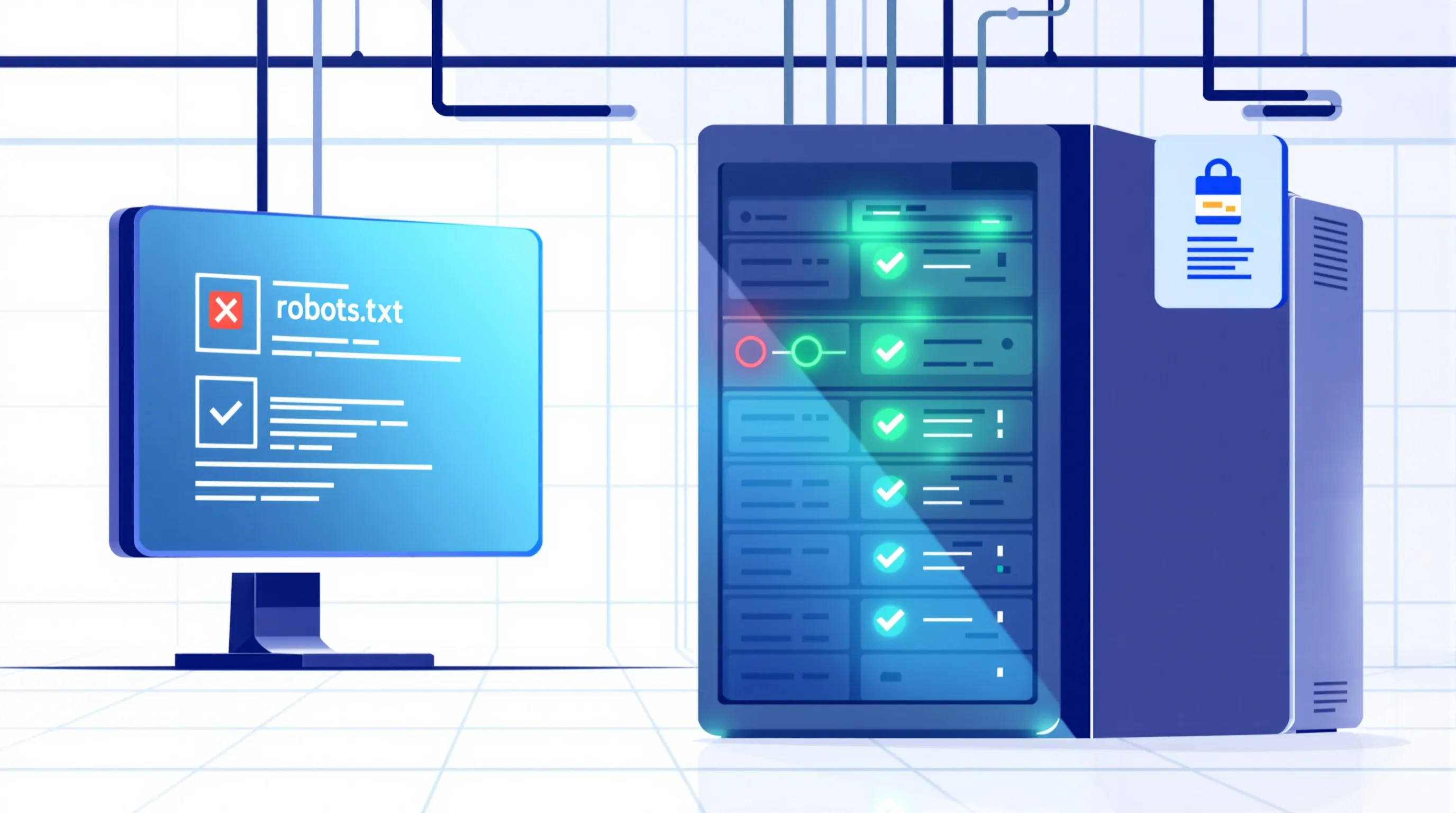
Does my robots.txt affect AI visibility?
Yes. GPTBot, ClaudeBot, and PerplexityBot all respect robots.txt directives. Block these crawlers and your content becomes invisible to their AI systems. Explicitly allowing them signals your content is available for citation. Check your robots.txt right now — we've seen sites unknowingly blocking AI bots.
Which AI crawler user-agents should I allow in robots.txt?
The main ones: GPTBot (OpenAI/ChatGPT), ChatGPT-User (ChatGPT browsing), ClaudeBot (Anthropic/Claude), anthropic-ai (Anthropic general), PerplexityBot (Perplexity AI), and Google-Extended (Google AI Overviews/Gemini). Add explicit Allow rules for content pages and Disallow for admin and API routes.
What is server-side rendering and why does it matter for AEO?
SSR means your HTML content is generated on the server before being sent to the browser. Most AI crawlers don't execute JavaScript — they read raw HTML. If your content is rendered client-side, AI crawlers see empty pages. Use SSR, SSG, or pre-rendering to make sure your content is in the HTML source.
How important is heading hierarchy for AI visibility?
Critical. AI systems use heading hierarchy (H1 → H2 → H3) to understand content structure and topic relationships. One H1 per page — the main topic. H2s for major sections, H3s for subsections. Question-format headings like "What is AEO?" are especially effective because they match how users query AI assistants.
What role do internal links play in AEO?
Internal links help AI systems map relationships between your content. Topic hubs, Related Articles sections, breadcrumbs, cross-references — they create a navigable content graph that AI crawlers follow. Strong internal linking distributes authority across pages and ensures important content is discoverable no matter where a crawler enters your site.
Should I use microdata, RDFa, or JSON-LD for structured data?
JSON-LD. It's cleanly separated from HTML — no inline attributes to maintain. It's easier to implement and debug. Google and most AI systems prefer it. Microdata and RDFa mix schema with HTML attributes, making them harder to maintain and more error-prone. JSON-LD goes in a single script tag and you're done.
How do I test if my structured data is valid?
Use Google's Rich Results Test or Schema Markup Validator to check syntax and required fields. Our audit also validates structured data as part of the Schema.org criterion. Common errors include missing required properties, wrong @type values, and orphaned schema blocks that reference entities not defined on the page.

Getting Started

Is the AEO audit really free?
Yes. No signup, no credit card. Enter any website URL and get a full 48-criteria analysis with scores, findings, and recommendations. We built this to help businesses understand their AI visibility gaps — the audit is the first step.
What happens after the audit?
You get detailed findings and our Knowledge Base guides to implement improvements yourself. Each criterion has an in-depth guide with code examples and common mistakes. If you want hands-on help, we offer AEO Content Optimization services to deploy the changes for you.
How quickly can I improve my AEO Site Rank?
Many improvements take a single day. Adding llms.txt, deploying Schema.org markup, updating robots.txt, fixing semantic HTML — all quick wins. Building FAQ sections and restructuring content for Q&A takes 1–2 weeks. Entity authority and original data are ongoing investments that compound over time.
Do I need technical skills to improve my AEO Site Rank?
Some improvements — writing FAQ content, adding author bios — require zero technical skills. Others — deploying JSON-LD schema, modifying robots.txt — require basic HTML knowledge or developer access. Our Knowledge Base guides include code examples for each criterion. For hands-on help, we offer professional services.
Can I compare my AEO Site Rank over time?
Yes. Every audit is versioned. You can see exactly how your score changed between audits — which criteria improved, which declined, and the overall trajectory. This is how you measure the impact of your AEO work.
What is the fastest way to improve my AI visibility?
Start with high-impact, low-effort wins: (1) Create an llms.txt file, (2) Add Organization JSON-LD to your homepage, (3) Update robots.txt to allow AI crawlers, (4) Add FAQPage schema to existing FAQ content. These four changes take under a day and typically produce noticeable improvements within weeks.
What should I prioritize if my score is below 40?
A score below 40 means several fundamentals are missing — like Crisp (34) and HelpCrunch (33) in our Customer Support benchmarks. Focus on: (1) llms.txt — quick to create, high impact, (2) Schema.org — Organization schema at minimum, (3) robots.txt — make sure you're not blocking AI bots, (4) Clean HTML — content must be in the page source, not behind JavaScript.
How much does AEO optimization cost?
The audit is free. Self-implementation using our Knowledge Base guides costs nothing but your time. For professional AEO optimization, we build custom programs based on your industry, competitive landscape, and goals. Schedule a free consultation to discuss what makes sense for your business.
Can I implement AEO improvements on WordPress?
Yes. WordPress has excellent AEO support. Use Yoast SEO for schema markup, create llms.txt via FTP or a custom plugin, edit robots.txt through Yoast or directly, and build FAQ pages with Gutenberg blocks. Most WordPress themes already produce clean, crawlable HTML.
Can I implement AEO improvements on Shopify?
Yes, though Shopify requires some workarounds. Use apps like JSON-LD for SEO for schema markup, create llms.txt through the theme editor, modify robots.txt through Shopify admin, and build FAQ sections in product descriptions and dedicated pages. Shopify produces server-rendered HTML, which is good for AI crawlability.
What is the minimum viable AEO setup for a new website?
Four things on day one: (1) Organization JSON-LD schema on every page, (2) a well-structured llms.txt at your domain root, (3) robots.txt explicitly allowing GPTBot, ClaudeBot, and PerplexityBot, (4) at least one FAQ page with FAQPage schema. This baseline takes a few hours and establishes the foundation everything else builds on.

AI Visibility & Citations

How do AI answer engines decide which sources to cite?
AI systems evaluate structured data quality, content relevance, entity authority signals, content freshness, and how well the format matches the question. Sites with Schema.org markup, clear entity information, and Q&A-formatted content get cited far more often than sites with unstructured, anonymous content.
Which AI engines matter most for my business?
Depends on your audience. ChatGPT has the largest user base for general queries. Perplexity is growing fast among researchers and knowledge workers. Google AI Overviews affects anyone relying on Google search traffic. Claude dominates professional and enterprise contexts. The 48 AEO criteria across 5 pillars improve visibility across all of them.
How long does it take for AEO changes to affect AI visibility?
Technical changes — Schema.org, robots.txt — get picked up by AI crawlers within days to weeks. Content changes — FAQ pages, Q&A restructuring — take weeks to months to be fully indexed and reflected in AI answers. Unlike SEO, there's no established timeline. AI systems re-index on their own schedules.
Does AEO replace SEO?
No. They're complementary. SEO optimizes for search rankings and click-through traffic. AEO optimizes for AI citations and answer engine visibility. Many AEO improvements — structured data, semantic HTML, internal linking — also boost SEO. Implement both.
What is a visibility score and how is it measured?
A visibility score measures how often and how prominently your domain appears in AI answers for relevant queries. We test this by running real queries against multiple AI engines, analyzing whether you're cited, what competitors show up alongside you, and what sentiment the AI expresses about your brand. It's real-world visibility — not just technical readiness.
What are query variants and why do they matter?
Query variants are different phrasings of the same question. "Best live chat software," "top customer support tool," "live chat comparison 2025" — all variants of one topic. AI engines cite different sources for different phrasings. Testing multiple variants reveals gaps where you're visible for some queries but invisible for others.
How do competitors affect my AI visibility?
AI engines typically cite 3–5 sources per answer. If competitors have better-structured content, stronger entity signals, or more FAQ pages, they get cited instead of you. Our competitor comparison shows exactly which competitors appear in AI answers for your target queries and what content signals give them the edge.
What is a threat analysis in AI visibility?
Threat analysis identifies competitors and trends that can erode your AI visibility. New competitors gaining citations in your space. Competitor content improvements outpacing yours. Emerging query patterns where you have no presence. Changes in AI engine behavior that affect your citation rate.
Can I track my AI visibility over time?
Yes. Each visibility analysis is versioned. You can track how citation rates, competitor positions, and query coverage shift over time. Regular monitoring catches visibility drops early, measures the impact of AEO improvements, and keeps you ahead of competitors who are also optimizing.
Why do different AI engines show different results for the same query?
Each engine has its own training data, indexing system, and citation logic. ChatGPT prioritizes conversational relevance. Claude emphasizes structured data and entity clarity. Perplexity focuses on real-time web results. Google AI Overviews draws from its search index. A multi-engine audit reveals these differences so you can optimize across the board.
What is zero-click search and how does AEO address it?
Zero-click search means the user gets their answer directly from AI without clicking through to any website. Over 60% of Google searches are now zero-click. AEO addresses this by making your brand the cited source in those AI answers - even when users never visit your site, they see your name, building awareness and trust.
What is brand mention monitoring and how does it affect AI visibility?
Brand mention monitoring tracks where your domain appears - and where it does not - across the web. We scan high-authority pages, competitor listings, and industry directories to find opportunities where competitors are mentioned but you are not. These gaps matter because AI engines treat third-party mentions as trust signals. More mentions on authoritative pages means AI systems are more likely to cite you in answers. We also surface contact information for outreach so you can close those gaps.
How does Reddit presence affect AI citation rates?
Reddit threads are a primary training data source for AI engines - and a live retrieval source for Perplexity and ChatGPT with web search. When your brand is mentioned positively in relevant Reddit discussions, AI engines pick up that signal. We monitor Reddit for brand mentions, competitor discussions, and industry questions where you could contribute. The scan identifies threads where your expertise is relevant but your brand is absent - each one is a missed citation opportunity.
What is the difference between AEO Site Rank and AEO Page Rank?
AEO Site Rank is your overall domain score across all 48 criteria - it measures sitewide infrastructure, content quality, trust signals, and AI discoverability. AEO Page Rank scores individual pages for citation readiness - how likely that specific page is to be cited by AI engines. A site can have a strong Site Rank but weak pages, or strong individual pages on a poorly optimized site. Both scores appear on the Studio dashboard so you can identify which pages need the most work.

Industry Benchmarks

What are AEO industry benchmarks?
Benchmarks show average and best AEO readiness scores across business sectors. We track Healthcare & Patient Advocacy, Customer Support & BPO, Music & Vinyl Retail, SaaS & Productivity, and AI & Marketing Technology. Each sector breaks down into categories. They help you understand where you stand relative to industry peers - not just in absolute terms.
What is a good AEO Site Rank for my industry?
It varies. In Customer Support & BPO, scores range from 33 (HelpCrunch) to 63 (Tidio), with the median around 45. Healthcare tends higher due to content-rich sites. Scoring above the industry median means you're ahead of most competitors. Top quartile means you've got a real competitive advantage in AI visibility.
How are benchmark scores calculated?
Benchmarks come from real AEO audits of domains in each sector. We audit multiple companies per category using the same 48-criteria methodology across 5 pillars and aggregate results. Each domain shows per-engine scores (ChatGPT, Claude, Gemini), best score, and overall visibility indicators. Benchmarks update as new audits are published.
Can I see how specific competitors score?
Yes. Browse benchmarks by sector and category, then click any domain to view its full Domain Intelligence Dashboard - detailed scorecard, findings, recommendations. See exactly where competitors are strong and where they have gaps you can exploit.
How often are benchmarks updated?
Automatically, whenever new audits are published. Each audit includes a timestamp so you know how current the data is. Industries with more audited domains have more reliable benchmarks. We're continuously expanding coverage across sectors.
Why does my industry have low benchmark scores?
Low benchmarks usually mean most businesses in that sector haven't prioritized AEO yet. That's an opportunity, not a problem. Implementing AEO while competitors are still unaware gives you an early-mover advantage. Industries with low benchmarks see the fastest improvement from basic AEO work.
Can I request my industry to be benchmarked?
Yes. If your industry isn't represented, contact us. We need 4-5 domains per sector to establish meaningful benchmarks. We prioritize industries with strong demand for AI visibility.
What is a Domain Intelligence Dashboard?
It's a central page for any audited domain that pulls together everything: per-engine score gauges, multi-engine comparison, visibility analysis, score trends across versions, top opportunities, and key metrics. One URL you can share with stakeholders to show the complete AEO profile.
How do I use benchmark data to prioritize my AEO work?
Compare your per-criterion scores against the sector average. If your Schema.org score is 3/10 but the sector average is 6/10, that criterion is a priority. Focus on closing the biggest gaps first - those represent the areas where competitors are already ahead and where improvement yields the most relative gain.

Content Strategy for AI

How should I format content for AI answer engines?
Use question-format headings (H2/H3) that match how people query AI assistants. Start each section with a direct answer in 1–2 sentences, then add supporting detail and data. Use bullet lists for enumerable items. This inverted-pyramid style makes it easy for AI systems to extract and cite your answer.
How many FAQ questions should my website have?
At least 20–30 substantive questions across your key topics. Quality over quantity — each answer needs 3–5 sentences minimum and genuine depth. Group FAQs by category with clear headings. Include FAQPage JSON-LD schema so AI engines parse the Q&A structure directly. Our FAQ has 160 items across 15 categories — that's the kind of coverage that gets cited.
What makes content "original" for AEO purposes?
Proprietary data, first-hand research, expert analysis with author credentials, unique case studies, perspectives you won't find elsewhere. AI engines value original sources because they add new information to the knowledge base. Rephrasing content from other sources adds zero value for AI citation.
Should I create content specifically for AI engines?
Create content for humans first, then structure it for AI extraction. The best AEO content is genuinely useful to readers AND easy for AI to parse. That means clear headings, direct answers, proper schema, and author attribution. Don't create low-quality keyword-stuffed content — AI engines are smart enough to spot it.
How important are author bios and credentials?
Very. AI systems use author info as an authority signal — especially for YMYL topics like health, finance, and legal content. Include names, credentials, professional background, and links to profiles. Add Person schema markup. Anonymous content is at a serious disadvantage for AI citation.
Should I update old content or create new content?
Both — but updating existing high-performing content often yields faster results. Add Q&A headings, FAQ schema, author attribution, and internal links to existing pages. For new content, focus on topics where you have genuine expertise or original data. AI engines value freshness, so update publication dates when you substantially revise content.
How do I write for multiple AI engines simultaneously?
Focus on the universal AEO criteria: structured data, clean HTML, entity clarity, Q&A formatting. These work across all engines. Multi-engine audits reveal engine-specific gaps — Claude weights structured data heavily while ChatGPT prioritizes conversational relevance. Address the common foundation first, then fine-tune for specific engines.
What content length is best for AI visibility?
There's no magic number, but content must fully answer the question. Under 300 words rarely gets cited — too thin. Over 5,000 words can bury key answers. The sweet spot is thorough coverage with clear structure. Use headings to make long content navigable. Put answers in the first paragraph of each section.
How does content freshness affect AI citations?
AI engines prefer recently updated content, especially for time-sensitive queries. ChatGPT inherits Bing recency signals - content updated within 90 days gets a retrieval boost. Add dateModified to your Article schema, update publication dates on substantially revised pages, and maintain a regular publishing cadence to signal ongoing relevance.
What is the ideal FAQ page structure for AI extraction?
Group questions by topic category with clear H2 headings per category. Each question should be an H3 with the answer immediately below. Lead every answer with a direct 1-2 sentence response, then elaborate. Add FAQPage JSON-LD schema matching every visible Q&A pair. Avoid hiding answers behind JavaScript accordions - AI crawlers need the HTML visible in the source.
What is topic coherence and why is it the heaviest AEO criterion?
Topic coherence measures how tightly your blog content clusters around related themes. It is still the single heaviest criterion in the framework. The scorer analyzes sampled pages, building term frequency maps and bigram clusters to detect thematic focus. Sites with scattered topics (AI, recipes, fitness) score low. When coherence drops below 6/10, a "coherence gate" caps your entire AEO Site Rank - no matter how perfect your technical implementation.
What is the coherence gate and how does it cap my score?
The coherence gate is a unique scoring mechanic: when your topic coherence score drops below 6/10, your entire AEO Site Rank gets capped at 35 + (coherence_score * 5). A coherence score of 3 means your maximum possible AEO Site Rank is 50, regardless of how well you score on every other criterion. Fix this by removing off-topic blog content and building intentional topic clusters around your core themes.
How does content depth affect my AEO Site Rank?
Content Depth measures average word count, heading structure, and the ratio of substantive pages to thin pages. Pages under 500 words rarely get cited by AI. The sweet spot is 1,500-3,000 words with 5+ H2 headings. Content Depth is cross-linked with Topic Coherence - deep content on scattered topics gets penalized because depth without focus doesn't build authority.
What is query-answer alignment and how do I improve it?
Query-Answer Alignment measures how well your content's headings and phrasing match the natural language questions users ask AI engines. Generic headings like "Overview" or "Features" don't match any real queries. Rewrite them as questions users actually ask: "How Much Does Live Chat Cost?" or "How Do I Set Up AI Support?" Use your visibility report's MISS queries as a roadmap.
What is content cannibalization and how does it hurt AI visibility?
Content cannibalization happens when multiple pages on your site target the same topic, forcing AI to guess which one to cite. The scorer compares page titles and content similarity across your site. Fix it by consolidating competing pages into one authoritative resource with 301 redirects from the old URLs. When Topic Coherence is low, the cannibalization penalty becomes more aggressive.
Why do I need visible dates on my content pages?
Visible Date Signal checks whether your pages display clear publication and update dates. AI engines have a recency bias - content without visible dates gets treated as potentially stale, even if it was published recently. Add both "Published" and "Last Updated" dates to your article template, and match them with datePublished and dateModified in your Article schema.
How does direct answer density work?
Direct Answer Density (5% weight) measures how consistently your content leads with the answer right after each heading. AI doesn't read full articles - it scans headings and grabs the first 1-2 sentences. If those sentences contain filler ("In today's fast-paced world..."), AI moves on. Lead every section with a concrete fact or answer, then elaborate. This applies to all headings, not just questions.
What role does author schema play in AI visibility?
Author & Expert Schema (3% weight) proves that a real, credentialed person wrote your content. Person schema with name, jobTitle, sameAs links to LinkedIn, and knowsAbout fields lets AI cross-reference the author's identity. Publishing as "Admin" or "Staff Writer" is a negative trust signal. Author schema compounds with Entity Authority and Original Data to form the trust foundation AI uses for citation decisions.

Multi-Engine Comparison

Why do ChatGPT and Claude give different scores for the same website?
Different training data, different evaluation criteria, different citation priorities. ChatGPT (GPT-5.2) focuses on conversational query matching and content retrievability. Claude (Opus 4.6) emphasizes structured data completeness and entity disambiguation. HelpSquad scored 47 on ChatGPT but only 42 on Claude — that 5-point gap reveals exactly which signals each engine cares about.
What AI engines are used in multi-engine audits?
We currently audit with ChatGPT (GPT-5.2), Claude (Opus 4.6), and Gemini (2.5). Each engine evaluates the same 48 AEO criteria independently, producing separate scores, verdicts, and recommendations. The comparison dashboard shows all results side by side.
Which AI engine should I optimize for first?
Start with the 48 AEO criteria that work across all engines. If you must pick one, choose by audience: ChatGPT for consumer-facing businesses, Claude for enterprise and professional contexts, Google AI Overviews if your traffic is Google-dependent. The multi-engine audit shows which engine gives you the biggest gap to close.
What does the engine comparison dashboard show?
Per-engine scores with visual gauges and delta badges showing the gap between engines. Verdict comparison. A scorecard table showing how each criterion scored across engines. Merged opportunity recommendations with engine badges indicating which engine flagged each improvement.
Can I see engine-specific recommendations?
Yes. Each engine produces its own findings and recommendations. On the comparison dashboard, opportunities are merged and tagged with engine badges — you can see which improvements are flagged by one engine versus all engines. Recommendations that appear across multiple engines are your highest priority.
How often do AI engines update their ranking criteria?
Continuously, often without announcements. Major model updates — a new GPT version, a new Claude release — can shift citation patterns overnight. This is why regular re-auditing matters. A score from three months ago doesn't necessarily reflect current engine behavior.
What is the Gemini engine and how does it differ?
Gemini 2.5 is Google's AI model powering Google AI Overviews — the AI summaries at the top of Google search results. It evaluates content for knowledge graph alignment, multimodal retrieval, and AI Overview inclusion. Since AI Overviews appear on over 30% of searches, Gemini optimization directly affects your Google search visibility.
Do engine scores correlate with actual AI citations?
Audit scores measure technical readiness — whether your content is structured for AI extraction. Visibility scores measure actual citation rates. Higher audit scores generally correlate with better visibility, but domain authority, content relevance, and competition also play a role. You need both metrics for the complete picture.

Pricing & Services

What professional services does AEO Content AI offer?
Custom AEO optimization programs tailored to your industry, competitive landscape, and visibility goals. Services range from foundational technical setup (llms.txt, Schema.org, robots.txt) to full content restructuring, multi-engine optimization, and ongoing visibility management. Schedule a free consultation to discuss what makes sense for your business.
How is pricing determined?
Every business has different needs. We build custom programs based on factors like your current AEO Site Rank, number of competitors, content volume, and target AI engines. Schedule a free 30-minute consultation and we will walk through your specific situation and recommend an approach.
Do you offer one-time implementation or ongoing plans?
We offer both. AEO requires ongoing attention because AI engines update their models, competitors improve their content, and new query patterns emerge. But we also work on project-based engagements for specific, bounded needs. Let us know your situation during the consultation.
How do I get started?
Schedule a free 30-minute consultation. We will review your current AI visibility, show you how competitors are performing, and outline a custom optimization roadmap. No commitment required.
What kind of ROI can I expect from AEO optimization?
Depends on your industry, competition, and current visibility. Businesses in competitive verticals often see measurable increases in AI-driven traffic and citations within 1-3 months. Our benchmark data shows most competitors in any given industry aren't optimizing for AI yet - that's a significant first-mover advantage for early adopters.
What is included in the Starter plan?
The Starter plan covers foundational AEO setup: llms.txt creation and deployment, Organization JSON-LD schema, robots.txt AI crawler configuration, and an initial FAQ section with FAQPage schema. These are the highest-impact, lowest-effort changes that establish your AI visibility baseline.
What does the Growth plan add beyond Starter?
The Growth plan adds multi-engine audit coverage, content restructuring for Q&A extraction, expanded schema markup (Article, BreadcrumbList, FAQPage across all key pages), internal linking architecture improvements, and monthly re-audits to measure progress. It addresses the mid-weight criteria that separate average scores from strong ones.
What is included in the Scale plan?
The Scale plan includes everything in Growth plus daily visibility monitoring across 5 AI engines, branded mention alerts, the original data pipeline with artifact generation (live web intelligence from 15 sources), 10 page rewrites per month, 5 content clusters, and a dedicated manager. It adds entity authority engineering, original data strategy, and ongoing optimization across all 48 criteria.
Do you offer services for agencies managing multiple clients?
Yes. Agencies can white-label our audit infrastructure and run multi-domain AEO programs at scale. Volume pricing is available for agencies managing 10+ client domains. Contact us to discuss agency partnerships.
How long does a typical AEO engagement last?
Foundational setup (Starter-level) takes 1-2 weeks. Full content restructuring (Growth) runs 4-8 weeks. Ongoing content pipeline (Scale) is a continuous engagement with monthly reporting. Most clients start with a bounded project and expand to ongoing once they see citation improvements in their visibility reports.

Technical Audit Criteria

What is schema coverage ratio and why does it matter?
Schema coverage ratio measures what percentage of your indexed pages have relevant JSON-LD. A site with Organization schema on the homepage but no Article schema on blog posts has low coverage. The audit crawls all pages and calculates the ratio — above 80% gets full marks, below 40% scores poorly because most pages are invisible to structured data consumers.
How is fact density calculated in the technical audit?
Fact density counts verifiable claims per 1,000 words — named statistics, specific numbers, dated references, attributable statements. The audit uses NLP to identify factual assertions versus opinions or filler. Pages with fact density above 5 claims per 1,000 words are significantly more likely to be cited by AI engines. It's one of the strongest predictors of citation-worthiness.
What is content velocity and how is it measured?
Content velocity tracks how frequently you publish new or substantially updated content over a rolling 90-day window. The audit measures this through sitemap lastmod timestamps, RSS feed dates, and crawl-detected changes. Sites publishing at least weekly maintain stronger freshness signals than sites publishing monthly or less.
What are conditional audit criteria?
Conditional criteria are checks that only apply to certain site types. Product/Offer schema applies only to e-commerce. Hreflang only to multilingual sites. ai.txt/TDM policy only to sites with substantial original content. Speakable schema was previously conditional but is now an active scored criterion in the 48-criteria framework. The remaining conditional criteria supplement the 34 universal audit criteria.
How does the technical audit check sitemap completeness?
The audit compares URLs in your sitemap.xml against pages discovered by crawling. It checks for missing URLs, stale lastmod timestamps that don't reflect actual changes, incorrect priority values, and orphaned entries pointing to deleted pages. A complete, accurate sitemap ensures AI crawlers discover every page you want indexed.
What is definition pattern detection?
Definition pattern detection identifies sentence structures AI systems extract for direct-answer responses. Patterns like "AEO is the practice of..." or "Content velocity refers to..." are structures AI engines pull when answering "What is..." queries. Pages with clear definition patterns appear in direct-answer results at significantly higher rates.
How does canonical URL strategy affect AI visibility?
When multiple URLs serve the same content — with/without www, HTTP/HTTPS, trailing slashes — AI crawlers split signals across duplicates. The audit checks every page for a rel=canonical link pointing to the correct URL. Missing or conflicting canonicals confuse crawlers about which version to index, diluting your AI visibility.
What does the RSS feed audit check?
The audit verifies your site has a discoverable RSS or Atom feed with proper metadata. It checks feed existence at common paths, a link tag in the HTML head, adequate item count, and pubDate per item. RSS feeds let AI indexing systems detect new content automatically without waiting for a full crawl.
How is table and list extractability scored?
AI engines frequently restructure HTML tables and lists into their answers — but only when the HTML is properly formed. The audit checks that tables use semantic thead, tbody, and th elements, that lists use proper ol/ul markup, and that data tables have clear column headers. Poorly formatted tables get skipped by AI extraction.
What content licensing signals does the audit check?
The audit looks for machine-readable licensing metadata: CreativeWork license properties in JSON-LD, meta tags indicating reuse policy, copyright notices, ai.txt declarations, and TDM Reservation Protocol headers. Clear licensing tells AI systems whether they can quote or reference your content in their answers.

Intelligence Report

What does the AI hallucination audit reveal?
The hallucination audit asks multiple AI engines direct questions about your business and checks their responses for accuracy. It catches four types of issues: facts AI invents about you, outdated cached info, competitor confusion where AI mixes you up with similar businesses, and missing information about key products or services AI should know but doesn't.
How does the live citation test work?
We submit real user-style queries to ChatGPT, Claude, and Perplexity, then analyze whether your domain appears in citations, which pages are referenced, whether quoted info is accurate, and how your citation rate compares to competitors for the same queries. This is real-world AI visibility — not a readiness checklist.
What is a content depth score?
Content depth score uses AI evaluation to judge whether your pages cover topics with enough breadth and depth to be considered authoritative. A shallow page that skims a topic scores low even with perfect technical markup — because AI engines compare your depth against competing sources in real time.
What are citation-ready content patterns?
Specific content structures AI engines prefer to extract: attributable claims with sources, self-contained factual statements, comparative assertions with evidence, definition-then-elaboration sequences. The intelligence report tests whether your content matches these patterns by running it through AI extraction algorithms.
How does topic authority clustering work?
Topic authority clustering maps your content into topic groups and evaluates whether you cover enough related subtopics to qualify as a real authority. A single page on a topic is weak. Multiple interconnected pages covering setup, comparison, pricing, and features — that's a cluster AI engines recognize as authoritative.
What is cross-engine consistency and why does a gap matter?
Cross-engine consistency measures the variance in your scores across ChatGPT, Claude, and other engines. A gap greater than 10 points — like Tidio's +14 Claude bonus or Crisp's +17 — signals your content is tuned for one engine but not another. The intelligence report uses this gap to trigger engine-specific recommendations.
How does the content uniqueness analysis work?
Content uniqueness analysis uses AI to identify what percentage of your content provides genuinely novel information versus restating widely available knowledge. Pages that primarily restate common knowledge score low — AI engines already have that info from dozens of sources. They prioritize citing pages that add something new.
What is author schema depth and why does it matter?
Author schema depth evaluates whether your Person markup includes enough detail for AI engines to verify the author as a real expert. Beyond just a name, deep schemas include sameAs links to LinkedIn, jobTitle, knowsAbout topics, and alumniOf institutions. Deeper schemas create stronger trust signals.
How does Wikidata presence affect AI visibility?
A verified Wikidata entry and Google Knowledge Panel mean your business entity exists in public knowledge databases that AI engines consult. Entities with Wikidata QIDs get higher trust scores because AI systems can cross-verify claims about your business against authoritative external sources — independent of your website.
What does social profile verification check?
It goes beyond checking that sameAs URLs are present — it confirms linked profiles actually exist, are active, and contain consistent business information. Dead social links or profiles with different business names damage trust rather than build it. AI engines follow these links to verify entity claims.

ChatGPT Optimization

Why does ChatGPT use Bing for web retrieval?
ChatGPT retrieves web content through Bing's search index. When ChatGPT browses the web to answer a question, it sends the query to Bing and processes what comes back. This makes Bing indexation a hard prerequisite — if Bing hasn't indexed your page, ChatGPT can't find it. Doesn't matter how well-structured your content is.
How do I check if my pages are indexed by Bing?
Submit your sitemap to Bing Webmaster Tools at bing.com/webmasters. Use the URL Inspection tool to check individual pages. You can also search site:yourdomain.com on Bing to see indexed pages. Our ChatGPT optimization audit checks Bing indexation automatically and flags pages missing from the index.
What is ChatGPT conversational query matching?
ChatGPT matches questions to web content using conversational NLP — not keyword matching. Content written in the same natural language patterns people use when talking to ChatGPT gets cited more often. Question-format headings, direct conversational answers, and natural phrasing outperform keyword-stuffed content every time.
How does ChatGPT recency bias affect my content?
ChatGPT inherits Bing's recency signals. Content with dateModified within the last 90 days gets a measurable retrieval boost. Stale content gradually drops out of ChatGPT retrieval even if it ranks well on Google. Regular content updates maintain ChatGPT visibility — it's that simple.
What are direct answer paragraphs for ChatGPT?
Self-contained 2–4 sentence blocks ChatGPT can extract and quote without needing surrounding context. The ideal paragraph: a direct answer, a supporting fact, a specific detail. Pages with 5+ such paragraphs get cited at significantly higher rates than pages that bury answers in long narratives.
How does ChatGPT extract comparison tables?
ChatGPT frequently restructures HTML tables into comparison answers. Tables with proper thead/tbody/th structure, clear column headers, and factual data get extracted at high rates. Tables using CSS grid layouts, nested divs, or missing headers get skipped — ChatGPT can't reliably parse their structure.
What is the difference between being indexed and being retrieved by ChatGPT?
Indexed by Bing means your page exists in the search index. Retrieved means ChatGPT actually selects it when answering relevant queries. Many indexed pages are never retrieved — they lack conversational relevance, have low Bing ranking, or don't contain extractable answer content. The retrievability test measures this gap.
How do I analyze my Q&A distribution for ChatGPT?
Q&A distribution analysis maps your existing question-answer content against the questions ChatGPT users actually ask about your topic. Coverage gaps are missed citation opportunities. The analysis identifies high-volume questions you haven't answered and prioritizes new content based on query demand and competitive coverage.

Claude Optimization

What is Claude compound trust multiplier?
Claude applies compounding trust to JSON-LD structured data. 1 schema type is baseline. 2 types give a small boost. 3 types cross a trust threshold. 4+ types create compounding trust. Sites with Organization plus FAQPage plus Article plus BreadcrumbList get exponentially higher Claude scores than sites with Organization alone. Tidio hit this threshold — that's part of why it scored 63.
Why does Claude penalize missing llms.txt?
Claude evaluates llms.txt on a four-level quality rubric: basic existence, structured URLs, detailed descriptions, and llms-full.txt link. No llms.txt means a trust penalty — Claude interprets it as a signal you haven't considered AI accessibility. Sites with high-quality llms.txt files get proportionally higher Claude scores.
How does ClaudeBot directive affect Claude scores?
Claude applies a specific trust penalty when ClaudeBot isn't explicitly mentioned in robots.txt — even if the site allows other crawlers like GPTBot. Explicitly allowing ClaudeBot signals willingness to be cited by Claude. Block ClaudeBot but allow GPTBot? Reduced Claude citation rates.
How does Claude handle entity disambiguation?
Claude cross-references Organization schema, sameAs links, address data, and domain registration signals to distinguish similarly-named businesses. Without clear entity signals, Claude will confuse you with competitors or refuse to cite you to avoid inaccuracy. HelpSquad's Claude score of 42 — 5 points below its ChatGPT score of 47 — was partly driven by thin entity signals.
What content licensing signals does Claude look for?
Claude evaluates licensing to determine citation willingness. Clear CreativeCommons licenses, TDM Reservation Protocol headers, or ai.txt permissions explicitly granting citation rights increase citation rates. Ambiguous or missing licensing makes Claude more conservative about quoting content directly.
How does Claude evaluate semantic HTML hierarchy?
Claude performs deeper semantic HTML analysis than other engines. It evaluates strict H1→H2→H3 nesting, ARIA landmark roles, semantic sectioning elements (main, article, section, nav), and content-to-boilerplate ratio. Pages with clean semantic hierarchy get a measurable Claude scoring boost.
What are citation-ready fact blocks for Claude?
Claude preferentially cites content structured as fact blocks: a named statistic or claim, followed by its source, followed by context. A specific number, company attribution, date, market context. These match Claude's internal reasoning patterns and get extracted at higher rates than narrative prose.
Why did Tidio score higher on Claude than expected?
Tidio got a +14 Claude bonus over what technical metrics alone would predict. Why? A 251-line llms.txt file. 4+ JSON-LD schema types triggering compound trust. Explicit ClaudeBot allow in robots.txt. Clean semantic HTML hierarchy. Claude's governance-first evaluation rewards sites that invest in machine-readable signals — and Tidio nailed all of them.

Intelligent Content Pipeline

What is the AEO Content Pipeline?
A context-aware content production pipeline that learns your domain, competitive landscape, and brand voice — then continuously produces citation-optimized content to fill your AI visibility gaps. It goes beyond auditing what’s missing to actually creating the content that gets you cited.
How does the content pipeline learn my business?
It starts with your AEO audit data, existing content, competitor analysis, and industry benchmarks. Every piece of content it produces and every citation signal it measures feeds back into the system. The more it works with your domain, the better it understands what your audience needs and what AI engines want to cite.
What makes AEO content different from regular AI-generated content?
Two things. First, every piece is structured for AI citation from day one — proper schema, Q&A formatting, entity signals, fact density. Second, everything passes through our humanizer. No robotic phrasing, no filler, no telltale AI patterns. The result reads like it was written by your subject-matter expert, not a language model.
What is the content humanizer?
Our humanizer rewrites AI-generated drafts to eliminate machine-readable patterns — formulaic transitions, generic phrasing, repetitive structure. The output sounds natural and authoritative. This matters because AI engines are getting better at detecting and deprioritizing content that reads like it was generated by another AI.
How does the content pipeline decide what to produce next?
It uses your audit gaps, competitive intelligence, query variant analysis, and citation performance data. If competitors are getting cited for topics where you have no content, that’s a priority. If existing content isn’t being retrieved, the pipeline identifies why and produces improved versions. Every decision is data-driven.
Does the content pipeline replace my existing content team?
No. It augments your team by handling the volume of citation-optimized content that human writers can’t sustain alone. Your team focuses on strategy, original research, and thought leadership. The pipeline handles the structured, data-driven content that AI engines need to see at scale.
How does the feedback loop work?
Audit → Produce → Measure → Refine. After content is published, the system tracks which pieces get cited, by which AI engines, for which queries. High-performing patterns are amplified. Underperforming content is analyzed and improved. Each cycle makes the next batch of content more effective.
What does "compounding AI visibility" mean?
Each piece of optimized content strengthens your domain’s overall authority signals. More citation-ready pages means more AI citations. More citations means higher trust. Higher trust means future content gets cited faster. The effect compounds — early investment in content quality pays increasing returns over time.
What is the Original Data Bridge?
The Original Data Bridge connects your brand mention scans and Reddit monitoring directly into the article writing pipeline. When you run a mentions or Reddit scan, the system automatically converts findings into knowledge items - real competitor data, community questions, and market signals. These feed directly into the content pipeline so every article you produce contains original, proprietary intelligence that AI engines cannot find on competitor sites.
How does the Artifact Generation System create original data for articles?
The Artifact Generation System collects live web intelligence from up to 15 sources - news sites, academic databases, industry reports, government data - then synthesizes it into original analytical data for your articles. Instead of generic industry stats that AI already knows, every article gets fresh, sourced evidence with citations. The system deduplicates findings, validates sources, and packages everything into article-ready data points that make your content uniquely citable.
What are content clusters and why do they matter for AEO?
A content cluster is a pillar article (5,000-8,000 words) surrounded by 5-7 supporting child articles (2,500-3,500 words each), all interlinked. AI engines evaluate topic authority across your entire site - not just individual pages. A single article about "live chat" tells AI you mentioned the topic. A cluster of 7 interlinked articles about live chat, customer support response times, chat agent training, and support metrics tells AI you are an authority. Clusters directly improve Topic Coherence and Internal Linking - two of the highest-weighted AEO criteria.
How does the content rewrite wizard improve existing pages?
The rewrite wizard analyzes your existing page content against both AEO Site and AEO Page criteria, fetches domain context and competitive intelligence, then generates an optimized version. It starts with an intelligence step that shows what data is available - visibility gaps, Reddit discussions, brand mentions - before suggesting specific improvements. You control which changes to accept. The goal is to take a page scoring 30-50 and rewrite it to 80+ while preserving your brand voice.

Startups & Accelerators

Why should a pre-seed startup care about AI visibility?
AI is becoming the primary discovery channel for customers, investors, and journalists. When someone asks ChatGPT about your category, you are either in the answer or you do not exist. Unlike SEO, which requires months of authority building, AEO infrastructure can be deployed in a single afternoon - llms.txt, schema, robots.txt, FAQ. Two hours of work on launch day puts you ahead of 90% of funded startups.
What AEO Site Rank should a startup aim for before Demo Day?
Above 55 puts you in the top 15% of YC startups. Above 65 puts you in the top 5%. The average across 2,500+ audited YC startups is 38. Getting to 55-60 requires only the five quick wins: llms.txt, Organization schema, robots.txt AI directives, FAQ page, and Q&A headings. All achievable in a single sprint.
How do YC startups compare on AI visibility?
We have audited over 2,500 startups across 12 YC batches (W22 through W26). Average score: 38/100. Only 2% score above 70. Recent batches trend slightly higher as awareness grows, but the majority of funded startups remain invisible to AI engines. The biggest gaps: no llms.txt (80%+), no FAQ content (75%+), and default robots.txt with no AI crawler rules (70%+).
Does AEO matter for B2B SaaS startups?
Especially. B2B buyers use AI assistants for vendor research, feature comparison, and shortlisting. "What are the best API testing tools?" and "How does [your product] compare to [competitor]?" are real queries running through ChatGPT and Perplexity daily. If your product page and FAQ are not structured for AI extraction, you lose these buyers before they ever visit your site.
Should I focus on SEO or AEO first?
AEO first. SEO requires domain authority built over 6-12 months - backlinks, content volume, accumulated trust. AEO requires technical infrastructure built in 2-3 hours - metadata, schema, crawler access. For an early-stage startup with zero authority, AEO delivers faster returns. And the infrastructure you build for AEO (schema, FAQ, structured content) also improves your SEO foundation.
Do investors use AI to research startups?
Yes. VCs increasingly use ChatGPT, Perplexity, and Claude to evaluate markets, compare competitors, and validate startup claims. A startup with strong AI visibility appears in these research queries. Your AEO Site Rank is becoming a proxy for technical sophistication - founders who set up llms.txt and schema on day one signal they understand modern distribution.
What is the AEO for Startups program?
We offer every startup a free comprehensive AEO audit plus 50% off all services for 6 months. The program includes batch leaderboard tracking, visibility reports, and priority queue for audit processing. Any startup pre-seed through Series A is eligible - not just YC companies. Apply at audit.aeocontent.ai/startups/program.
Can AEO help my startup get discovered by AI assistants like ChatGPT?
That is exactly what AEO does. The 48 AEO criteria - structured data, llms.txt, Q&A content, entity authority, AI crawler access - are the signals AI engines use to decide what to cite. We have tracked this across 2,500+ startup audits: startups scoring above 55 appear in AI answers at significantly higher rates than those below 35. Structure determines visibility.
How do I check where my startup ranks in its YC batch?
Visit audit.aeocontent.ai/startups/yc and navigate to your batch. Every batch has a leaderboard sorted by AEO Site Rank, showing your position relative to batch mates. Click your domain for the full audit report. If your startup has not been audited yet, request a free audit and you will appear in the leaderboard once processing completes.
What is the fastest way for a startup to go from score 30 to 60?
Five specific changes that consistently produce a 25-30 point lift: (1) Create llms.txt at your domain root - 20 minutes, 8-12 point impact. (2) Add Organization + WebSite JSON-LD - 15 minutes, 5-8 points. (3) Update robots.txt with AI crawler allows - 5 minutes, 3-5 points. (4) Build a 15-item FAQ with FAQPage schema - 60 minutes, 5-8 points. (5) Rewrite top-page headings as questions - 30 minutes, 4-6 points. Total: under 3 hours.