
New startups can win only the ChatGPT answers that trigger a search

On this page
Quick Answer
A startup founded after a model's training cutoff gets named only where ChatGPT or Perplexity runs a live search. Target comparison and current-year prompts first. Category definitions come from memory, and memory belongs to the incumbents.
Describing your company to ChatGPT won't change that. Memory personalizes one user's account; it does not retrain the model. Let OAI-SearchBot in. Publish pages that answer narrow comparison questions. Then get named on the third-party pages the search step reads.
Key Points
- OpenAI runs separate crawlers, OAI-SearchBot for ChatGPT search and GPTBot for model training, and its documentation states: "Each setting is independent of the others."
- In a March 2026 r/smallbusiness test of 50 local businesses on ChatGPT, Gemini and Perplexity, only 6 appeared, though several invisible ones ranked on Google's first page.
- On the Fatrank Podcast in September 2026, James Dooley of Soft Surfaces Limited described a head teacher asking ChatGPT to compare four bids for a contract worth £572,000.

A young brand can only appear where the assistant goes looking.
Picture a founder who opens ChatGPT and describes the company in loving detail. Pricing, integrations, the customer who almost churned. The next day the founder asks for the best tools in the category. The company isn't there. It feels like being forgotten. It isn't.
What happened is a mix-up that surfaced plainly in a November 2024 r/ChatGPTCoding thread. Commenters there explained that ChatGPT's Memory saved details a user shared to a kind of notepad and slipped them into that same user's later chats as hidden context. Training sat behind a separate switch, "Improve the model for everyone," and one commenter warned that even opting in carried "no guarantee it will be trained on your data." Telling the assistant about your startup teaches your own account. Nobody else's.
So the useful question is narrower, and colder. Where does an engine go looking, live, at the moment a buyer asks? Live retrieval is the search step an AI assistant runs while it answers, pulling current pages instead of leaning on what it learned in training. For a brand founded after the cutoff, that step is the only door.
Below, I walk through the crawler split OpenAI now documents, the prompts that push ChatGPT and Perplexity into a search, and the prompts that stay with the incumbents. There is a school contract weighed inside a chat window. There is a Reddit test where businesses ranking on Google's first page went missing from AI answers. And there is a sequence for the first quarter, starting with the one bot a young company can't afford to block.
A page nobody ranks can still get quoted. That is the odd mercy of live search, and for a young startup it is the only mercy on offer.
In a January 2026 video, the creator behind Vasco's SEO Tips argued that when a prompt is specific enough, the AI will go "to the 100th page" to find a fitting answer. The example was Epic Gardening. A single line on a Shopify product page, about "non-toxic USDA approved paint," got the brand linked in an AI answer. One line. No ranking behind it.
I keep coming back to that story because it runs against what most founders assume about how ChatGPT knows things, since a model's training data was sealed before their company existed and nothing they publish today can reach back into it. So the first thing to check is which of your buyers' prompts send the assistant out to search. That step only fires on some prompts.
Making the pages is no longer the slow part. In AEO Content's own pilot, a study that read a product's code repositories proposed two knowledge-base topics in about two minutes, each tied to one to four specific files. It also dropped a topic because the feature it would describe wasn't built yet. I trust that restraint more than the speed. The harder call is which prompts to write for.
Why doesn't ChatGPT know about my new startup?
ChatGPT answers from two places: training data frozen at a cutoff, and a live search run at answer time. A startup born after the cutoff exists only in the second.
Three checks tell you which path you are standing on:
- Ask whether the prompt needs anything newer than the model's cutoff. If it does, a live search has to run.
- Confirm your robots.txt lets OAI-SearchBot in, and that no firewall rule or edge challenge turns it away.
- Decide on GPTBot separately. It gathers text for training, not for today's answers.
Training data is the fixed body of text a model learned from before its cutoff date. Nothing published after that date lives in its memory. OpenAI gathers that text with GPTBot. Retrieval runs on different machinery: OAI-SearchBot surfaces sites in ChatGPT's search features, and ChatGPT-User fetches a page live when something a user does in ChatGPT calls for it. Uriel Bitton put the split plainly on dev.to in October 2026: OAI-SearchBot "is used for ChatGPT search," while GPTBot "may gather content for model training." His next line matters more to a founder. "Allowing one does not require allowing the other."
OpenAI has since drawn the line sharper. Search Engine Roundtable reported on December 9, 2025 that OpenAI rewrote its crawler documentation and dropped the claim that OAI-SearchBot is used to train its foundation models. The same update added a wrinkle. If a site allows both bots, OpenAI "may use the results from just one crawl for both use cases to avoid duplicate crawling." Two purposes. Sometimes one visit.
The common assumption runs the other way. One AI-visibility vendor tells business owners that ChatGPT, Claude, Gemini and Perplexity "don't crawl the web in real time" and answer from what they were trained on. That describes the memory path and stops there. It also explains why founders who check their category keep seeing the same incumbents, and why so many decide the game is rigged. A review of 5 sources on how these assistants gather text points somewhere narrower and more useful. Memory is closed to a post-cutoff brand. Search is not.
I'd call this the most expensive misunderstanding in early-stage marketing. A founder who believes AI answers come only from memory either gives up, or pours budget into prompts no new brand can win yet.
It is also why the promise we make at AEO Content holds together. We tell clients they will be named in AI answers in 90 days, or we work free until they are. Nobody can schedule a model's next training run. The search path is the one a brand can work on now.
If the crawler names start to blur, the AEO knowledge base guides keep the definitions in one place. The harder question sits one layer down: which prompts make ChatGPT reach for the search path at all, and which ones it answers from memory without looking.
What decides whether ChatGPT can name a brand it never learned about?
A founder ran about 20 queries through ChatGPT and Perplexity in April and found that most of the startups checked went unnamed. For brands born after the cutoff, three checkpoints decide whether that can change.
A commenter under that post, in the r/microsaas forum for small software founders, said ChatGPT "tends to recommend the same 5-10 big names in every category" and that "being mentioned in training data early seems to matter." For a company founded after the model's cutoff, early has already passed. What remains is the answer where ChatGPT goes looking, and that route has gates.
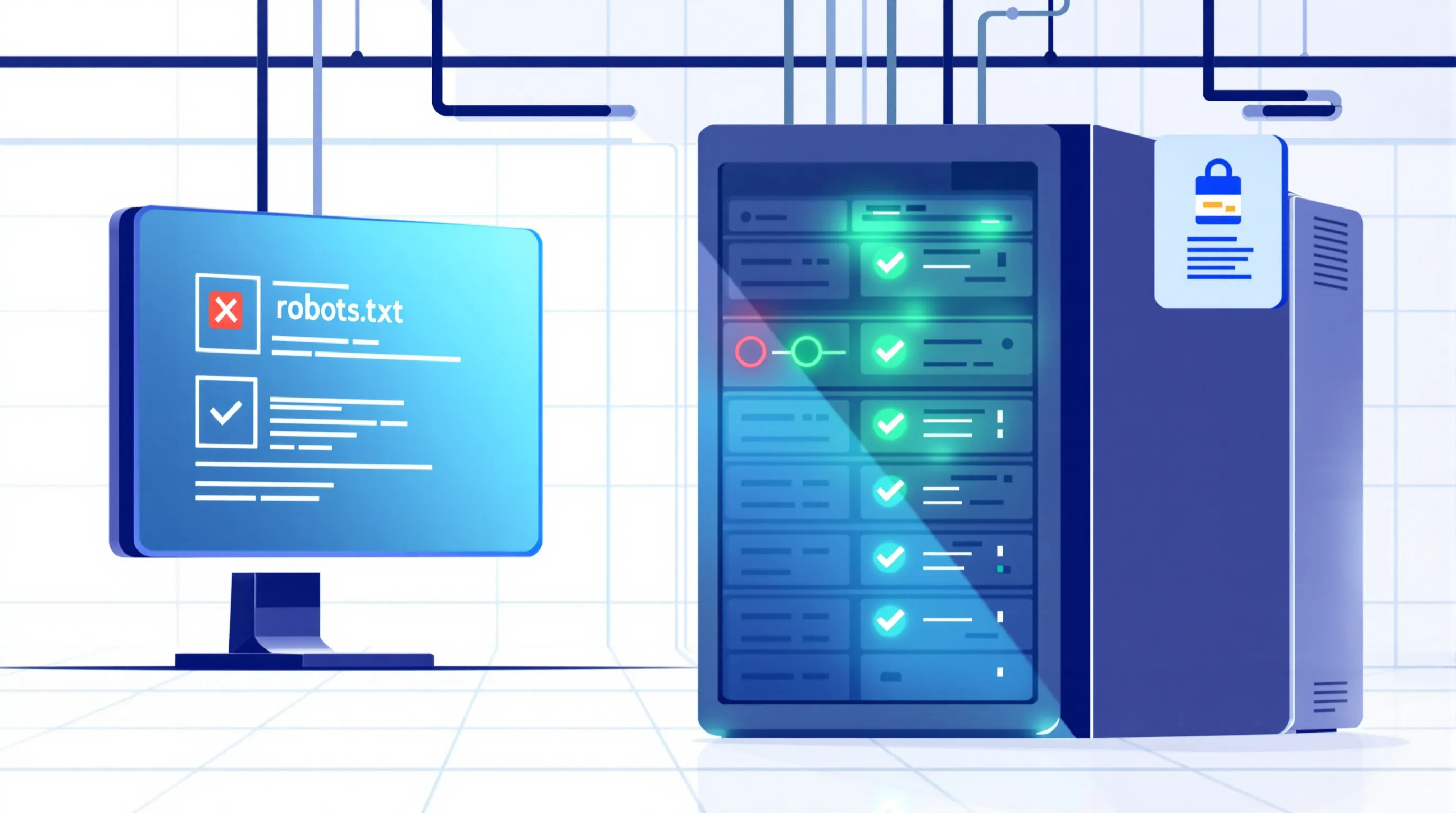
The first gate is a line in a text file. OpenAI uses separate crawlers for training and for ChatGPT search, and its documentation states: "Each setting is independent of the others." Sites opted out of OAI-SearchBot "will not be shown in ChatGPT search answers, though can still appear as navigational links." The Plus Addons, a WordPress plugin maker that offers a free crawler-control plugin, warns that blocking that bot "is the quiet way people drop out of ChatGPT's search answers while thinking they only opted out of AI training," and that SEO plugins can generate a robots.txt that overwrites manual edits.
| OpenAI agent | What it does | What it means for a new brand |
|---|---|---|
| GPTBot | Crawls content that may train OpenAI's models | Blocking it opts you out of training and leaves your ChatGPT search eligibility unchanged. |
| OAI-SearchBot | Surfaces sites in ChatGPT's search results | Blocking it keeps you out of the search answers a post-cutoff brand depends on. |
| ChatGPT-User | Fetches a page when a user action in ChatGPT triggers it | A successful fetch tells you nothing about whether OAI-SearchBot can crawl your site. |
A correct robots.txt still proves less than founders assume. Uriel Bitton, a developer who writes about SEO and AEO, lists what can block a crawler elsewhere: "a firewall rule, an edge challenge, an error, or a redirect that never reaches the intended page." He also warns: "A page opening successfully during a chat does not establish that OAI-SearchBot can crawl it." OpenAI recommends allowing requests from its published IP ranges and says search can take about 24 hours to reflect a robots.txt change. The rules shift, too: in December 2025, Search Engine Roundtable reported that OpenAI had rewritten its crawler descriptions.
Once the door is open, the competition moves somewhere founders rarely look. A Chrome extension built to log ChatGPT's searches explains: "When you ask ChatGPT a question with search enabled it transforms your prompt into multiple targeted search queries." Its developer says those queries go to Bing, which we could not confirm in OpenAI's documentation, and had to update the tool "for new format of query fan outs after ChatGPT 5." The pages that compete answer sub-queries nobody typed, and the shape of those sub-queries can change with a model release.
Many of those pages belong to someone else. The chief executive of an AI visibility software company, a former B2B tech publicist, said on a September 2026 podcast that "the citations are what informs the response," naming "user reviews," "media" and "social posts" among them. An informal March 2026 test on r/smallbusiness points the same way: of 50 local businesses checked on ChatGPT, Gemini and Perplexity, 44 were invisible, several of them on Google's first page. The six that appeared shared structured data, a maintained Google Business Profile and consistent mentions across directories, news articles and review platforms. Fifty local shops checked with unstated prompts cannot set a rule for software startups. The test does show that ranking well and being chosen can come apart.
Specific, evaluative prompts reach a brand's own pages too. On a September 2026 podcast, James Dooley, speaking for Soft Surfaces Limited, a UK 3G pitch contractor, described a Manchester head teacher feeding four bidders' quotes into ChatGPT and asking which offered the best value. By his account, ChatGPT pulled the firm's CHAS and Constructionline badges and an insurance certificate from its website, weighed its case studies, and questioned a rival offering a 10-year guarantee after four years of trading. "When we asked the head teacher, they basically said ChatGPT was the one that made the decision," Dooley said. The contract was worth £572,000. The account comes from the winning firm, which has traded for over two decades, so it shows what a pointed prompt can read on a website and says nothing about how a young brand would fare.
Founders tend to treat their absence as a memory problem, and memory is the one thing a post-cutoff brand cannot touch. The evidence points elsewhere: a door the founder controls completely, hidden sub-queries that can be studied, and pages, other people's and the founder's own, that can be improved and pitched but never commanded.
Five checks for a brand ChatGPT never learned
- Treat your robots.txt rules for OAI-SearchBot and GPTBot as two separate decisions on every hostname you use, and allow about 24 hours after a change.
- Ask whoever runs your firewall or CDN whether requests from OpenAI's published IP ranges reach your public pages. A successful fetch in a chat does not count as proof.
- Run the comparison prompt you most want to win with search on, log its sub-queries with a fan-out tracker, and ask ChatGPT to cite its sources.
- For each cited page that names rivals and leaves you out, ask what inclusion would take: a review, a directory listing, a mention.
- Put checkable proof on crawlable pages, then ask ChatGPT to choose between equal quotes from you and a larger rival, and read its reasons.
How we checked this
We used OpenAI's own crawler documentation, a news report on changes to it, two practitioner guides, a Chrome Web Store listing, two podcast interviews and three Reddit threads. This section uses none of our own figures. The founder and small-business tests are informal and self-reported, with unstated prompts. The claim that ChatGPT's searches go to Bing comes from an extension developer. The contract story comes from the winning firm. The podcast guest, the plugin maker and Mr. Bitton all sell AI visibility or crawler tools or services. We sell answer engine optimization, so we have a stake as well. Still unknown: how ChatGPT decides whether a given prompt triggers a search, and how it chooses among the pages it finds. None of our sources documents either.
- OpenAI, overview of OpenAI crawlers, retrieved October 26, 2026.
- The Plus Addons, guide to OAI-SearchBot on WordPress, July 2026.
- Uriel Bitton, OAI-SearchBot versus GPTBot on dev.to, October 2026.
- Search Engine Roundtable, report on OpenAI's crawler documentation update, December 9, 2025.
- Chrome Web Store, query fan-out tracker listing, version updated July 26, 2026.
- Uncomplicated Marketing podcast, episode transcript on AI visibility, September 2026.
- Fatrank Podcast, episode transcript on the school pitch contract, September 2026.
- r/microsaas, founder thread on startups missing from AI answers, April 2026.
- r/smallbusiness, test of 50 local businesses in AI search, March 2026.
- r/DigitalMarketing, thread on getting mentioned in ChatGPT, June 2025.

Which ChatGPT prompts trigger a web search, and which stay with incumbents?
Specific, evaluative prompts with constraints, comparisons or a current date push ChatGPT into a live search. Broad category questions get answered from memory, where incumbents already live.
Query fan-out is the step where an assistant breaks one prompt into several narrower searches before it answers. Leah Nurick, co-founder and CEO of Brandy AI, described it on the Uncomplicated Marketing podcast in September 2026 as the model taking a prompt apart to work out what the user actually wants. One Chrome extension built only to capture those sub-queries says ChatGPT "transforms your prompt into multiple targeted search queries" and sends them to Bing. Its makers had to update it for a new fan-out format after ChatGPT 5. The plumbing still moves.
That detail about Bing deserves a second look. In 2022, one search veteran put Bing at 5% market share, a small number next to Google. If that routing holds, the smaller index is where ChatGPT goes looking for sources. A startup that never checked how it shows up in Bing may have skipped the one door that opens.
So which prompts send it out? The evidence leans one way: prompts that ask the assistant to weigh, compare or check something it cannot know from memory. A contractor's own telling of a school sports pitch tender makes the point. A head teacher fed four bids into ChatGPT and asked which was the best value. The answer drew on the winning firm's accreditation badges, insurance details, case studies and comparison articles. It also caught that a rival offering a 10-year guarantee had been trading for only four years. No model's training data held that tender. The search did the work.
I read that story as the cleanest picture of what a young brand can actually win. Nobody asked the assistant to define the category. They asked it to decide.
Broad category prompts behave differently. A question like best CRM for startups needs nothing current, so the model can answer from what it already knows, and what it knows was written about Notion, HubSpot and Zapier. Retraining a model of that class was described back in 2022 as costing millions of dollars for a single run. Memory does not refresh on a startup's schedule.
Retrieval is not a free pass, either. A small-business owner on Reddit tested 50 local businesses across ChatGPT, Gemini and Perplexity in March 2026, and only 6 appeared in AI answers. Several of the invisible ones ranked on page 1 of Google and were spending "thousands per month on Google ads." So run your own page-one terms through ChatGPT before assuming they carry over. Nurick adds the harder part: in Brandy's data, "the answers are different the majority of the time, like every day." A search-triggered answer is a door that opens. It also swings shut.
For a founder, the practical work is building pages that answer those narrow follow-up searches, which is the idea behind research-driven content built on evidence. That leaves the question with money attached: given a list of prompts and a thin budget, where does an early-stage startup start?
How do I get my brand to show up in ChatGPT answers?
We have scored 11,000+ domains across 15 sectors and 28 categories. For a young brand, the rule is narrow: target prompts that force a live search, and skip head-term category questions.
Here is the order I would work in:
- List the prompts a buyer types when deciding, not learning: comparisons against a named rival, alternatives to an incumbent, questions with constraints such as team size, budget or industry, and anything carrying the current year.
- Set aside head-term prompts like best project management tool for now. Memory answers those.
- Run each target prompt in ChatGPT and Perplexity, then ask the assistant to cite its sources.
- Work your way onto the pages it names: category listicles, directories, review platforms, the forum threads that rank.
- Publish pages on your own site that answer the narrow follow-ups: pricing, alternatives, integrations, specific use cases.
- Re-run the same prompts on a fixed schedule and log which ones name you.
Steps three and four come straight from a June 2025 r/DigitalMarketing thread on getting a company into ChatGPT answers. One commenter laid out the move: after a query, ask ChatGPT to cite its sources, take the list of URLs it returns, and try to get listed on them. The same commenter called placement in the top listicles for your space "the most crucial part." Another reported brands appearing after they joined Reddit conversations that rank on Google. "It's slow-burn SEO, but it works."
The thread did not agree on everything. One marketer said clients were already getting AI traffic from ordinary SEO without doing anything extra. That can be true for a brand old enough to sit in a model's memory. A post-cutoff startup does not have that luxury.
My advice is blunt. Give the first quarter to prompts where the assistant has to go looking. A comparison against an incumbent is winnable. Put the definition prompts on a later list and test them again after each new model release.
Measure the right thing, too. One engagement at AEO Content went from a quiet site to 10 booked calls in 3 weeks. Booked calls are the number a founder can take to a board. Mentions are a means.
There is a gap I won't paper over. The evidence here does not yet measure which prompt types trigger a live search for startups in ChatGPT and Perplexity, or how long a first citation takes on a search-triggering prompt versus a definitional one. Those are the two numbers a startup should start logging from day one, prompt by prompt, so its own record answers the question.
The AEO FAQ answers cover the common setup questions. What they can't do is tell you how the model in front of your buyer behaves this month, and that is where the comparison table comes in.
What should a startup founded after the cutoff do first?
Pick the prompts where the engine has to go looking: comparisons, hard constraints, this year's questions. Memory belongs to the incumbents until the next training run, and nobody outside the lab schedules that.
The same Vasco's SEO Tips video that told the Epic Gardening story carried a warning I'd tape above any founder's desk. If there were a step-by-step method everyone could follow, the creator said, "there wouldn't be any leverage." Fair. A checklist copied by every startup in a category stops working as a checklist, because the engine has no reason to prefer one identical page over all the others saying the same thing.
So the leverage sits in specifics only you hold. "Be hyper specific because AI and prompting is hyper specific," the video put it. Your integrations. Your pricing edge. The constraint your product handles that the incumbents' pages never mention.
Open your site to the search crawler. Write the page a comparison prompt needs. Then watch which prompts start returning your name, and which stay quiet. The quiet ones show you where memory still runs the room.
Summarize This Article With AI
Open this article in your preferred AI engine for an instant summary.
Frequently Asked Questions
What else do founders ask about getting a new brand into ChatGPT?
Most follow-up questions come back to crawler access, what it proves, and what it can't. Access is one condition for a citation. It is never the citation itself.
Will allowing OAI-SearchBot get my startup cited?
Not on its own. Uriel Bitton's guide is blunt about it: "Neither an allow rule nor a successful request guarantees a citation." I treat access as the door and the page behind it as the reason anyone walks in.
ChatGPT opened my page during a chat. Can the search crawler reach it too?
You can't tell from that. ChatGPT-User is the agent OpenAI uses for requests a person starts inside a chat, a different role from automated search crawling. A firewall rule, an edge challenge or a bad redirect can still stop OAI-SearchBot while robots.txt says allow.
Does blocking OAI-SearchBot keep my site out of ChatGPT's links?
No. OpenAI's revised documentation no longer describes OAI-SearchBot as feeding the navigational links in ChatGPT answers, so blocking it does not mean you vanish from them.
Do the same robots.txt rules cover Claude?
They don't. Anthropic runs its own crawlers, ClaudeBot, Claude-User and Claude-SearchBot, each with a different role. OpenAI's bot names do nothing in a policy meant for Claude.
Does it matter if AI helped write my pages?
Less than founders fear. What gets a page picked is whether it answers the specific question a buyer asked, in plain words, with the detail the incumbents left out.
Where can I get help mapping my prompts?
Reach the AEO Content team through the contact page at aeocontent.ai/contact, and bring the questions your buyers ask before they ever book a demo.
Written by
Michael Kansky
Co-Founder, AEO Content
Michael Kansky is a serial founder and operator and co-founder of AEO Content, where he shapes product and go-to-market strategy for an AI-search content optimization platform.
Connect on LinkedIn