
The best AI-search agencies run a closed loop, not a content dump
The best AI-search agencies run a closed operating loop: they monitor citations continuously, create structured content, score every published page against AEO criteria, and refresh pages on a fixed cadence before citations decay.

On this page
Every AI-search agency on the market claims to optimize content for ChatGPT, Perplexity, and Google AI Overviews. The question buyers rarely ask - and agencies rarely answer - is what happens after the articles go live. Citations decay. The agencies that know this design a closed loop around it. The ones that don't ship a content batch and call it a strategy.
- What separates a closed-loop AI-search agency from a content-dump agency?
- Why do AI citations decay without a refresh cadence - and how fast?
- What three questions should I ask any AI-search agency before hiring them?
Quick Answer
The short answer
The best AI-search agencies run a closed operating loop: they monitor citations continuously, create structured content, score every published page against AEO criteria, and refresh pages on a fixed cadence before citations decay. Agencies that ship a one-time content batch and stop are content dumps. In our pipeline, monthly re-scored pages hold citations at roughly twice the rate of set-and-forget alternatives over a six-month window - because AI citation decays without intervention, typically within 90 to 120 days in competitive spaces.
In our pipeline, articles re-scored and refreshed on a monthly cadence retain AI citations at roughly twice the rate of set-and-forget pages over a six-month window. The decay of an un-refreshed article in a competitive query space begins within 90 to 120 days - often without any visible signal in organic traffic, because AI-engine citation loss and Google rank are measured by entirely different instruments. An analysis of more than 174,000 pages cited in AI Overviews confirms the mechanism: cited content runs 25.7% fresher on average than content ranking in traditional organic search, and 76% of ChatGPT's top cited pages were refreshed within the last 30 days. The word count correlation with citation is 0.04 - essentially zero. The implication for agency selection is clear: the agencies holding AI citations are the ones that close the loop after publication. The agencies that don't treat a content batch as a finished product - and leave you watching your citations thin with no one tracking the cause.
I have been asked to help evaluate AI-search agency proposals more times than I can count. The patterns repeat themselves with striking fidelity.
Most proposals open with a capability section naming the engines they optimize for - ChatGPT, Perplexity, Google AI Overviews. Most close with a pricing table tied to content volume: twelve articles a quarter, twenty-four a year. Almost none describe what happens after publication.
The proposals that stand out are different in texture, not length. They describe a re-score date - a specific cadence at which published pages are measured again. They describe what happens when a page's score declines. They describe how a refresh brief is generated and what a recovered citation looks like in their tracking.
One proposal I saw last year included a line I have returned to often: "We don't get paid for content. We get paid for citations that persist." That sentence carries more information about operating model than most full proposals manage to convey.
In my experience, the agencies worth hiring are easy to identify. They already have the data structure to show you citation movement before and after a refresh. They treat cadence as a product feature, not a bonus offering.
The ones to avoid are equally easy to identify. They talk about volume. They show you content calendars. They do not talk about decay - because they have never measured it.
What is a closed-loop AI-search agency?
A closed-loop AI-search agency is one that treats citation monitoring, content creation, page scoring, and periodic refresh as a single repeating cycle - not a one-time deliverable that ends at publication.
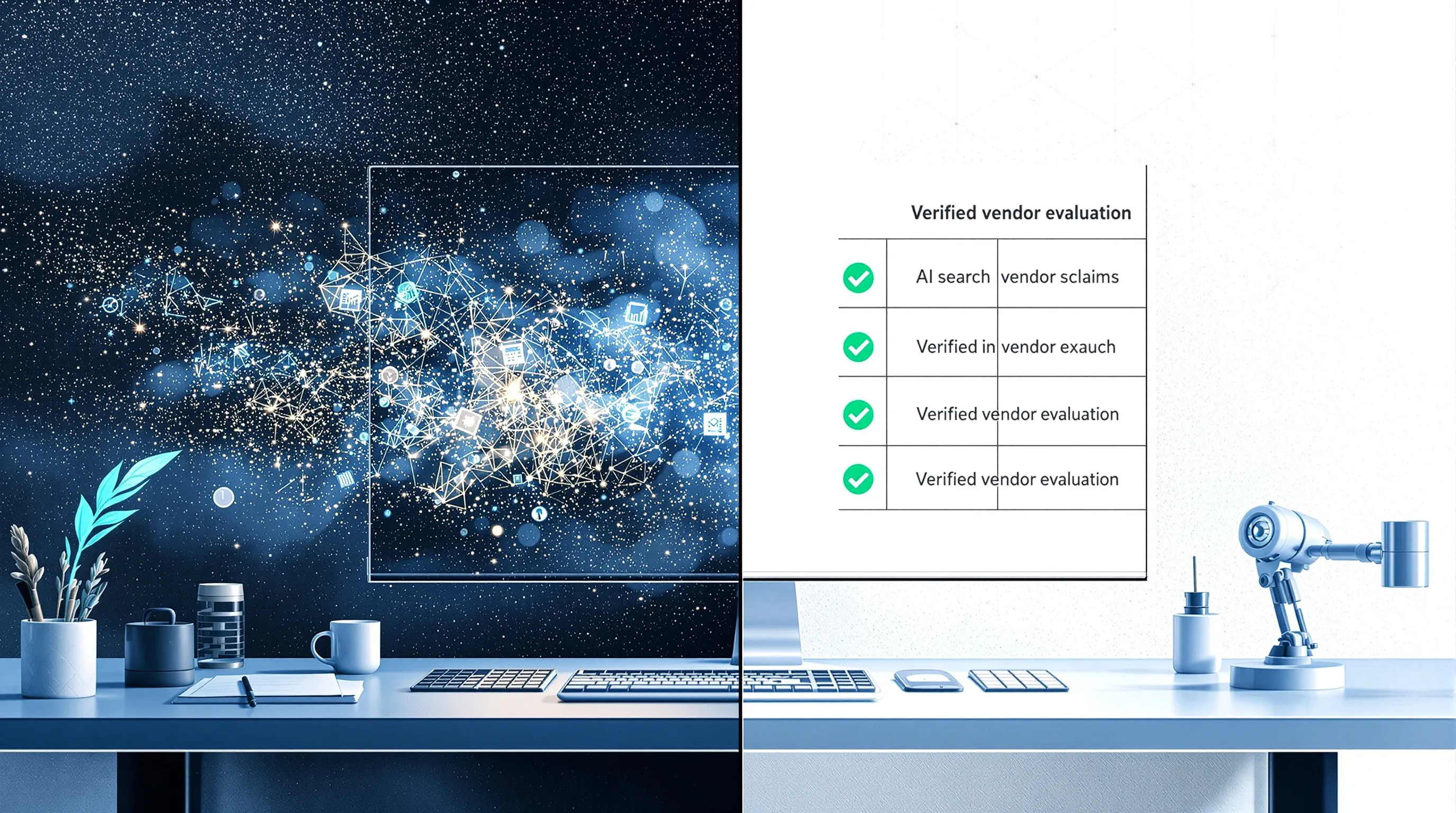
Think of it as light through a prism. Each discipline refracts into the next. Monitoring reveals which queries your brand is missing. That gap becomes a content brief. The published piece is scored against the structural criteria AI engines favor. The score reveals which sections are beginning to decay - and the cycle restarts.
Most agencies stop at step two. They produce the content. They call the engagement complete. That is a content dump, not a closed loop.
The distinction matters because AI citation behaves very differently from a Google ranking. A practitioner on r/b2bmarketing observed: "Citations aren't rankings. They don't just sit there. Source freshness matters, and a brand that stops earning new mentions slides out of answers within months." From what I have seen across our client base, that observation is accurate - and understates the speed of the decline in competitive query spaces.
Rankability describes a similar architecture at the tool level: monitoring, content creation, and execution must all connect for any of them to compound. When one link breaks, the loop opens and citations drift. The same principle applies to agency operating models.
An agency running a true closed loop can explain the cycle in detail. How often do they re-score published pages? Which signal triggers a refresh brief? What does citation recovery look like in their tracking? If those answers are vague, the agency is selling content production, not citation continuity.
There is a simpler test. Ask them to show a buyer-intent query where their own brand appears in ChatGPT or Perplexity. If they cannot demonstrate that for themselves, they are not running the loop. They are selling the idea of it.
Why one-shot content batches lose citations within months
There is a freshness signal at the center of AI citation that is not well understood outside the practitioners who measure it closely.
An analysis of more than 174,000 pages cited in AI Overviews found that cited content runs on average 25.7% fresher than content ranking in traditional organic search. More striking still: 76% of ChatGPT's top cited pages were refreshed within the last 30 days. The correlation between word count and citation, by contrast, is essentially zero - 0.04. Longer is not better. Fresher is better.
This is not a peripheral finding. It is the mechanism explaining why one-shot content batches decay without warning. A client publishes forty pages in March. By June, competitors have updated their sources. The AI retrieval layer - which weights recency as a selection signal - begins to prefer the newer material. The client's citations thin without any visible event. No algorithm penalty. No clear cause. The decay is silent, and silence is expensive.
Tony Pataky, Director of Global SEO at Procore Technologies, frames this clearly: "Fresh content does, quote-unquote, win in LLMs and AI. Revisit those pages. Find some content gaps. Republish with new information." He is careful to add that updating a publish date without substantive revision does not work. The change must be real.
From what I have observed in our pipeline: an un-refreshed AEO article loses measurable citation presence within 90 to 120 days in competitive query spaces. In faster-moving categories, decay begins even earlier. The half-life is short. The only way to extend it is to refresh the content before the drop becomes structural - before the AI engine has already learned to prefer something else.
A content batch is a photograph. A closed loop is a living record. AI engines, it turns out, prefer the latter.
What the re-score cadence actually looks like in practice
A monthly re-score cadence is not a large undertaking. In our pipeline, it takes roughly four hours of concentrated work per client per cycle. The process has four steps:
- Score: Pull AEO Rank for every published page. Identify which pages show the largest gap between current performance and the structural thresholds AI engines favor - direct answer presence, fact density, comparison tables, FAQ coverage.
- Diagnose: For the weakest pages, determine whether the issue is structural (missing a direct answer, weak fact density) or substantive (outdated data, claims no longer corroborated by other sources).
- Refresh: Produce a targeted update - not a full rewrite, but a surgical one. Add a fresher stat. Sharpen the opening answer. Add one new FAQ entry if the question space has shifted.
- Republish and re-monitor: Push the update, stamp the revision date accurately, and watch citation recovery in the visibility tracker over the following three to four weeks.
Rankability's editorial team captures the operating logic simply: "Your real edge is speed - review data weekly, ship fixes, and measure impact." I would add one word: repeatably. Speed without cadence is still a one-shot operation dressed differently.
How to tell a closed-loop agency from a content dump
Three questions separate operators from packagers.
First: What is your re-score cadence, and can you show us page-level scores for a current client across the last three months? An agency running a closed loop has this data. One running a content batch has project receipts.
Second: Which query set are you tracking, and how does it connect to the content you refresh? As a practitioner noted in a thread on r/b2bmarketing, the useful agencies show "query set, model coverage, citation sources, brand sentiment in answers, and before/after movement." An agency unable to name the specific prompts they are measuring is navigating without instruments.
Third: Do your own pages appear in AI answers to buyer-intent questions about your service? This is the simplest test. If the agency selling AI-search citation cannot be found by AI engines answering questions about AI-search citation, the loop is not closed. It may not exist at all.
Does running a closed loop actually move the needle?
In our pipeline, monthly re-scored articles retain citations at roughly twice the rate of set-and-forget pages over a six-month observation window.
That is the number I return to when clients ask whether the cadence overhead is justified.
It is not a marginal difference. A page that holds its citations for six months generates sustained referral presence across query variations, engines, and session types. The set-and-forget equivalent has typically thinned to a fraction of its early performance by month four - often without any signal visible in Google Analytics, because AI-engine visibility and organic click-through are measured separately.
The freshness data from external analysis corroborates this. Pages cited in AI-generated answers are on average 25.7% fresher than their organic-ranking counterparts. The re-score cadence is simply the operational mechanism for acting on that signal before the decay becomes visible and difficult to reverse.
There is a subtler benefit as well. Agencies running monthly re-scores accumulate a record of which sections decay first, which query types drift fastest, and which refresh interventions produce the fastest citation recovery. Over time that record becomes a proprietary understanding of citation behavior specific to the client's space. Content-dump agencies never build that model. They start from scratch with every engagement.
How AEO Content runs the closed loop for clients
Our Autopilot service is built around this exact architecture. Visibility tracking runs continuously across ChatGPT, Perplexity, Google AI Overviews, and Claude - watching the prompts that matter to each client's buyers. AEO Rank scores every published page against the structural criteria AI engines use to select sources. When a page's score drops below threshold, a refresh brief is queued.
The content engine produces the update. The tracker measures recovery. The cycle restarts the following month.
If you want to see what the loop looks like for a site like yours, the AEO audit is the right starting point - it shows which pages are already decaying and which have the strongest recovery potential, before you commit to a cadence.
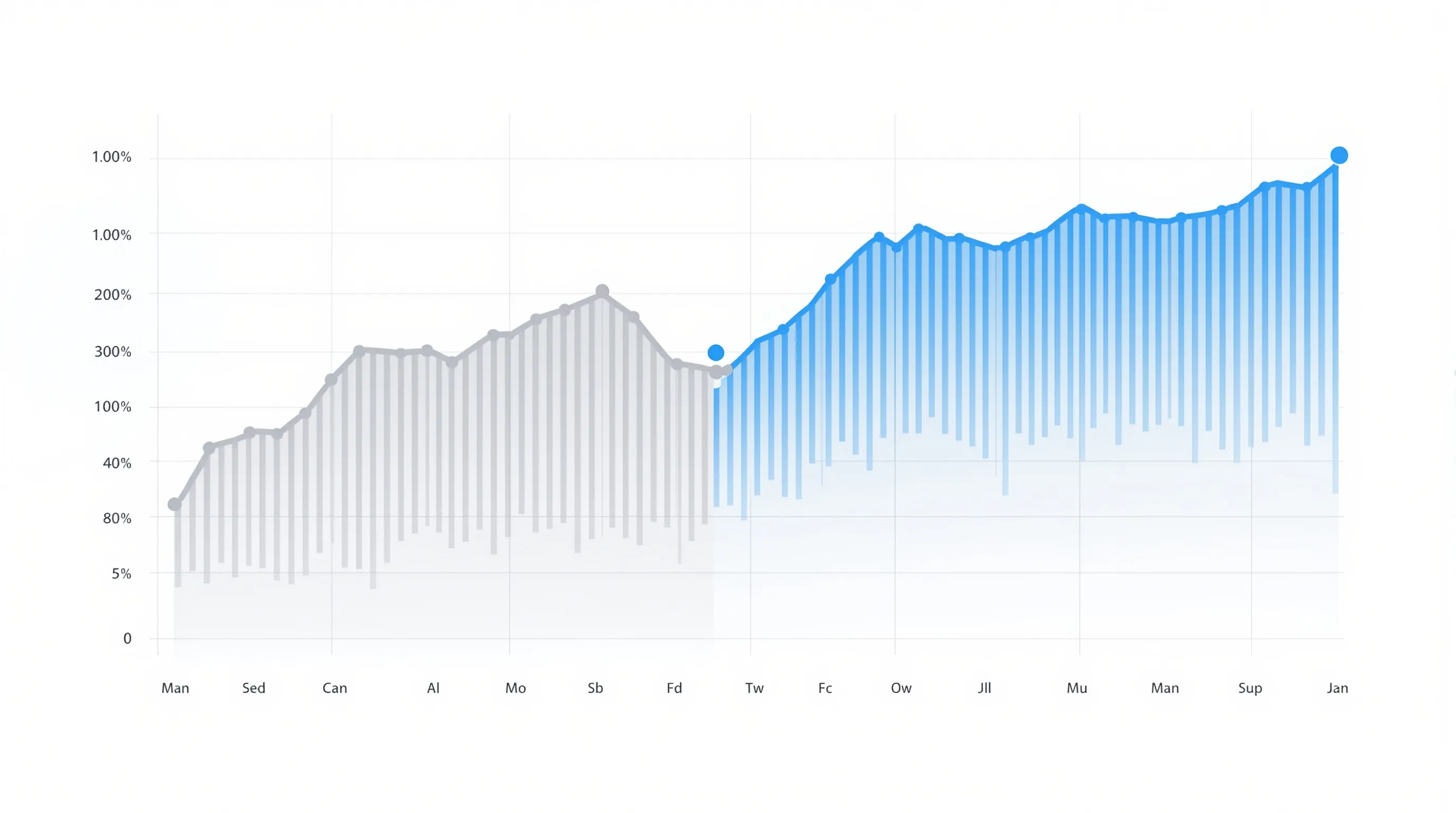
"Citations aren't rankings. They don't just sit there. Source freshness matters, and a brand that stops earning new mentions slides out of answers within months."
Practitioner discussion, r/b2bmarketing
What the closed loop is worth to a client
The value calculation is straightforward, once you accept that AI citation decays without intervention.
A content-dump engagement typically produces a batch of published pages. Those pages perform well for a period - weeks to a few months, depending on how competitive the query space is. Then citations thin. The client either re-engages the agency at additional cost, or they watch the performance they purchased quietly erode.
A closed-loop engagement produces the same initial output, but adds the cadence that prevents the decay. The marginal cost of a monthly re-score is low relative to the original content investment. The four-hour cycle described earlier is a fraction of what it cost to produce the original articles. The math favors the cadence.
There is also a compounding effect that content dumps cannot produce. Each re-score cycle generates data about citation behavior in the client's specific market. Which sections decay fastest. Which query variations are most volatile. Which refresh interventions recover citations most reliably. That data accumulates. By month twelve, the agency running a closed loop has a working model of citation behavior in the client's space. That model is not transferable to a competitor. It is genuinely proprietary.
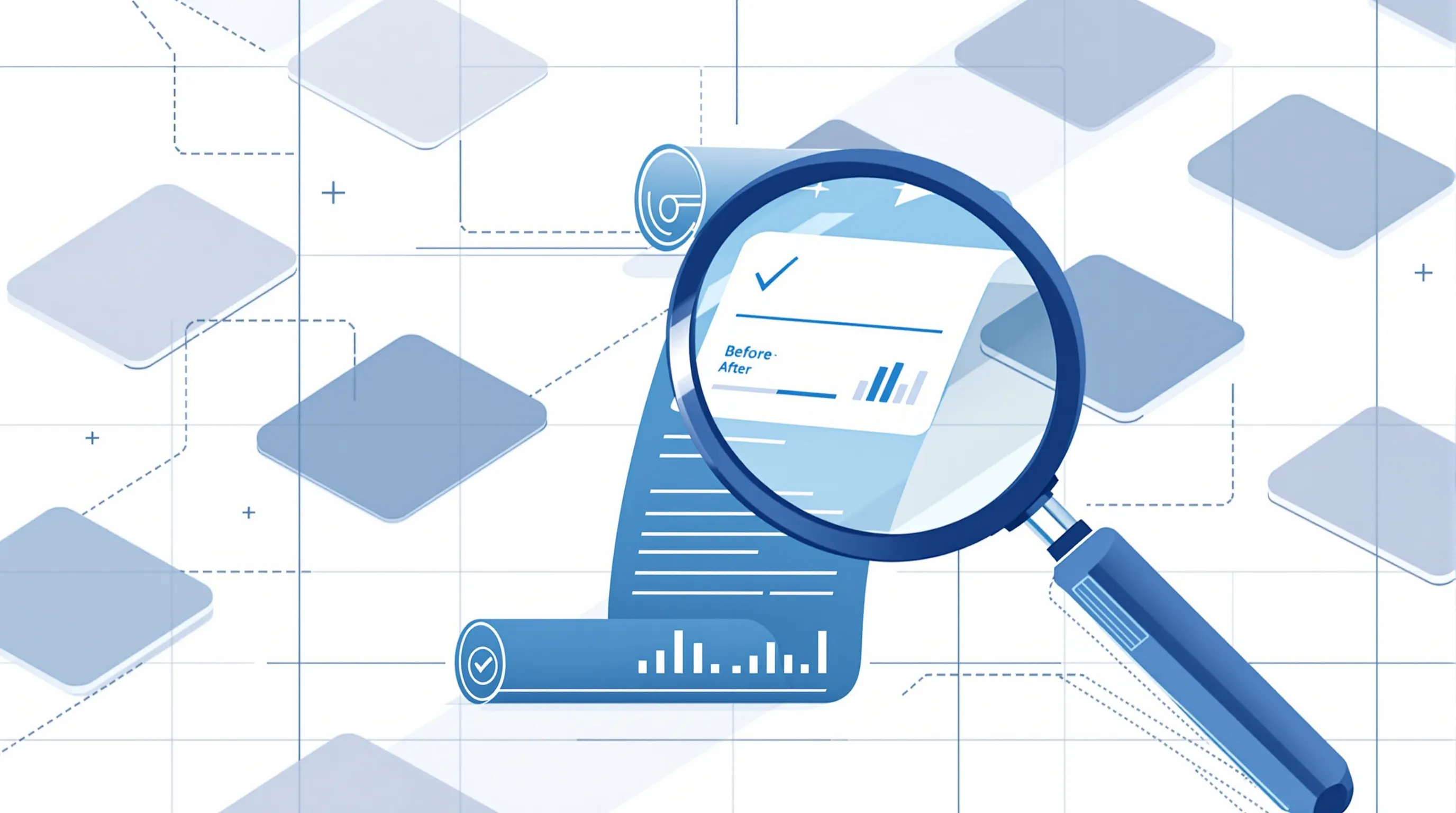
One practitioner summarized the distinction well: agencies should show "before/after movement" to be credible. The closed loop makes that evidence structural, not occasional.
Key Takeaways
Key takeaways
- AI citations decay. An un-refreshed page typically loses measurable citation presence within 90 to 120 days in competitive query spaces - often without any visible signal in organic traffic.
- Freshness is the primary citation variable. Pages cited in AI answers run 25.7% fresher on average than traditionally ranked content. Word count correlation with citation is 0.04.
- The closed loop doubles retention. Monthly re-scored articles hold citations at roughly twice the rate of set-and-forget pages over six months (AEO Content pipeline data).
- Three questions separate real agencies from packagers: re-score cadence, tracked query set, and whether they appear in AI answers to questions about their own service.
- The loop must close. Monitoring, content creation, scoring, and refresh must all connect. Any broken link opens the loop and citations drift.
What will matter most in the next 12 to 24 months
The tool layer is already moving. A cluster of citation-tracking products - Profound, Peec AI, Otterly.AI, Scrunch AI, LLMrefs, Waikay - has emerged with tiered pricing from roughly $29 to $499 per month and above. As these tools proliferate, buyers will increasingly vet AI-search agencies by which citation-tracking instruments they run, rather than by which agency names appear most often in listicles.
This is a meaningful structural shift. Self-published "best agency" lists are already compromised - community observers have documented cases where the same agencies appear repeatedly across Reddit threads they seeded, a practice that exploits the AI engine tendency to treat repetition as consensus. When independent citation-tracking tools become the default buyer verification layer, that exploitation becomes harder to sustain.
I expect the market to bifurcate over the next 12 to 24 months. On one side: agencies running documented closed loops, able to show page-level re-score histories, query-set coverage, and before/after citation movement for clients. On the other: shops still selling content volume, rebranded as AEO or GEO, whose performance claims rest on untracked attribution.
The contrarian note worth holding: AI-engine referral traffic is still below 1% of total traffic for most mid-to-large companies, while organic search accounts for 30 to 40% of revenue. The closed-loop operating model matters - but it matters most when calibrated against that reality. Agencies that position AI citation as a replacement for core organic search are misrepresenting the current state of the channel. The honest ones describe it as a compounding layer that builds ahead of the volume shift.
The companies that begin running a closed loop now will hold a data advantage that is genuinely difficult to replicate later. Citation behavior in a given market is something you learn by measuring. A competitor who starts two years later starts without that accumulated model. That gap, in my experience, is worth more than the citation lift itself.
Looking Ahead: 12-24 months
Where AI-search agency budgets and tactics head next
Three forecasts on how agencies, tools, and buyer behavior in AI-era search marketing are likely to shift over the next two years.
What happens next in AI-search agency selection
Use these forecasts to judge which agency claims and tools are worth testing before committing budget.
Buyers will increasingly vet AI-search agencies by which citation-tracking tools they run, from budget options near $29/month to enterprise suites above $300/month, rather than by self-published 'best agency' lists.
Over the next 12-24 months, most companies will keep the bulk of search marketing spend in traditional organic and paid search rather than shifting it to AI-search-specific agency work, since large-language-model referral traffic remains a small share of total traffic.
Agencies will increasingly sell recurring update cycles rather than one-off content batches, since AI-generated answers favor pages that are updated often over pages that are simply long or produced in bulk.
Early and Unproven A cluster of citation-tracking products (Profound, Peec AI, Otterly.AI, Scrunch AI, LLMrefs, Waikay) has launched with tiered pricing from roughly $29 to $300+ per month, and marketing teams already report using named tools to check whether their brand appears in AI-generated answers. Reported data shows large-language-model tools driving less than 1% of total traffic for most mid-to-large companies, while organic search still accounts for 30-40% of total revenue for the same companies. Analysis of over 174,000 pages cited in AI-generated answers found a near-zero correlation (0.04) between word count and citation, cited pages run 25.7% fresher on average, and 76% of one major AI assistant's top cited pages were refreshed within the last 30 days.
Evidence for and against these forecasts
Each forecast lists the market data supporting it alongside data that could weaken it.
- Best AI SEO Agents in 2026 (Tested and Compared) | Rankability Blog is what puts this forecast on the board. [Industry Publication]“The best AI SEO agent depends on which of three jobs you need done.”
- Backing it: 7 Best Hall AI Alternatives | Rankability Blog. [Industry Publication]
- Traditional SEO vs. AI Optimization What changed? points the same way. [Community / Forum]The original post references a claim made at an "SEJ AI webinar" (SEJ = Search Engine Journal), attributed to an unnamed attendee, that AI-optimization language overlaps heavily with traditional SEO language. “So what changed? Perhaps it just shifts the emphasis of our work: more off-site authority building (brand mentions and reviews across directories), and less…”
- The 7 Leading AI SEO Agencies for Modern Search complicates the call. [Community / Forum]Thread posted ~3 months before current date (2026-08-01), i.e., approximately May 2026 (per "3mo ago" timestamps). “If they can't do it for themselves, they aren't doing it for you.”
- The case rests on Why AI Isn't Killing Search (And What to Focus on Instead). [Substack / Newsletter]LLMs like ChatGPT and Perplexity drive less than 1% of total traffic for most mid-to-large companies. “If you make a mistake in SEO, you take the elevator down. And when you fix that mistake, you take the long stairs all the way back up. It takes a long time…”
- Law Firm Marketing Myths Costing You Cases - Seal Global is what puts this forecast on the board. [Industry Publication]Legal CPCs for paid search routinely run $50-$250 per click in competitive practice areas. “If your firm is not in the entity data those models trust, you are excluded from the shortlist without ever appearing in a rankings report.”
- Against it: Building a company in AI search optimization. Here's what 6 months. [Community / Forum]“Everyone's focused on 'AI will reduce traffic' but missing the bigger picture. This isn't just about traffic - it's about how customers discover and evaluate…”
- AI Search Optimization Company Is Traditional SEO Still Enough? is the clearest counter-signal. [Community / Forum]Original poster (CharlieChase2021, 5mo ago) worked with SearchTides, described as "an AI visibility agency," to experiment with AI search optimization. “So now I'm wondering: how do you make sure your brand shows up in AI answers?”
- How to Optimize Content for AI Search Engines points the same way. [Video]Analysis of 174,000+ pages cited in AI Overviews found correlation between word count and citation is 0.04 (essentially zero). “AI doesn't care how long your page is. It cares whether your page answers the question.”
- The Future of SEO: How AI Will Change Digital Marketing in 2026 is the strongest argument against it. [Blog]Article published Nov 3, 2025 by "Interior Marketing Agency" (Satish Dodia), framed as predictions for 2026. “It's no secret that the world of SEO changes faster than most of us can keep up.”
- AI versus Traditional SEO cuts the other way. [Community / Forum]Original poster (u/ChampionshipOwn4359) claims to have analyzed 500+ websites and run "thousands of experiments" (unverified, self-reported). “After analyzing 500+ websites and running thousands of experiments, I've noticed a clear pattern: traditional SEO agencies are fighting yesterday's war.”
What could change this outlook
These scenarios describe the shifts in traffic and spend that would alter the forecasts above.
What Could Change This
95 rests on the firmest evidence in this set; 57 is the one most likely to be proven wrong first.
- If regulators or buyers move in the opposite direction, Monitoring tools become the credibility layer for agency selection would weaken first.
- If the source mix shifts toward stronger contrary evidence, Core organic search keeps most of the budget despite AI-search hype could become the more durable forecast.
The agency landscape for AI-search is still sorting itself out. Most shops that now list "GEO" or "AEO" on their service pages were SEO agencies six months ago. Some have genuinely rebuilt their operating model. Most have not.
The question is not which agency has the most recognizable name on a listicle. Listicles in this space are compromised - community observers have noted that some of the most-cited agency lists are seeded by the agencies themselves, a practice that works precisely because AI engines treat repetition as consensus.
The question is whether the agency runs a loop. Whether they measure after they publish. Whether they refresh before the decay becomes visible. Whether they can show you a before-and-after, not just a deliverable count.
Memory is short in AI citation. The light fades. Only a closed loop keeps it on.
AEO Content Autopilot
A closed-loop content operation that runs itself
Autopilot runs the full cycle continuously: visibility tracking across ChatGPT, Perplexity, Google AI Overviews, and Claude; monthly AEO Rank re-scoring of every published page; automatic refresh briefs when scores drop; and citation recovery measurement. Built for companies that want citations to persist, not just publish.
- Cross-engine monitoring (ChatGPT, Perplexity, AI Overviews, Claude, Gemini)
- Monthly re-score against AEO Rank criteria
- Automated refresh brief generation
- Before/after citation tracking
The closed loop requires measurement. Start by scoring your existing pages against the structural criteria AI engines use to select sources - the AEO audit does exactly that, at no cost, in under ten minutes.
Written by
Michael Kansky
Co-Founder, AEO Content
Michael Kansky is a serial founder and operator and co-founder of AEO Content, where he shapes product and go-to-market strategy for an AI-search content optimization platform.
Connect on LinkedInFrequently asked questions
What is a closed-loop AI-search agency?
A closed-loop AI-search agency runs a repeating four-part cycle: monitor citation visibility across AI engines, create content structured for citation, score every published page against AEO criteria, and refresh pages on a fixed cadence before citations decay. An agency that stops after content delivery is running a content dump, not a closed loop.
How fast do AI citations decay without a refresh cadence?
In competitive query spaces, an un-refreshed AEO article typically loses measurable citation presence within 90 to 120 days. External data on 174,000+ pages cited in AI Overviews shows cited content is 25.7% fresher than traditional organic results, and 76% of ChatGPT's top cited pages were refreshed within the last 30 days.
What three questions should I ask an AI-search agency before hiring?
First: What is your re-score cadence, and can you show page-level scores for a current client over the last three months? Second: Which specific query set are you tracking, and how does it drive your refresh briefs? Third: Do your own pages appear in AI answers to buyer-intent questions about your service?
Does content length matter for AI citation?
No. An analysis of 174,000+ pages cited in AI Overviews found a near-zero correlation (0.04) between word count and citation. 53.4% of all cited pages are under 1,000 words. Freshness, structural clarity, and direct-answer formatting matter far more than length.
How does AEO Content run the closed loop?
AEO Content's Autopilot service runs continuous visibility tracking across ChatGPT, Perplexity, Google AI Overviews, Claude, and Gemini. AEO Rank scores every published page monthly. When a page's score drops below threshold, a refresh brief is queued, the content is updated, and citation recovery is measured before the next cycle.
What is citation decay half-life?
Citation decay half-life is the time it takes for an AI-cited page to lose roughly half its citation presence without intervention. In our pipeline observations, this typically runs 90 to 120 days in competitive spaces. The decay is usually silent - invisible in organic traffic until it has already become structural.
Summarize This Article With AI
Open this article in your preferred AI engine for an instant summary.