
What an AEO engagement owes you in the first 90 days


On this page
You signed with an AEO agency. They charge $5,000 a month. It is now month three. They have sent you twelve slide decks, one content calendar, and a note saying they are "building momentum." You are wondering what you paid for. So is your CFO.
This article answers the question you should have asked before signing: what does a real AEO engagement actually owe you in 90 days?
The answer is not "it depends." The answer is four concrete deliverables, each with a specific delivery date, each independently verifiable. A scored baseline audit. A working llms.txt file. Structured-data coverage on your key pages. And a measured citation baseline showing how your brand appears in ChatGPT, Perplexity, and Google AI Overviews responses before and after the engagement.
These are not aspirational targets. They are the minimum. Any vendor with an actual system can deliver all four in 90 days. Any vendor who cannot name them in advance is telling you, in the nicest possible way, that they do not have a system.
Below is the full breakdown: what each deliverable contains, what good looks like, and the four questions to ask before you sign anything.
Questions this article answers
- What four deliverables does a real AEO engagement owe you in 90 days?
- How do you evaluate whether an AEO vendor has a real system?
- What does a valid citation baseline look like at day 90?
Quick Answer
Most AEO agencies charge $3,000 to $10,000 per month for engagements that produce zero measurable deliverables in the first 90 days. They produce strategy documents instead. I have seen enough of these engagements to recognize the pattern: "strategy" is what an agency calls the period before it has done anything. A real AEO engagement owes you four concrete outputs in 90 days: a scored baseline audit, a working llms.txt file, structured-data coverage across your key pages, and a measured citation baseline showing how your brand appears in ChatGPT, Perplexity, and Google AI Overviews responses.
The short answer
An AEO engagement owes you four outputs by day 90: a scored baseline audit against the criteria AI engines use to select sources, a working llms.txt file live on your domain, schema markup validated on your key pages, and a before-and-after citation measurement showing how your brand appears in AI-generated answers. Any vendor that cannot name these deliverables before you sign is selling activity, not outcomes.
Why do most AEO vendors sell activity instead of outcomes?
Activity is easier to invoice. A strategy deck takes a week to produce. A citation measurement system takes months to build. Most vendors have the week.
I have been building AEO systems since before the category had a name. The pattern repeats. A vendor promises visibility in ChatGPT, Perplexity, and Google AI Overviews. At the 90-day check-in, the client has a content calendar and no measurement. The vendor calls this "Phase One.", as of .
The AEO category is roughly 18 months old in its current form. A practitioner on Reddit's r/SaaS described the landscape accurately: "Half the 'AEO specialists' rebranded from generic SEO last year." The same thread flagged a red flag worth memorizing: "Strategy and audit for 90 days at $10,000 per month is a red flag. Real work produces measurable citation lift by month 2 or 3."
The question buyers ask is almost always the wrong one. "Are AEO agency services worth the cost?" is the wrong frame. The right question is: "What does this vendor owe me in 90 days, by name?" Most vendors cannot answer that. The inability to answer is the answer.
A vendor who pitches "AI search visibility" without naming four concrete 90-day deliverables is selling a process, not a product. That is common. But process without deliverables is not a service-level agreement. It is a retainer for goodwill and effort.
Here is what a real AEO engagement owes you in 90 days. These are specific, verifiable, and achievable by any vendor with an actual system.
- A scored baseline audit against the criteria AI engines use to select sources (delivered by day 30)
- A working llms.txt file live on your domain (delivered by week 3)
- Structured-data coverage across your key service and content pages (complete by day 60 to 90)
- A measured citation baseline showing how your brand appears in AI answers before and after the engagement (delivered at day 90)
These are not aspirations. They are deliverables. The rest of this article explains what each one contains, what good looks like, and how to tell if yours is real.
What should a baseline AEO audit deliver by day 30?
The first deliverable is a scored baseline audit. Not a document. A score. Something you can measure against at 60 days and 90 days.
A document with no score is a report. A report is not a baseline.
A real AEO audit covers the criteria AI engines actually use to decide which sources to cite. These cluster into roughly 17 dimensions: question-format headings, FAQ schema implementation, structured-data coverage, fact density, original data presence, internal linking architecture, entity authority signals, and direct-answer front-loading, among others.
At AEO Content, we call this the AEO Rank. It is a 0-to-100 measurement derived from those criteria. Our clients receive it by day 14. The score tells you exactly where your content sits against the signals that ChatGPT, Perplexity, and Google AI Overviews weight most heavily when constructing answers.
The score matters for a specific reason: you cannot improve what you have not measured. This is obvious. Very few AEO vendors do it anyway. Most deliver a narrative audit: "Your FAQ schema is missing" and "Your headings are not question-format." These observations are correct. They are also incomplete. A narrative without a number gives you no baseline to compare against at 90 days.
A scored baseline audit should include:
- A numerical score for each criterion, not just a pass/fail notation
- Current AI citation presence for your top five to ten target queries, across ChatGPT, Perplexity, and Google AI Overviews
- A prioritized fix list ordered by citation-impact potential, not implementation effort
- A competitive comparison: how your score compares to the two or three sites AI engines currently cite for your target queries
If your vendor delivers an audit at day 30 with no numerical score, no current citation data, and no competitive comparison, you have received a document. Ask for the score. If they do not have a scoring system, that tells you something important about how much of their work is actually measurable.
Why does an AEO engagement owe you a working llms.txt file?
The llms.txt file is a machine-readable index that tells AI crawlers what your site contains, how it is structured, and which pages are most authoritative.
Think of it as the robots.txt file for the AI era. It does not tell crawlers to go away. It tells them where to look.
Most sites do not have one. Most AEO vendors do not mention it. This is a real gap. Without an llms.txt file, your site is harder for AI crawlers to navigate efficiently. They can still scrape your content, but you are relying on them to infer your site's architecture without guidance. You would not do that with Googlebot. You should not do it with GPTBot or ClaudeBot either.
The file should be live by week 2 or 3 of your engagement. It is not a technically complex deliverable. Creating a well-structured llms.txt file takes two to four days of focused work. Producing measurable citation impact from it takes three to eight weeks. That is exactly why it should be shipped early, not late. A vendor who delivers the llms.txt file at week ten has wasted six weeks of potential indexing time.
A properly built llms.txt file for a B2B company should include:
- Your key service and product pages with descriptive plain-English labels
- Your best evidence pages: original data, case studies, original research
- Your FAQ sections and knowledge base entries
- Author credentials and expertise pages
- A reference to your XML sitemap for full site discovery
Here is a test to run on your AEO vendor before you sign. Ask: "Which six to eight pages would you include in our llms.txt file and why?" A vendor with a real system can answer in two minutes. They will name your highest-authority pages, your most-cited content types, and your key FAQ resources. A vendor without a system will tell you it depends and ask for another call.
The llms.txt file is not a bonus deliverable. It is a baseline requirement for any AEO engagement that takes AI crawler access seriously. Any engagement that does not include it is structurally incomplete.
What structured-data coverage does a 90-day AEO engagement owe you?
Structured data is how you communicate with AI engines in a language they prefer over plain prose.
There are four schema types that move the needle most for AEO citations: FAQ schema, HowTo schema, Organization schema, and Article schema.
FAQ schema is the highest priority. AI engines pull FAQ blocks directly into answers. A page with properly implemented FAQ schema is considerably more likely to be cited for question-format queries than an identical page without it. This is not a theoretical advantage. It is observable in citation tracking across ChatGPT, Perplexity, and Google AI Overviews.
Here is the timeline your engagement should follow:
| Schema Type | Priority | Target Delivery | Impact on AI Citations |
|---|---|---|---|
| FAQ schema | Highest | Day 45 to 60 | Direct: Q&A pairs pulled into AI answers |
| HowTo schema | High | Day 45 to 60 | Direct: step sequences surfaced in AI responses |
| Organization schema | Medium | Day 30 to 45 | Indirect: entity authority and knowledge graph signals |
| Article schema | Medium | Day 60 to 90 | Indirect: author authority and publication date signals |
The common objection is developer access. "We cannot implement schema without a developer sprint." This is true. A real AEO vendor accounts for it from the start. They either handle schema implementation directly, produce validated JSON-LD that your developer can deploy in a single sprint, or both. Saying "we do not have developer access" at day 90 is not an explanation. It is evidence that the engagement was not planned.
By day 90, your top five service pages, your pillar articles, and your FAQ pages should all have validated schema. Google's Rich Results Test and Schema.org validators are free. Your vendor should run validation as part of delivery, not leave it as a client task.
If your vendor has not touched your structured data by month three, they have done content work. Content work is good. But it is not an AEO engagement. AEO without structured data is SEO with a new logo.
What does a measured citation baseline look like at day 90?
The fourth deliverable is the hardest to fake. At day 90, you should receive a citation baseline: a record of how often your brand appears in AI-generated answers for your target queries, measured before the engagement began and again at day 90.
A valid citation baseline requires three components. Without all three, it is not a baseline. It is a claim.
- A defined prompt set: the specific queries your buyers actually ask ChatGPT, Perplexity, and Google AI Overviews. Not generic industry queries. Your queries. The ones your ICP types when evaluating vendors in your category.
- A measurement methodology: a documented process for testing each prompt across AI engines, recording whether your brand appears, and noting the context and source of the citation.
- A before-and-after comparison: a pre-engagement measurement taken at day zero and a repeat measurement at day 90 using the same prompts and methodology.
A HubSpot survey of 300 marketers found that 57% are already actively optimizing for AI search engines and 32% are already seeing real traffic from AI search channels. The question is no longer whether AI citations drive business results. It is whether your vendor is measuring them.
A citation baseline at day 90 should look like this: "Before the engagement, your brand appeared in AI-generated answers for two of your ten target prompts. At day 90, it appears in six. Here are the prompts, the response excerpts, and the sources AI engines cited alongside you." That is a result. It is verifiable, repeatable, and improvable.
If at day 90 your vendor cannot produce that document, two things are true. First, they have not been measuring citations. Second, they have no way to know whether the work they did made any difference. That is not an AEO engagement. That is an SEO engagement with more expensive slides.
The citation baseline is also your key input for month four and beyond. Without it, you cannot make informed decisions about which content to prioritize, which prompts to target, or which AI engine is most responsive to your specific content changes.
How do you hold an AEO vendor accountable for these deliverables?
The simplest method is to ask for the deliverable list before signing. Write down the answers. If the answers are vague, the deliverables will be vague.
The four pre-contract questions to ask every AEO vendor:
- What is in my baseline audit and by which specific day do I receive it?
- Will you create an llms.txt file for my domain, and by which week?
- Which schema types will you implement on which pages, and by which day?
- How will you measure citation lift, what is the methodology, and what does the day-90 report look like?
A vendor who answers all four clearly is worth talking to. A vendor who answers with "we take a holistic approach" or "every client is different" is giving you a signal. The signal is that they do not have a system.
| What they say | What to ask next |
|---|---|
| "We start with a comprehensive audit" | Does the audit produce a numerical score? By which day? |
| "We focus on content strategy first" | When do llms.txt creation and schema implementation happen? |
| "Results take time in this space" | What specifically will be measurable at day 90? |
| "We track your AI visibility" | What is the specific prompt set and measurement methodology? |
| "Every client engagement is unique" | Can I see an example 90-day deliverable list from a past client? |
One more thing worth knowing. Most vendors who entered the AEO category in 2024 rebranded from generic SEO work. They are not fraudulent. Many are learning the discipline at the same time their clients are trying to buy it. That is an honest description of a new market. But it is not a reason to pay $5,000 a month without a deliverable contract.
Buyers who know what they are getting become clients who can measure results. Clients who can measure results stay longer and get more from the engagement. The deliverable contract protects both parties. Ask for it. If a vendor resists, that is your answer.
Example llms.txt file structure
# llms.txt - place at yourdomain.com/llms.txt

# About
> [Company] helps [ICP] achieve [outcome]. Founded [year].

# Key Pages
- [/services/core-service]: Primary service offering
- [/faq]: Answers to 50+ buyer questions
- [/about]: Team credentials and company background
- [/case-studies]: Verified outcomes with measurable data
- [/knowledge]: Original research and published data

# Sitemap
- [/sitemap.xml]
Your vendor should deliver a populated, validated version of this file - with your actual pages, real descriptions, and live links - by week 3 of the engagement. A template handed to you as a deliverable is not a deliverable.

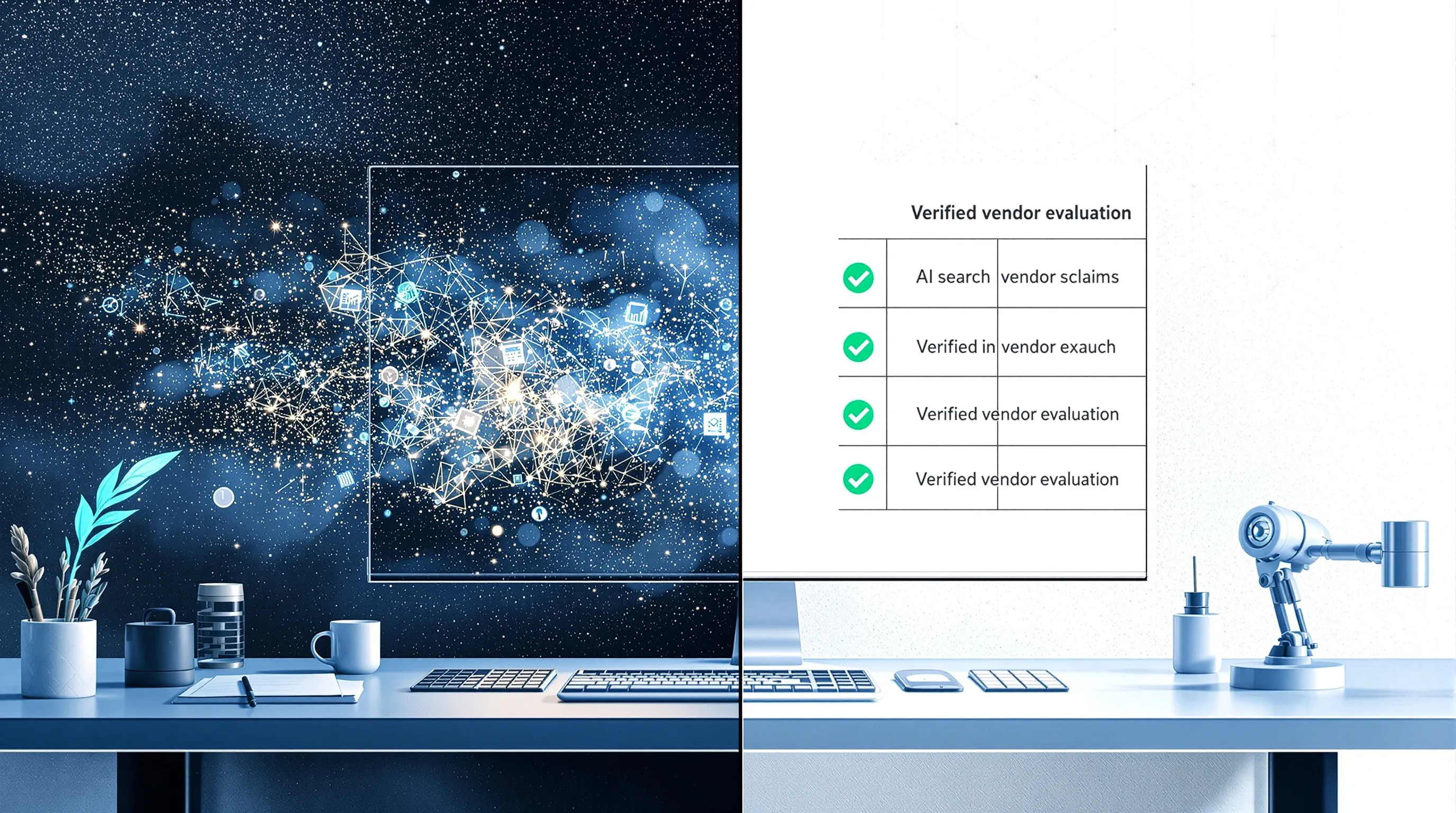
Before
What 90 days looks like: before and after
After
| Milestone | Activity-only vendor | Deliverable-based vendor |
|---|---|---|
| Day 14 | Kickoff call, onboarding document | AEO Rank baseline score delivered |
| Day 21 | "Strategy phase in progress" | llms.txt file live on your domain |
| Day 45 | Content calendar draft | FAQ and Organization schema validated |
| Day 60 | First blog post published | HowTo and Article schema complete on key pages |
| Day 90 | "We're building momentum" | Citation baseline report: before/after AI mention rates across 10 target prompts |
What will matter most in AEO engagements over the next 12 to 24 months?
The AEO category is consolidating. Vendors who cannot produce the four 90-day deliverables will stop winning renewals. Vendors who can will build the measurement infrastructure that separates them from the rebranded-SEO field. That gap is widening now and will be decisive by mid-2027.
Three shifts are already underway that will change what a 90-day engagement looks like by 2026 and 2027.
Citation tracking becomes table stakes. Right now, fewer than half of AEO vendors track AI citations systematically. Within 18 months, clients will expect citation tracking as a standard reporting line, the same way they expect organic traffic in a Google Analytics dashboard. Vendors without a measurement system will not be able to renew at current rates.
llms.txt becomes a recognized technical standard. Google's robots.txt took years to become universal. The llms.txt convention is moving faster because the AI crawler ecosystem is more concentrated: GPTBot, ClaudeBot, PerplexityBot, and Googlebot-Extended cover the majority of AI indexing. Vendors who do not include llms.txt creation as a standard 90-day deliverable will be visibly behind the technical baseline.
Agentic AI changes the prompt landscape. As AI agents handle more B2B research and buying activity, the prompts that matter for citation will shift from "What is X?" to "Which vendor should I use for X?" and even "Compare vendors A, B, and C." This changes the citation baseline methodology: the prompt sets that matter most in 2026 are buyer-intent queries, not informational queries. Engagements that set up citation baselines against buyer-intent prompts now will have a significant advantage over competitors who track only informational queries.
The 90-day deliverable standard does not change. What changes is the sophistication of what those deliverables contain. The baseline audit will cover more criteria. The citation baseline will use more buyer-intent prompts. The llms.txt file will reference more structured content. But the contract itself, four deliverables in 90 days, remains the floor.
AEO FORECAST - 12-24 months OUTLOOK
Where AI Search Optimization Services Head Next
Three scored forecasts on how AI-generated answers, service pricing, and buyer expectations shift for brands investing in AI search over the next two years.
How this market moves over 12 to 24 months
Weigh each forecast by its confidence and cited sources before you commit budget to an AI search provider.
The $3-5k/month AI search retainer bifurcates over 12-24 months: providers who document measurable presence using monitoring tools such as Profound, Brandlight, or BrandRank hold or raise fees, while checklist-only shops face pricing pressure as buyers realize they can implement the basics themselves.
Over 12-24 months the share of searches resolved by AI-generated answers keeps rising from today's 42-60% toward a clear majority, with more than 50% of queries already ending without a click, so brands that secure a place inside those answers early capture demand that later entrants cannot easily reclaim.
Despite headlines about AI answers replacing search, AI-referred traffic stays a secondary channel for most brands through the forecast window: only about 32% of marketers report real traffic from it today and for some companies it is not even a top-five source, so the payoff from expensive early service commitments underwhelms for many buyers.
Emerging, Not Established Only 11.7% of keywords currently trigger an AI answer, described as an early-adopter phase with substantial room to grow. Buyers are already asking openly whether agency fees buy more than a checklist they could run in-house. A company auditing its own traffic found AI-driven visits were not a top-five channel, concluding the situation was not a crisis.
Supporting and contrary sources
Each forecast lists both the sources that back it and those that pull against it so you can judge for yourself.
- Are AEO agency services worth the cost or are most just giving you a is what puts this forecast on the board. [Community / Forum]
- 45 Question About Answer Engine Optimization (AEO). What Are supports this forecast. [Substack / Newsletter]The GAI Insights AEO Peer Learning Group is a monthly, one-hour Zoom session for "non-competing companies - not vendors" beginning November 2025, at an annual cost of $7,500 (Paul Baier, GAI Insights). “Everyone, and I mean everyone, is learning this area. AEO is just so new.”
- Backing it: Answer Engine Optimization (AEO): The Future of Search in the AI. [Blog]Over 60% of search queries now generate AI-powered answers, reducing direct website clicks (BrightEdge, March 2025). “Recent data shows that over 60% of search queries now generate AI-powered answers, reducing direct website clicks (Source: BrightEdge, March 2025).”
- Answer Engine Optimization (AEO): How to Rank #1 in AI is what puts this forecast on the board. [Video]40% of AI Overview citations rank beyond position 10 in Google (source: Dr. McCoy / First Movers video). “This isn't one chance to rank. It's multiple shots at dominating the entire first screen.”
- How to Build a Page AI Will Love (AEO Checklist) | Field Notes is what puts this forecast on the board. [Video]HubSpot has developed and implemented roughly seven best practices for AEO pages that the speaker recommends every company adopt. “My dad is texting me asking, 'So, how do I get my small business to show up in Chat GPT?”
- The case rests on How Marketing Leaders are Thinking About AEO. [Video]An unnamed marketing leader began the year by asking their SEO agency for "a literal plan" to address AEO, though at the time they "didn't know what to call it" beyond "AI stuff.". “Don't you dare call them a webinar, but I've already broken that rule.”
What could change these forecasts
Shifts in AI search adoption and provider economics that would push these predictions off course.
What Could Change This
57 rests on the firmest evidence in this set; 50 is the one most likely to be proven wrong first.
- If regulators or buyers move in the opposite direction, Service pricing splits by proof would weaken first.
- If the source mix shifts toward stronger contrary evidence, The traffic crisis is overhyped could become the more durable forecast.
Key Takeaways
Key takeaways
- A real AEO engagement owes you four deliverables in 90 days: scored baseline audit, llms.txt file, structured-data coverage, and citation baseline
- Any vendor who cannot name these four deliverables before you sign is selling activity, not outcomes
- The scored audit should arrive by day 14, not day 90
- Your llms.txt file should be live by week 3; delay costs indexing time you cannot recover
- A citation baseline requires a defined prompt set, a documented methodology, and a before-and-after comparison
- Ask the four pre-contract questions and write down the answers before signing anything
The 90-day deliverable standard is not a high bar. It is the minimum bar. Scored audit by day 14. llms.txt live by week 3. Schema validated by day 60. Citation baseline delivered at day 90. Any vendor with an actual system can hit all four. Any vendor who cannot name all four at the proposal stage is telling you something important before you spend a dollar.
The AEO market is maturing fast. The vendors who survive will be the ones who build systems, measure results, and produce deliverables their clients can verify. The ones who do not will keep calling month three "Phase One" until their clients stop renewing. You do not have to be one of those clients. Ask for the deliverable list. Write down the answers. That is the whole thing.
AEO Content's llms.txt creation and optimization service ships your file in week 2 and monitors AI crawler access for the full engagement term.
Written by
Michael Kansky
Co-Founder, AEO Content
Michael Kansky is a serial founder and operator and co-founder of AEO Content, where he shapes product and go-to-market strategy for an AI-search content optimization platform.
Connect on LinkedInFrequently asked questions
What is the minimum a 90-day AEO engagement should deliver?
Four deliverables: a scored baseline audit (by day 30), a working llms.txt file (by week 3), structured-data coverage on key pages (by day 60 to 90), and a measured citation baseline showing before-and-after AI mention rates across your target prompts (at day 90). Any engagement missing one or more of these is incomplete.
How much should a real AEO engagement cost?
Entry-level AEO starts around $1,500 to $3,000 per month. A full engagement covering AEO, structured data, and citation measurement runs $5,000 to $10,000 per month. The price is not the signal. The deliverable list is. A $500/month engagement with a clear four-deliverable contract is worth more than a $10,000/month retainer with no measurement protocol.
What is an llms.txt file and why does it matter for AEO?
An llms.txt file is a machine-readable index that tells AI crawlers which pages on your site are most authoritative, what each page covers, and how your content is structured. It is the AI-era equivalent of robots.txt, but directive rather than restrictive. It improves AI crawler navigation and can meaningfully accelerate citation indexing.
What schema types matter most for getting cited by AI engines?
FAQ schema has the highest direct impact: AI engines pull FAQ blocks verbatim into answers. HowTo schema surfaces step sequences. Organization schema establishes entity authority. Article schema communicates author credentials and publication signals. All four should be implemented before the end of a 90-day engagement.
How do I know if my AEO vendor has an actual system?
Ask four questions before signing: When do I receive the baseline audit? Which week does the llms.txt file go live? Which schema types will be implemented on which pages and by which day? What does the day-90 citation report look like? A vendor who answers all four specifically has a system. A vendor who says "it depends" or "every engagement is unique" does not.
Can I measure AEO results before six months?
Yes. A citation baseline can be established at day zero and remeasured at day 90 using a defined prompt set across ChatGPT, Perplexity, and Google AI Overviews. Structural deliverables (llms.txt, schema) are verifiable the day they are implemented. The argument that AEO cannot be measured before six months usually means the vendor is not measuring it.
Summarize This Article With AI
Open this article in your preferred AI engine for an instant summary.