The 4 tool jobs behind a Google AI Overview citation, stage by stage

On this page
Most AI Overview tools only track citations. See which tools handle demand discovery, page rewriting, schema validation and citation measurement, stage by...
One of 53 criteria in AEO Rank, the citation-readiness score we run against every site we audit.
Audit Note
In our audits, we've measured The 4 tool jobs behind a Google AI Overview citation, stage by stage on live sites, we've compared implementations, and we've audited the gaps that keep scores low.
Summarize This Article With AI
Open this article in your preferred AI engine for an instant summary and analysis.
Quick Answer
Four kinds of tools help a page earn a Google AI Overview citation: Search Console and Bing data to find demand, a rewriting tool, a structured-data validator, and a citation tracker.
Most products sold as AI Overview tools do only the last job. Tracking proves a citation exists. It cannot earn one. That is why our guarantee, that clients are named in AI answers across their target question set, rests on the page work that comes before any measurement.
Key Points
- Earning a Google AI Overview citation takes four tool jobs: demand discovery, page rewriting, structured-data validation and citation measurement, and most AI Overview tools do only the last.
- Search Engine Journal reported that AI Mode and AI Overviews cited the same URLs only 13% of the time, so track each surface separately.
- In CXL's sample, 55% of cited passages came from the first 30% of the page, which is why answers belong near the top.

Getting cited in a Google AI Overview starts with page work, well before anyone checks the results page.
In May 2025, a course creator posted a video showing a Google AI Overview citing their own Udemy deals page. They had added a short section titled "Best Udemy deal" to that page 12 hours before filming. The overview credited their site for instructor discounts and listed Quora, Groupon and Reddit beneath it. Older SEO, they recalled, meant months of waiting, "but this took me like 12 hours."
That is the street-level view, and it is real. The wider pattern is less forgiving. One analysis of 11 websites hit by a Google update in early 2026, reported by Blush Grey on Medium, found that every site that lost organic visibility also lost AI citations, a double loss that no citation monitor could have prevented on its own. Even the answers themselves are contested: a study reported by The New York Times in April 2026 put Google AI Overview summaries at around 91% accurate, a figure Reddit commenters read in sharply different ways.
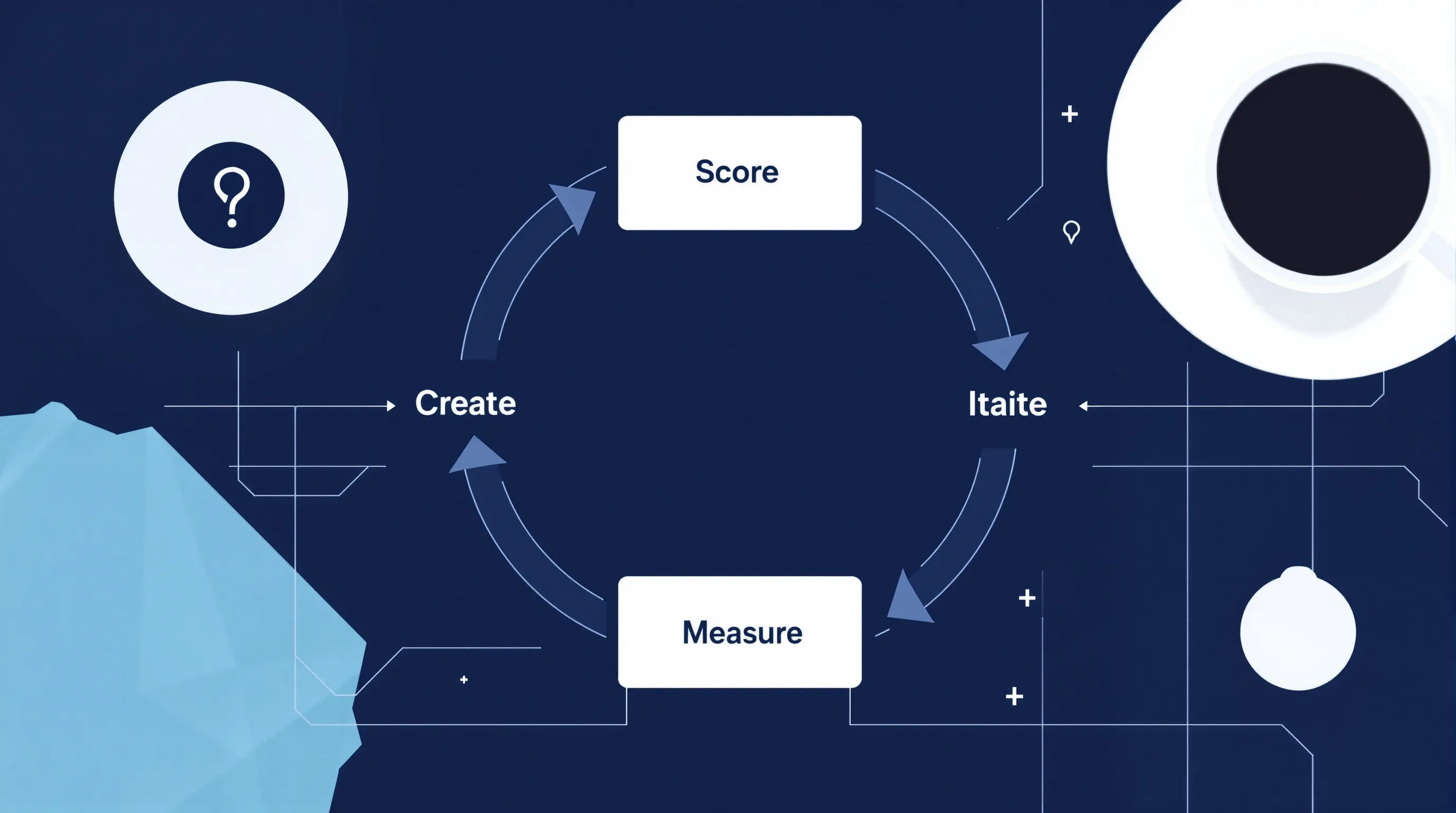
Between the quick win and the double loss sits a sequence of work that most tool lists blur together. Earning a citation takes four jobs, and this article is arranged around them: finding the questions buyers ask, rewriting pages to answer them, validating structured data, and measuring the citation once it appears. Our own commitment rests on all four. We guarantee clients are named in AI answers across their target question set within 100 days, or our team keeps working for free, with no contract and the freedom to cancel anytime.
So ask any vendor three things: which questions it will choose, who rewrites the page, and how it will show you a citation turned into a visit.
On 26 October 2026, a site owner told Reddit's r/SEO forum that their traffic had dropped by about 90% in a matter of days. The pages were still crawled and indexed. Their average position in Google Search Console still sat in the top 5. What had vanished, the poster suspected, were the AI Overview citations that had been sending "a lot of impressions and clicks," though they conceded that Search Console alone could not prove it. Other commenters in the thread described the same pattern on the same date, and one said a page was still in position 1 while clicks and impressions "crashed."
I read that thread as a portrait of a tooling problem. A Google AI Overview citation is a link Google's AI summary gives to a page it drew on for the answer. Earning one takes four separate tool jobs: finding the questions in Search Console and Bing data, rewriting the page to answer them, validating its structured data, and measuring the citation itself. Each job answers a different question, so a team can audit its own stack by asking which of the four it could do tomorrow without buying anything. The poster had a ranking report, and no record of the citation they had lost.
Questions this article answers
Why does it matter that AI Mode and AI Overviews cite different pages?
After 26,577 AI-visibility audits, I treat Google's AI answers as two separate contests, because AI Mode and AI Overviews seldom credit the same page for the same question.
Before you buy another tool, settle four things in plain terms:
- Which buyer questions already trigger an AI Overview on your topic.
- Which of your pages should answer each one, and whether it answers early.
- Whether those pages are indexed and their markup validates.
- Which Google surface cites you, tracked separately for AI Overviews and AI Mode.
The case for that last step comes from a study Ahrefs ran on a September 2025 U.S. dataset, which Search Engine Journal reported in December 2025. The two surfaces cited the same URLs only 13% of the time, and the overlap rose to just 16% when only the top three citations in each response were compared. Yet the answers themselves largely agreed, with an average semantic similarity of 86%. "Put simply: 9 out of 10 times, AI Mode and AI Overview agreed on what to say. They just said it differently and cited different sources," said Despina Gavoyannis, a senior SEO specialist at Ahrefs.
The common assumption is that a citation belongs to the answer. It does not. Citation appears to be a separate step from the answer itself, and Google's documentation says both features may use query fan-out, issuing several related searches across subtopics while a response is being generated. Read together, 4 findings from the Ahrefs work point one way: high agreement on meaning, low agreement on sources, 45.5% of AI Overview citations changing on update, and different source tastes by surface, with Wikipedia in 28.9% of AI Mode citations against 18.1% in AI Overviews.
A page can win one contest and vanish from the other. A tracker that blends both surfaces will hide that loss. Your reporting has to split them.
I come to this as an operator rather than a theorist. Our team includes a full-stack engineer and content infrastructure architect with 20 years of building enterprise systems, and in our experience that background reframes the question: a citation is a pipeline problem before it is a prose problem. We have scored 11,000+ domains across 15 sectors and 28 categories, and the scoring only becomes useful when it is tied to a page someone can actually change. That is why I argue for research-driven content built on evidence rather than pages tuned to the habits of one surface, which can shift between one update and the next.
And Google, for its part, keeps moving the links themselves.
Why does Google keep changing where AI Overview links appear?
We tell clients they will be named in AI answers in 100 days, or we work free until they are, which means we must measure citations on a surface Google keeps redesigning.
The redesigns are not cosmetic. In August 2024, Search Engine Land reported that Google was rolling out a right-hand link display for AI Overviews on desktop, with a mobile version reached by tapping site icons in the upper right of the results. In the same announcement, Google said it would test links placed directly inside the text of AI Overviews, alongside the existing link cards, and was trying new link icons as well. The company said the in-text experiment had shown "early, positive results" and was "driving higher traffic to publisher sites." It published no figures.
So a citation is no longer one thing. It can be a card under the answer, a sidebar entry, an icon behind a tap, or a phrase inside a sentence. Each placement asks a different amount of effort from the reader before a click happens.
Conventional wisdom treats a citation as a fixed asset, earned once and banked. The evidence points the other way. On the EDGE of the Web podcast, SE Ranking, which sells an AI Overview tracker, said it rebuilds its link-extraction methods for each study, because a method that worked one month might not work the next, and the episode noted that many interactive elements of the answer could not be captured at all. If the researchers struggle to hold the surface still, a dashboard that reports a single citation count is reporting a moving target as if it were a landmark.
That is the friction at the heart of the fourth tool job. Measurement must record where a link sits. Presence alone misleads.
Alex and I bring a combined 40+ years of SEO and content infrastructure experience to AEO, and the habit those years built is suspicion of any metric that cannot be repeated next month under the same rules. The outcome we report to clients is the one their business feels. For Imagine Dental Arts, that was patients, not citations: AI-referred new patients rose 900%, from about 5 a month to 50. Nobody at the practice asked which pixel the link occupied. They asked who walked through the door.
The tension, then, is between what a tracker can see and what a buyer can feel. A citation count is easy to chart. A referral is harder to trace, and worth far more. If you are still deciding which number to put in front of leadership, our AEO FAQ on AI search optimization answers the common questions about what AI visibility reporting can and cannot show.
Which leaves the harder question: whether a citation, wherever Google puts it, sends anyone to your site at all.
Do AI Overview citations actually drive clicks?
A company I founded made the Inc. 5000 at number 84, and I judge marketing as an operator: an AI Overview citation is visibility, not traffic, until a click proves otherwise.
The most useful evidence on this comes from a Search Engine Land contributor who, in 2025, studied more than 20,000 ranking queries across industries, with a focused case study of 200+ results pages from February to April 2025 where AI Overviews appeared. The finding was blunt. In 2025, ranking first inside an AI Overview delivered roughly Position 6 clicks, and by citation position 5 a link performed as if it sat on the tenth page of results. "Visibility in Google's AI Overviews doesn't equal traffic," the author wrote.
Contrary to the hope that the top slot in an overview replaces the top organic spot, it behaves more like a footnote. Citations are small. Attention collapses inside the answer box. By the study's measure, even the first overview slot trailed the top three blue links.
None of this makes citations worthless. It changes what you should do with them:
- Report citations as an upper-funnel assist, the framing the study recommends, and keep them off the click dashboard.
- Pair every citation with its Search Console row for the same query, so clicks and impressions sit beside presence.
- Write answer capsules under 200 characters directly after each H2 or H3, with no external link inside them.
- Keep building ordinary authority, since the study found backlinks still mattered for both overviews and blue links.
Our own client numbers show why both readings matter. For Understood Care, Google AI Overview citations rose 500%, from 22 to 132, in about five months. The next step for a team watching a climb like that is to open Search Console and check whether the same cited queries gained clicks over the same months. Our commitment to clients is written against their target question set, the specific buyer questions they need to be named for, because a citation on a question nobody in their market asks is a medal with no ceremony.
Some brands need presence in comparison answers faster than organic work allows. For them, sponsored listings that AI engines cite are a separate lever, and they deserve the same skepticism: count the visits, not the mentions.
The practical conclusion is narrow and firm. Citations are worth earning. Before the next report, ask which cited queries sent even one click last month. A team that tracks only presence will celebrate the wrong month.
Which sends the work back to the beginning of the chain, to the questions a page should be answering in the first place.
Which tool does each job between a buyer's question and a proven AI Overview citation?
On October 26, a site owner saw traffic fall by about 90% while average position held in the top five. Explaining it showed how many jobs a tool stack for AI Overviews must cover.
In Reddit's SEO forum, the owner wrote: "So it looks like we lost the AI Overview citations rather than organic rankings but I can't confirm that from GSC alone." One reply pointed to Search Console's Generative AI performance report, "if available." CXL says Google rolled those reports out worldwide by August 31, 2026, with AI Overview and AI Mode impressions shown separately.
Citation tracking is the last of four jobs and the least stable thing to watch: research reported by Search Engine Journal in December 2025 found that 45.5% of AI Overview citations change when the Overview updates. What research links to getting cited happens earlier, and each step needs its own tool.
| Job | Tool that does it | What that tool cannot tell you |
|---|---|---|
| Demand discovery | Search Console query export, sorted in a spreadsheet or language model | Which pages the Overview cites today |
| Page rewriting | An editor or writing model, working from the current Overview text | Whether the rewrite will be cited |
| Structured-data validation | Google's Rich Results Test | Whether markup changes citations |
| Citation measurement | A citation monitor or Search Console's Generative AI report | Whether a citation sent clicks, and how the answer changes between checks |
Discovery starts with a mechanism Google documents: "query fan-out," which runs several related searches across subtopics and data sources. A page can be cited for a sub-question it answers well while ranking poorly for the words the person typed.
In three of the four counts, a rank tracker misses most of what gets cited. In the large keyword study, the share fell from 76% to 38% between July 2025 and March 2026, the period in which Gemini 3 became Google's default model. Caleb Ulku, a consultant who sells AI Overview work mostly to local businesses, built a Search Console routine around that gap. He keeps question queries near page one and ranks them by an "opportunity score, which is your impressions divided by your position." He reports 14 of 17 client sites featured. He measured that result himself, and his process also added a backlink from a site he owns.
Once a query is chosen, the rewrite comes down to where the answer sits. CXL, a marketing training company, traced 100 cited passages to their position on the source page.
In CXL's sample, 55% of cited passages came from the first 30% of the page. Velut found a related pattern in 150 Hebrew business searches on Google Israel: 94% of Overviews opened with an answer under 40 words. CXL calls its result "a citation pattern, not a guarantee or causal ranking factor," and still advises teams to "answer earlier" while keeping the depth further down.
Structured data is upkeep. Google says AI Overviews and AI Mode need no special schema beyond indexing and Search eligibility, and its documentation calls the Rich Results Test "an easy and useful tool for validating your structured data." The claim that schema lifts citation likelihood by 40% traces to a 2025 Reddit post whose author never answered one commenter: "Care to share your data for validation?"
Measurement is where the October 26 thread hit its limits. Karo Zieminski, who writes the Product with Attitude newsletter, tracks "mention, citation, visit, and subscriber" separately, because "being named by AI is not the same as getting a reader." We count citations too, since we guarantee clients get named in AI answers. Understood Care's Google AI Overview citations rose from 22 to 132 in about five months. We report that count next to the site's 3.9K monthly organic visits, because the count alone can't show that any citation produced a visit.
Line up the four jobs and the mismatch shows. The output most monitors watch changes almost half the time an Overview updates. The inputs that research ties to citation, the chosen question and the early answer, are set before any monitor has anything to read. Most of the leverage sits upstream of the monitor.
Checks for each job
- Export your Search Console queries, keep question queries near page one, and sort them by impressions divided by position before buying another monitor.
- Check where each target page's main answer starts. If it sits below the first 30%, move it up and keep the depth underneath.
- Run key page templates through the Rich Results Test, and ask any vendor promising a schema lift to show its data.
- Ask any citation tool how often it re-checks each query, since 45.5% of citations change when an Overview updates.
- When a monitor reports a lost citation, check whether AI Overview impressions also moved in Search Console's Generative AI report, if your property has it.
How we checked this
Our sources were citation studies reported by Search Engine Journal, CXL and Velut, Google's structured data documentation, a practitioner video, two Reddit threads and a newsletter author's own tracking. The Understood Care figures (22 to 132 citations, 3.9K monthly visits) are ours. CXL's sample is 100 citations, Velut's covers 150 Hebrew searches in one country, and the rank-overlap studies measured in different ways. Ulku's 14 of 17 result is self-reported, and the Reddit threads are individual accounts that can't establish a pattern. CXL sells marketing training, Ulku sells AI Overview services, and we sell AEO content with a citation guarantee, so all three of us have a stake. Still unknown: whether moving an answer higher causes a citation, and how many properties still lack the Generative AI report.
- Search Engine Journal, report on AI Mode and AI Overview citations, December 2025.
- CXL, study of where AI Overview citations sit on the page, March 2026.
- Velut, Google AI Overviews study and guide, October 2026.
- Google Search Central, introduction to structured data markup, retrieved November 25, 2026.
- Caleb Ulku, video on his AI Overview method, July 2025.
- r/SEO, thread on a 90% traffic drop, October 2026.
- r/DigitalMarketing, thread claiming a schema citation lift, August 2025.
- Karo Zieminski, Product with Attitude post on getting cited, September 2026.
- AEO Content, Understood Care client tracking data.
Where should a team start with AI Overview tools this week?
Start with the job your stack skips. Ask each vendor which of the four jobs its product performs, and which it quietly leaves to your team.
Our AEO Rank standard grades every site on 53 criteria across 5 pillars, and it tracks whether ChatGPT, Claude, Perplexity and Google AI Overviews name our clients. I believe those criteria are worth less as a grade than as a map of which job is missing. Google's own documentation sets the entry bar low: AI Overviews ask for no special markup beyond a page being indexed and eligible to appear in Search. Nothing exotic gets you in.
In a March 2025 episode of the Everyday AI podcast, the host warned against copying language-model output straight onto a website and urged human review before, during and after generation. That review is the rewriting job, and no monitor performs it. A monitor will tell you, eventually, that a citation is gone. It will not tell you which question you stopped answering, and that is the record I would want in hand the next time traffic falls while the ranking holds steady.
Summarize This Article With AI
Open this article in your preferred AI engine for an instant summary.
Frequently Asked Questions
What else do people ask about AI Overview tools?
Most follow-up questions concern schema, lost citations and timing. Each answer below points back to one of the four tool jobs a team has to cover.
Does schema markup get a page cited in AI Overviews?
Not on the evidence available. A 2025 post in Reddit's r/DigitalMarketing forum claimed that schema markup increases citation likelihood by 40%, but the poster published no data, and a commenter's request to see it went unanswered. I treat structured data, the machine-readable labels that describe a page to search engines, as something to validate, not a lever that decides citation.
Why do AI Overviews cite pages that only partly support the answer?
Readers have noticed it too. Some say cited sources "slightly deviate from the conclusion" or cover "a related but not the exact same topic." That gap is an opening for a page that answers the exact question.
How do I tell a lost citation from a lost ranking?
Compare the same pages and queries before and after the drop. Then check whether those searches still show an AI Overview linking to you, and split mobile from desktop.
How quickly can new content show results?
For Modern Wealth, organic search sessions rose 220% and Google clicks 61% within three weeks of the first articles.
How do I reach AEO Content?
Use the contact page at aeocontent.ai/contact, and tell us which of the four jobs your stack is missing.
Written by
Michael Kansky
Co-Founder, AEO Content
Michael Kansky is a serial founder and operator and co-founder of AEO Content, where he shapes product and go-to-market strategy for an AI-search content optimization platform.
Connect on LinkedIn