Where ChatGPT optimization crosses into manipulation

On this page
ChatGPT optimization ends where the evidence could not be published. Learn which AI search tactics are honest, which are manipulation, and how to vet an...
One of 53 criteria in AEO Rank, the citation-readiness score we run against every site we audit.
Audit Note
In our audits, we've measured Where ChatGPT optimization crosses into manipulation on live sites, we've compared implementations, and we've audited the gaps that keep scores low.
Summarize This Article With AI
Open this article in your preferred AI engine for an instant summary and analysis.
Quick Answer
ChatGPT optimization becomes manipulation when the evidence could not survive publication. Real data, named authors and disclosed methods are optimization. Fabricated statistics, fake authors, seeded threads and stuffed llms.txt files are not.
Influence is moving through the front door anyway. Meta says its ads AI connectors let assistants such as ChatGPT and Claude into ad accounts over Model Context Protocol. Front doors are fine. Side windows are the problem, and I would only hire a vendor whose methods you could print.
Key Points
- The Princeton study, as That Marketing Buddy summarized it in March 2026, found that adding statistics improved AI visibility by up to 37%, and citing credible sources by 30 to 40%.
- Microsoft confirmed in March 2025 that schema markup helps its LLMs understand content, so structured data counts as optimization, not a trick.
- Google's spam policies, last updated September 2, 2026, prohibit keyword stuffing, link spam, scaled content abuse and user-generated spam to prevent deceptive content and ranking manipulation.


If you could not publish the evidence beside the claim, it is not optimization.
AEO Rank, the audit standard we score sites against, checks one thing before anything clever: whether ChatGPT, Claude, Perplexity and Google AI Overviews actually name the brand. Everything else in AI visibility hangs on how that naming gets earned.
Here is the thing. AI answers reward what a good editor rewards, which is real numbers, named sources and people who exist. Optimization hands ChatGPT those things in a shape it can read. So ask one thing of every page you ship: if a reporter called, who would answer for where each number came from?
I want to be fair to the people tempted by the shortcut, because the machines are new, the pressure from the board is real, and the incentive is sitting right there on the table like a plate of cookies nobody is guarding. In 2025 the trick was a fake follower. Now someone wants to sell you a fake author, with a headshot and strong opinions about schema. Same trick. Better posture.
The machines will at least talk about their own influence when asked. Asked by an r/ChatGPT user in July 2026 whether it tracks people's beliefs and decisions, ChatGPT replied like a polite tax attorney: "You're broadly right, but I'd sharpen it."
And paid influence is getting a front door. Meta now lets assistants such as ChatGPT and Claude work inside ad accounts, though Tucker Matheson, co-CEO of Markacy, doubts they will steer results, because "Meta's AI and algorithm will always be paramount." Disclosed access is one thing.
Undisclosed access is the thing this piece is about, starting with what actually gets a brand named in ChatGPT, then moving to where that work turns into forgery, which happens sooner than most vendors will tell you.
In a 2025 essay, Mo Gawdat argued that recommendations, the task the industry invested most in teaching machines, "quickly morphed into a form of seductive and intrusive manipulation." Then, a few paragraphs later, he conceded that most recommendation engines "do serve a conscious user very well." Both things were true at once. They still are.
ChatGPT optimization is standing at the same fork.
ChatGPT optimization is the practice of making true information easier for AI engines to find, read and attribute. Manipulation is the practice of inventing that information, or the author behind it, or the crowd that supposedly agrees with it. So the first thing I would ask any vendor is not what they do, but whose name goes on it. If the answer is a stock photo and a first name, you have met the 2025 fake follower again, now wearing a blazer.
The platforms are drifting toward disclosure, too. In April 2026, Meta opened its ad accounts to assistants such as ChatGPT and Claude through an announced, direct connection, rather than leaving that influence to back channels.
So here is the decision a marketing director faces this quarter. Fund the work that survives scrutiny. Or fund seeded forum threads and invented bylines, and prepare to explain them to your board.
Which side of the line is your site on?
Imagine Dental Arts saw AI-referred new patients rise 900%, from about 5 a month to 50. Understood Care's Google AI Overview citations went from 22 to 132 in about five months.
Our free audit scores your site on 53 criteria and shows which signals an engine can actually verify. Then you decide.
Get your free AEO audit
How do I get my brand to show up in ChatGPT answers?
Make your pages extractable and verifiable. Our AEO Rank standard scores sites on 53 criteria across 5 pillars and tracks whether ChatGPT, Claude, Perplexity and Google AI Overviews name a brand.
Before any of the clever stuff, run these four checks on your most important page:
- Replace every vague claim with a specific number you can source.
- Name the credible source behind each number, in the sentence itself.
- Quote a named expert wherever the claim needs a human to stand behind it.
- Render your schema markup on the server, not in JavaScript.
That list is not my opinion. The Princeton study found that adding statistics improved AI visibility by up to 37%, according to a March 2026 guide from That Marketing Buddy. Citing credible sources produced a 30 to 40% visibility improvement. Expert quotations, on their own, delivered 22%.
Then there is the plumbing. Microsoft confirmed in March 2025 that schema markup helps its LLMs understand content. The same guide notes that AI crawlers often do not execute JavaScript, so schema injected on the client side is invisible to them. You can do everything right and still hand the crawler a blank page.
Now, the common assumption is that getting into ChatGPT takes a trick. Some secret phrasing. A hidden file. A guy.
Here is the thing about the four checks above. Not one of them requires you to make anything up. So this week, pick one claim on your most-visited page and add the dataset behind it, the date it was measured and the name of whoever measured it.
Put 3 evidence items side by side (the Princeton figures, the Microsoft confirmation, and our own scoring standard) and the pattern is plain. Each one rewards information a reader could check. None of them rewards volume, repetition, or confidence for its own sake.
We have scored 11,000+ domains across 15 sectors and 28 categories, and every one of those sites was measured against the same 53 criteria. A dental practice and a payroll platform face the identical standard. What differs is the evidence each one has on hand to publish.
So the practical question for a marketing director is not "how do I get in?" It is "what do we actually know that nobody else has written down?" That is the raw material. Our approach to research-driven content built on evidence starts there, because structure without substance gives an engine a beautifully labeled empty box.
This week, pick one page. Run the four checks. Count how many claims survive.
And keep that count handy, because the next group we need to talk about looked at the same four checks, decided they were too much work, and went to Reddit instead.
Where does ChatGPT optimization cross into manipulation?
It crosses when you fake independence. Across 26,577 AI-visibility audits we have run, the dividing question stays the same: could you publish who said it, and why?
Here is how the line usually gets crossed, and it never looks like a crime at the start.
A company notices that AI answers lean on forum threads. Reasonable observation. Then someone suggests a few posts, just to "get the conversation going." Then a few accounts. Then the accounts need histories, so they post about other things first, sourdough, fantasy football, a strong opinion about a parking garage. Then, months later, one of them mentions the product. Warmly. Unprompted. As a stranger.
That last word is the whole problem.
Commenters in an r/artificial thread from June 2026 described exactly this playbook. One wrote that "companies know ai search pulls from reddit heavily. so they seed the platform with exactly what they want the models to say." Another claimed there are now "entire marketing agencies just dedicated to reddit/AI." Those are anonymous, unsourced assertions. They still describe a mechanism any buyer can recognize, and the same thread named the cost plainly: "it turns the whole thing into a feedback loop where the 'organic' source gets engineered."
Notice what is being counterfeited. Not the formatting. Not the schema. The independence. The engine is trusting that the voice in the thread is a separate person who reached a separate conclusion, and the seeded post is built to look like exactly that.
We have seen this costume before. A 2025 critique of recommendation engines listed the tactics the social algorithms of that era rewarded: clickbait, fake followers, keyword stuffing, hashtag spamming. Swap the venue and the list barely changes. Fake followers become fake reviewers. Keyword stuffing becomes a stuffed AI-facing file. The follower count becomes a fabricated statistic with no study behind it.
The influence itself is not the sin. A post on r/ChatGPT from July 2026 makes the point almost by accident: the poster shared how ChatGPT models a person's beliefs, resources and social sphere, then concluded that the same capability "could be used for manipulation or optimization." Same tool. Different disclosure.
So the boundary I draw is narrow and practical:
- Optimization makes true information easier for an engine to find, read and attribute.
- Manipulation manufactures a source, an author or an agreement that does not exist as presented.
Disclosed affiliation is fine. An employee answering a question under their own name, with their title, is evidence. The same employee posting as "just a happy customer" is a forgery with good grammar.
If you want the plain definitions in one place for your team, our AEO FAQ on AI search optimization covers the vocabulary. This week, ask whoever runs your community or social channels a single question: is anyone posting about us without saying who they work for?
The answer tells you which side of the line you are already standing on, and whether the vendor pitching you next month is about to push you over it.
If AI rewards numbers, sources and quotes, what stops anyone from faking them?
One popular guide to getting cited by ChatGPT offers a simple swap: drop the vague phrase and add a precise number. Ask where that number should come from, and the guide goes quiet.
RJ, a former agency owner who runs the review site That Marketing Buddy, gives the example plainly: "Instead of saying 'many businesses,' say '67% of B2B companies.'" His reasoning: "Quantifiable claims give AI systems concrete information they can verify and cite. Vague statements get skipped." Nothing in that step asks whether the 67% is real, who measured it, or when.
The payoff explains the temptation. In RJ's summary of a Princeton study, writing that looks like evidence ranks among the strongest changes tested.
The same summary names a stronger signal: existing online coverage, meaning media mentions, authoritative backlinks and social discussion, is the strongest predictor of AI citation. Coverage is supposed to be what other people say about you. Other people can be arranged.
On Reddit, users say that work is already under way. "companies know ai search pulls from reddit heavily. so they seed the platform with exactly what they want the models to say," one commenter wrote in r/artificial in June 2026, calling the result "a feedback loop where the 'organic' source gets engineered." Another went further: "There are entire marketing agencies just dedicated to reddit/AI." Nobody offered proof, and they disagreed on timing: one said agencies had done this for about four years. The thread describes a worry. It measures nothing.
Earlier recommendation systems went through the same thing. Mo Gawdat, who writes that he "lived inside the lab" during AI's rise, lists what social algorithms rewarded: "Clickbait, fake followers, looping videos, keyword stuffing, hashtag spamming, reposting, dramatic soundbites." His verdict: "It was all fair game as long as we clicked."
Some of those tactics now carry a penalty. Google's spam policies, last updated September 2, 2026, aim to "prevent deceptive content and ranking manipulation" and prohibit keyword stuffing, link spam, scaled content abuse and user-generated spam. RJ's guide notes that Google AI Overviews pull from top-ranking organic results, so those rules shape at least one AI answer. None of our sources shows whether ChatGPT can spot an invented statistic or a seeded thread.
On the page, a real statistic and a staged one look identical. The difference is what stands behind them.
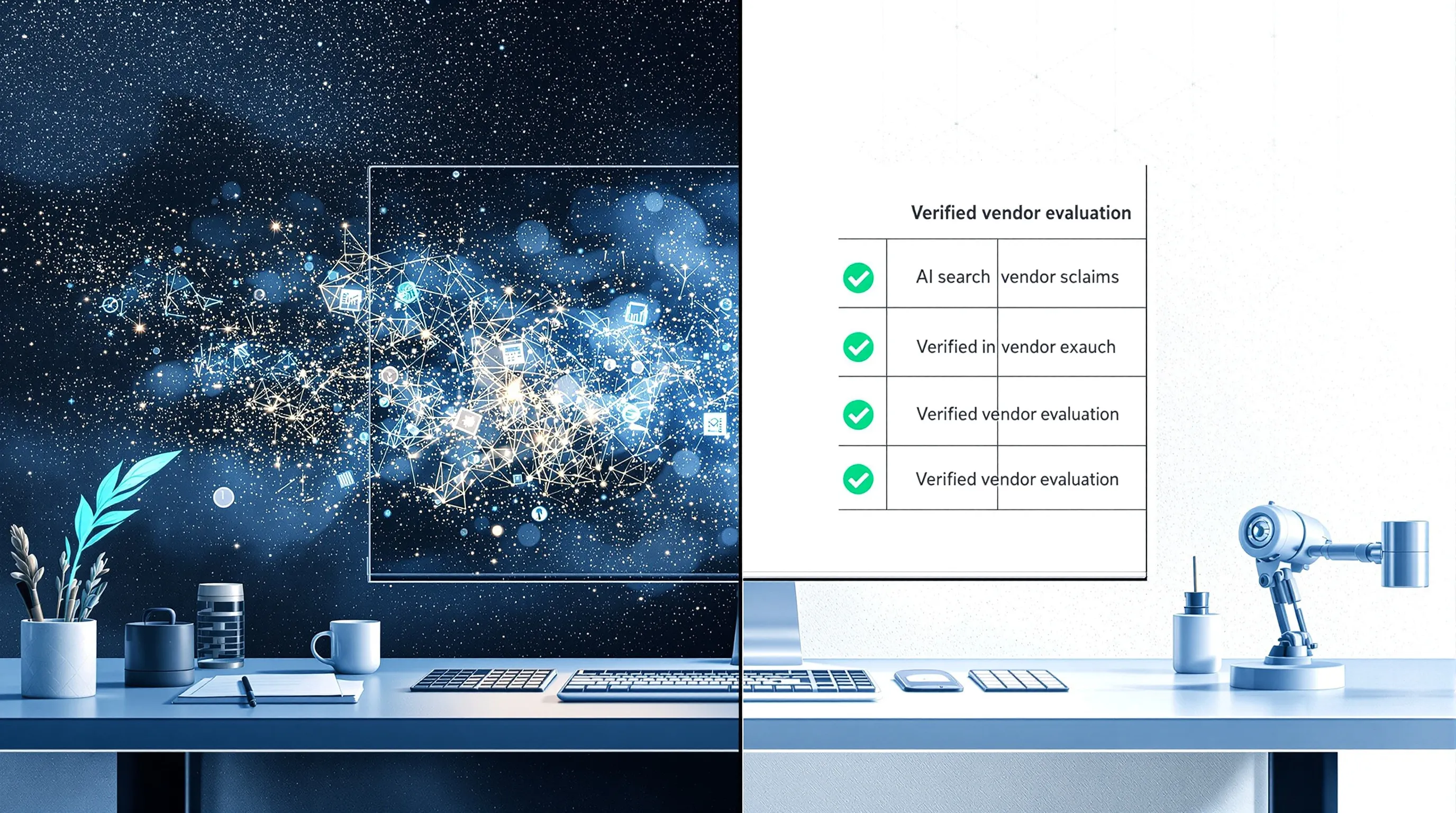
| Signal the research rewards | Optimization: the evidence exists | Manipulation: the signal is staged |
|---|---|---|
| A statistic | Your own dataset, dated, with how it was measured | A precise-sounding number nobody can trace |
| A credible source | A link to the page that actually makes the claim | A citation that does not support the claim |
| An expert quotation | Words a named person said, which you could show | A quote with no speaker anyone can reach |
| Existing coverage | Mentions other people chose to write | Threads seeded to look organic |
Our own pilot in October 2026 shows what that test does to a page. We answered the same two knowledge-base questions twice for a live-chat software company: first with web research, then with the product's code as the only source. We build that tool, so weigh the result accordingly.
Same two questions, written twice
- Web sources per article: 30 to 38 with web research, 0 from code only
- First-person opinions per article: 15 to 18, then 0
- Product claims correct when checked line by line against the code: all of them, in both rounds
In the first round, about a third of one article was regulation, attack statistics and industry framing, the borrowed numbers that advice to add statistics invites. Removing them cost no accuracy. Reading the code also caught something no web search could: the admin page said two-factor sign-in used an authenticator app, but the sign-in screen sends a one-time code by text and email. An article written from the documentation would have repeated the admin wording. Two questions cannot show whether AI engines cite such pages more often. They do show a page where every claim has a source you could show.
Statistics, sources, quotes and coverage are what the research rewards and what manipulators fake, so the tactic alone cannot tell you which side you are on. The answer sits one layer down: whether the dataset, the speaker, the page or the conversation exists and could be published next to the claim.
- For every number, write down the dataset, its date and who measured it. If you cannot, cut the number.
- Link each source to the page that actually makes the claim, and reread that page before publishing.
- Ask any agency you hire whether it posts on Reddit or forums for you, and whether those posts say who wrote them.
- Before publishing product help content, check every label and step against what a user actually sees on screen, not the admin wording or older docs.
- Run each tactic against Google's list of keyword stuffing, scaled content abuse and user-generated spam. If it only works because nobody can check it, treat it as manipulation, caught or not.
How we checked this
We read a practitioner's guide to AI citation, a June 2026 Reddit thread, an essay by former technology executive Mo Gawdat, and Google's published spam policies. We also used our own pilot data from October 2026. The Princeton figures come from the guide's summary, so we report them as secondhand. The Reddit comments are anonymous and unsourced. The pilot figures are ours. They cover one client and two knowledge-base questions, and they measure sourcing and accuracy, not AI citations. We sell AI visibility services and built the pilot product, so we have a stake in where the line falls. Still unknown: whether ChatGPT or other AI engines detect or discount fabricated statistics and seeded coverage.
- RJ, That Marketing Buddy, guide to getting cited by ChatGPT and AI search, March 11, 2026.
- r/artificial, Reddit thread on companies seeding Reddit for ChatGPT, June 3, 2026.
- Mo Gawdat, essay on the age of mind manipulation, April 11, 2025.
- Google Search Central, spam policies for Google web search, last updated September 2, 2026.
- AEO Content, repo-based knowledge base pilot with a live-chat software company, October 2026.
How do you vet an AEO agency for manipulation before you hire one?
Ask what they measure, how they source, and what they guarantee. Our own commitment is plain: named in AI answers in 100 days, or we work free until you are.
Before the next sales call, put these five questions in writing and ask for written answers:
- Which engines do you measure, and will you show results for ChatGPT, Claude, Perplexity and Google AI Overviews separately?
- Can you show the source behind every statistic in one sample article you published for a client?
- Who is the named author on the content, and how can I verify that person exists and holds the stated role?
- Do you post on forums or review sites on our behalf, and if so, under whose name?
- What does your guarantee depend on, and what happens on day one after it is missed?
Now picture the call where those questions land badly. You ask about sourcing. There is a pause. Then a very calm man says, "Our methodology is proprietary," in the voice of someone reading a hostage statement. You ask which engines. "All of them," he says. Which is a lie, and also not an answer. You ask about forums, and he tells you, with real warmth, that they have "a network."
A network. Of what, sir.
The fourth question does most of the work. A vendor who posts under undisclosed accounts is selling the exact feedback loop described above, and you are the one whose brand name ends up attached to it. The first question catches the quieter failure: a single-engine dashboard can show a win on one assistant while the others say something entirely different about you.
The fifth question matters for honest vendors too. A guarantee like ours depends on real inputs: pages with evidence worth citing, a site engines can read, and time for the work to be crawled. Ask any vendor to spell out its dependencies. A vendor running on fabricated signals cannot, because its results depend on nobody noticing.
Credentials are worth checking the same way you check statistics. Our co-founders bring a combined 40+ years of SEO and content infrastructure experience to AEO, including a full-stack engineer and content infrastructure architect with 20 years of building enterprise systems. Before this, the company I founded, LiveHelpNow, was an Inc. 5000 inductee (#84, 2015-2018). None of that should be taken on faith. Every line of it is the kind of thing you can look up, which is the point.
And if a vendor's real offer is paid placement, that is allowed. It just has to be labeled. Disclosed formats like sponsored listings that AI engines cite sit on the honest side of the line because the reader and the engine both know what they are looking at.
This week, send the five questions to every vendor in your pipeline. Then sort the replies by how many arrived with links, names and dates attached, and notice which ones came back with adjectives instead.
What are the top companies helping brands rank in ChatGPT and AI search?
The ones whose methods you could publish. Our scoring standard tracks whether ChatGPT, Claude, Perplexity and Google AI Overviews name a brand, and I would bet on verifiable evidence to move it.
My forecast for the next 12 to 24 months is simple. Disclosure becomes the dividing line. Digiday reported in April 2026 that Meta now gives AI assistants a "secure, direct connection" to ad accounts, and one analyst called it "a subtle lock-in move." Paid influence is getting a front door. Once it has one, the back door looks a lot more like a back door.
So the vendor you hire should be one you would be comfortable describing to a reporter. Out loud. In detail.
Start with your own pages, because that is the one part of this you fully control, and it is the first thing any engine reads about you.
Summarize This Article With AI
Open this article in your preferred AI engine for an instant summary.
Frequently Asked Questions
What else do people ask about ChatGPT optimization and manipulation?
Most questions come down to disclosure. If you could publish the source, the author and the method beside the claim, you are optimizing. If not, you are not.
Is ChatGPT optimization the same thing as manipulation?
No. ChatGPT optimization makes true information easier for an engine to read and attribute. Manipulation invents the information, the author or the agreement. Same tools, different evidence underneath.
Is adding schema markup or reformatting content for AI a trick?
No. Structure presents what is already on the page. It becomes a problem only when the thing being structured is fabricated, like a statistic with no study behind it.
Is it manipulation to post about my product on Reddit?
Not if you say who you are. An employee answering under their own name is evidence. The same employee posing as an unaffiliated customer is a forged source.
What belongs in an honest llms.txt file?
An llms.txt file is a plain guide for AI systems to the pages and facts on your site. Honest files point to real pages and describe them accurately. Stuffed files pile on keywords and claims the site never makes.
Can AI recommendations themselves become manipulative?
They can. Mo Gawdat argued in 2025 that "when a suggestion morphs to serve only the platform's agenda, it ceases to be a true recommendation." The same test applies to the content brands feed those systems.
How fast can legitimate optimization show results?
Sometimes within weeks. For Modern Wealth, organic search sessions rose 220% and Google clicks 61% within three weeks of the first articles. To start, reach AEO Content through the contact page at aeocontent.ai/contact.
Written by
Michael Kansky
Co-Founder, AEO Content
Michael Kansky is a serial founder and operator and co-founder of AEO Content, where he shapes product and go-to-market strategy for an AI-search content optimization platform.
Connect on LinkedIn