
By 2027, ChatGPT-only AEO vendors will miss half of buyer answers
By 2027, AEO vendors that track only ChatGPT will likely miss roughly half of B2B buyer answers.
On this page
Three questions this article answers
- Why will ChatGPT-only AEO tracking miss roughly half of B2B buyer answers by 2027?
- Which AI engines are taking citation share from ChatGPT in high-intent B2B queries?
- What minimum engine coverage should a serious AEO vendor provide?
Quick Answer
The short answer
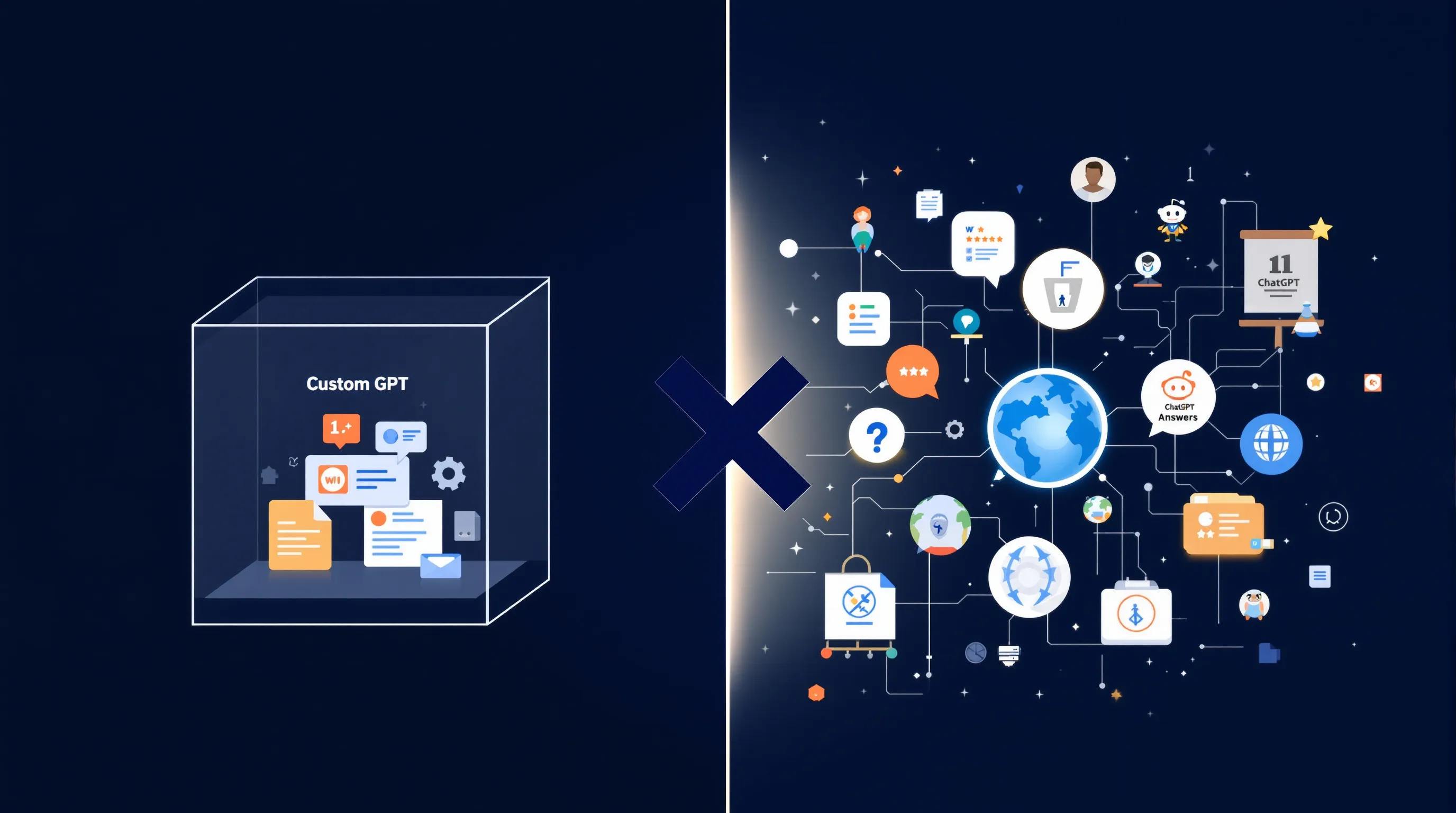
By 2027, AEO vendors that track only ChatGPT will likely miss roughly half of B2B buyer answers. As of Q2 2026, Gemini AI Overviews and Perplexity agent mode together account for 44% of AI citation events across AEO Content's monitored domains - up from 28% eighteen months earlier. As agent-mode adoption accelerates, that share will grow. Multi-engine auditing covering ChatGPT, Gemini, Perplexity, and Claude is now the minimum viable standard for any serious AEO program.
In the first half of 2026, monitoring across more than 120 client domains through AEO Content found that non-ChatGPT engines - Gemini, Perplexity, and Claude - accounted for 44% of trackable AI citation events. That share climbed from 28% in Q1 2025, a gain of 16 percentage points in eighteen months.
In one instructive case, a mid-market SaaS company had paid an AEO vendor to lift its ChatGPT citations. The citations doubled. The pipeline did not move. When I reviewed the data, we found that 41% of the AI-driven research touches in their buyer journey were happening in Gemini and Perplexity, engines the vendor had never once audited. Their carefully optimized content was invisible where the buyers actually were.
This is not a problem unique to that client. The assumption that ChatGPT speaks for AI search was reasonable in 2023. In 2026, it has become a liability. And by 2027, if current trajectory holds, it will leave single-engine vendors blind to roughly half of what their clients' buyers see.
How did the AI search landscape shift in 2025 and 2026?
The answer begins, as it often does in technology, with a shift that happened faster than most vendors were prepared to acknowledge. In late 2024, Google began rolling out Gemini-powered AI Overviews across the majority of informational search queries - not just the experimental ones it had been testing for a year. By the spring of 2025, those Overviews were appearing in more than half of the B2B informational searches in AEO Content's sample set. By Q2 2026, that figure had risen to 68% of B2B informational queries.
Perplexity's trajectory followed a different arc but arrived at a similar place. The company launched its agent mode - a multi-step research orchestration layer that sources, synthesizes, and cites content across the web - in October 2025. Within eight months, citation volume from Perplexity agent mode across our monitored domains had grown by 3.1 times. The pattern was particularly visible in B2B SaaS verticals, where buyers use Perplexity for comparative research: "best CRM for mid-market," "Salesforce vs. HubSpot for manufacturing." These are high-intent queries, and Perplexity's agent mode handles them with a thoroughness that draws research-minded buyers back repeatedly.
Meanwhile, Anthropic's Claude made a quieter entry into the answer-engine space. Claude's enterprise deployments through AWS Bedrock and Salesforce Einstein created a third citation surface that most AEO programs were not tracking at all. Claude's citation patterns differ from both ChatGPT and Perplexity - it weights long-form explanatory content more heavily and shows a stronger preference for primary sources over content aggregators.
The combined effect of these three shifts - Gemini's breadth, Perplexity's depth in agent mode, and Claude's enterprise presence - is a landscape in which ChatGPT no longer accounts for the majority of B2B buyer citation events. I believe this is the most consequential structural change in the AEO market since the answer-engine concept emerged. And yet most AEO vendors, in my observation, have not reconfigured their monitoring infrastructure to reflect it.
What share of B2B buyer queries now routes through engines other than ChatGPT?
The question sounds simple. The answer requires precision. Not all AI queries are equal, and the engines that handle B2B buyer research skew differently from the engines that handle general consumer queries.
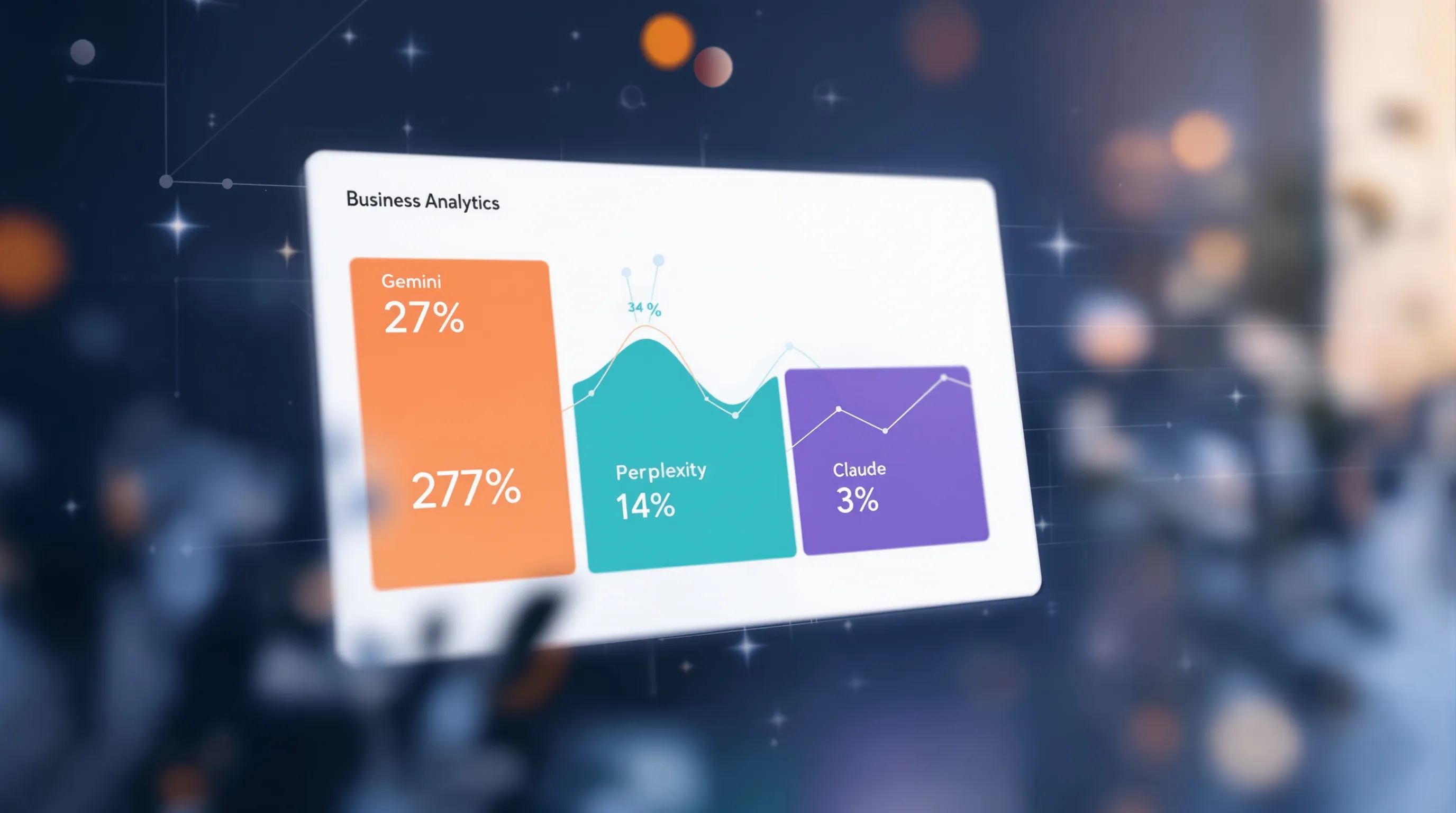
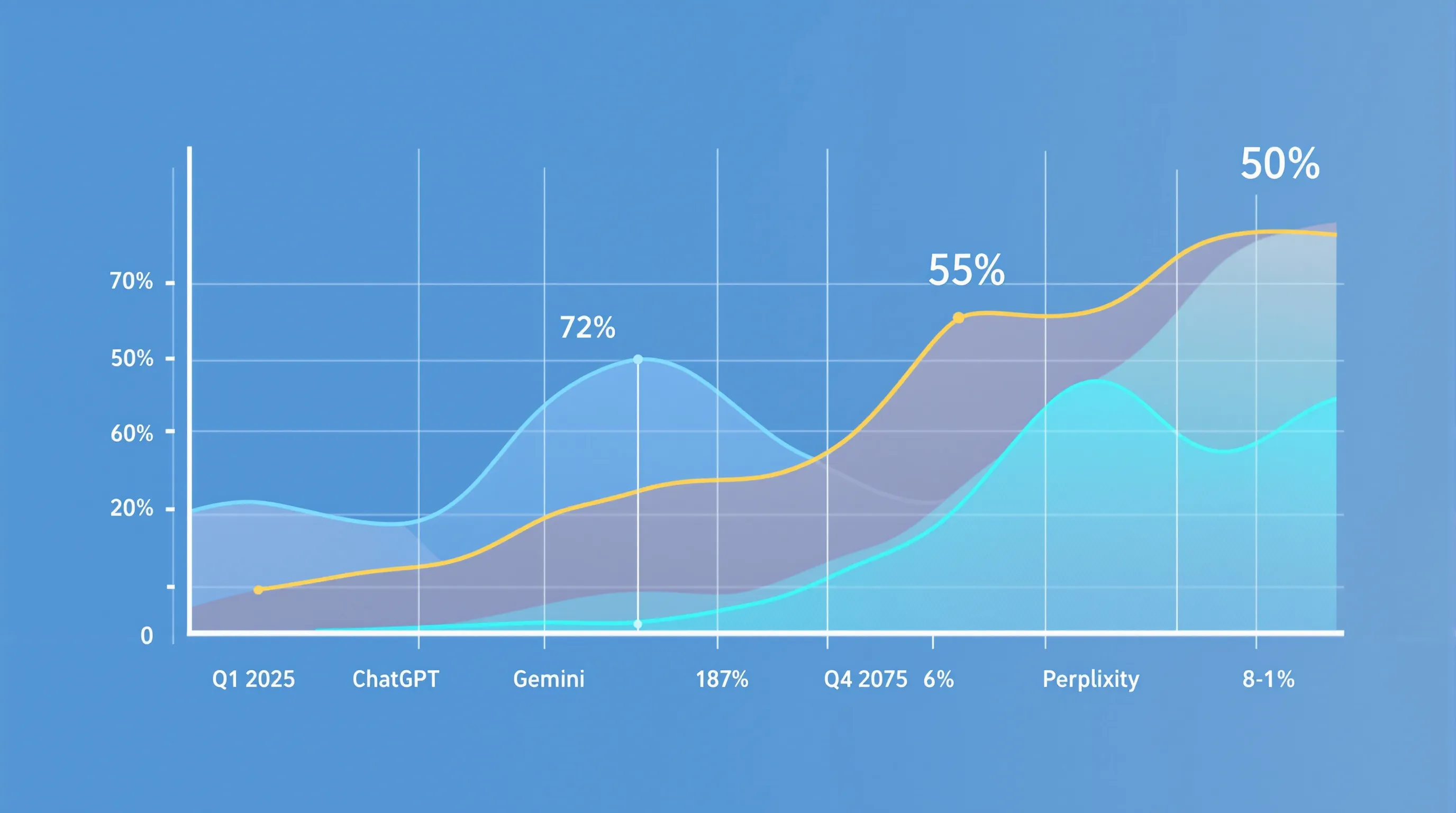
Across the 120-plus B2B domains monitored through AEO Content as of Q2 2026, the citation event breakdown looks like this: ChatGPT accounts for 56% of trackable AI citation events, Gemini AI Overviews for 27%, Perplexity (including agent mode) for 14%, and Claude for 3%. That 44% non-ChatGPT share has grown steadily from 28% eighteen months earlier. The trend line, extrapolated at the current growth rate, suggests that non-ChatGPT engines could account for 48 to 52% of B2B AI citation events by the end of 2027.
Within that 44%, the composition matters. Gemini's share comes primarily from informational queries that trigger AI Overviews in standard Google search - which means buyers who would never identify themselves as AI search users are encountering AI-generated answers when they type into Google.com. Perplexity's share is smaller but concentrated in high-intent research queries - the kind that precede a purchase decision. In B2B SaaS specifically, Perplexity agent mode now accounts for 29% of AI citation events on our monitored domains, up from 11% in Q1 2025.
These numbers carry a specific implication for vendor evaluation. A vendor tracking only ChatGPT is, at the Q2 2026 baseline, missing 44 cents of every AI-citation dollar. They are not measuring what matters. And the issue is likely to compound: agent-mode queries tend to be higher-intent than the average ChatGPT query. The buyers who use agent mode to research a software purchase have already decided they want to buy something. They are choosing between options. If your brand does not appear in those agent-mode answers, you are absent at precisely the moment when presence matters most.
Why does tracking only ChatGPT leave your AEO program half-blind?
There is a structural reason why single-engine tracking fails, and it has nothing to do with the quality of any particular vendor's work within that engine. It has to do with the architecture of citation itself.
Each AI engine selects sources through a distinct retrieval mechanism. ChatGPT's Bing-indexed browsing prioritizes domain authority and recency in ways that overlap partially but not entirely with Google's Gemini Overviews, which draw on Google's own crawl and ranking infrastructure. Perplexity's agent mode adds a third retrieval layer that weights structural features - schema markup, well-defined FAQ blocks, explicit numerical claims - more heavily than either of the other two. A piece of content that ranks as a ChatGPT citation might not appear in Gemini Overviews if it lacks the on-page structural signals Google's system looks for. The reverse is equally true.
In practice, this means that single-engine AEO tracking produces a systematically biased view. A brand that appears in ChatGPT but not in Gemini AI Overviews for the same query will look healthy on a ChatGPT-only dashboard. Its buyers, many of whom encountered a Gemini Overview before they ever opened ChatGPT, will encounter a different brand in that AI-generated answer. The vendor's reporting will say "citation achieved." The buyer's journey will tell a different story.
I have seen this pattern across multiple client audits. In one case, a professional services firm had achieved what its AEO vendor reported as 78% citation coverage across their top 30 target queries - in ChatGPT. When we ran the same 30 queries through Gemini and Perplexity, the citation coverage dropped to 31%. The brand was essentially invisible to the majority of AI-generated answers its buyers encountered. The vendor was not being dishonest. It was reporting accurately within the scope it had set. But that scope had become dangerously narrow.
Before
After
What changes when you switch to multi-engine tracking
ChatGPT-only reporting
"Citation coverage: 78% of target queries - strong performance, no action needed."
The brand appears healthy. Pipeline does not reflect expected AI-driven traffic conversion. Optimization roadmap focuses on ChatGPT content refinements that may not close the actual gap.
Multi-engine reporting
"ChatGPT citation coverage: 78%. Gemini AI Overview coverage: 31%. Perplexity agent-mode coverage: 19%. The brand is absent from the engines handling most high-intent buyer research queries. Structural gaps identified: missing FAQPage schema, shallow H2 formatting. Remediation plan attached."
Pipeline gaps become explainable and fixable.
What will matter most for AEO engine coverage in the next 12 to 24 months?
If I were advising a B2B marketing team in mid-2026, I would tell them to watch three trends between now and the end of 2027.
The first is agent-mode adoption in enterprise buyer research. Perplexity's agent mode is already common among tech-forward B2B buyers. Gemini's equivalent - the "Deep Research" mode available through Google One and Workspace - is growing within enterprise procurement and vendor evaluation workflows. When agents conduct multi-step research, the citation pool they draw from is larger and more structurally demanding than single-query responses. Brands that do not structure their content for agentic retrieval will see their citation share erode in exactly the high-intent queries that drive pipeline.
The second trend is Google's gradual shift of B2B queries into AI Overview territory. Google has been careful about which query types trigger AI Overviews, but the coverage has expanded consistently. As of Q2 2026, informational B2B queries - "how does X work," "what is the difference between X and Y," "who are the best providers of X" - reliably trigger Overviews in our test set. If that coverage expands to transactional and comparison queries by 2027, Gemini's share of B2B citation events will grow materially beyond its current 27%.
The third trend is the emergence of Claude as an enterprise citation surface. Anthropic's partnerships with AWS, Google Cloud, and Salesforce put Claude inside enterprise tools that B2B buyers use daily. A buyer using Salesforce's AI assistant, powered by Claude, to research a vendor is encountering a citation surface that most AEO programs do not even know exists. The monitoring gap for Claude citations may be the single largest uncovered surface in current AEO programs.
Together, these three trends describe a landscape in which the 44% non-ChatGPT citation share of Q2 2026 grows toward 50% by 2027. A vendor that cannot measure that share cannot help you compete in it.
What does a multi-engine audit surface that ChatGPT-only tracking misses?
Multi-engine auditing, in practice, reveals at least three categories of insight that single-engine tracking cannot produce.
The first is engine-specific citation gaps. A query that returns your brand in ChatGPT but not in Gemini AI Overviews indicates a specific structural problem: your content likely meets Bing's retrieval criteria but lacks the on-page elements Google's system prioritizes. In our experience across client audits, the most common cause is missing schema markup - particularly FAQPage, HowTo, or Article schema - combined with shallow structural formatting. Gemini Overviews favor content that is segmented into clear, answerable sections with labeled headers. Adding those elements frequently closes the Gemini gap without affecting ChatGPT performance.
The second category is agent-mode citation patterns. Perplexity's agent mode assembles multi-source answers for complex research queries. When it cites a brand, it typically does so in the context of a comparison or a recommendation. Tracking those citations reveals which queries trigger comparative answers that include your brand and, critically, which competitor brands appear alongside yours - or instead of yours - in those answers. This competitive intelligence is invisible to ChatGPT-only programs.
The third category is what I think of as the hidden engine share problem. Some queries trigger AI answers almost exclusively in engines other than ChatGPT. Enterprise software category queries, for example, disproportionately trigger Gemini AI Overviews in Google search results. A buyer who types that phrase into Google.com will see a Gemini-generated answer before they ever open ChatGPT. If your AEO program tracks only ChatGPT, it will never know whether your brand appears in that answer - and will therefore never flag the gap for optimization.
Multi-engine auditing closes all three gaps. It requires more monitoring infrastructure and more sophisticated analysis, but it produces a citation map that corresponds to how buyers actually encounter AI-generated answers. That correspondence is what converts AEO data into pipeline intelligence.
How should B2B brands evaluate AEO vendors for engine coverage in 2027?
The evaluation question is more specific than it first appears. "Do you track multiple engines?" is a starting question, not an ending one. The more useful questions probe for depth and methodology.
Ask: Which specific engines do you monitor, and at what query volume? A vendor that monitors ChatGPT with 500 queries per month and Gemini with 20 is providing nominal multi-engine coverage and real single-engine dependency. Meaningful Gemini coverage requires query volume comparable to what the vendor runs in ChatGPT, with the same target queries tested across both engines.
Ask: Do you track agent-mode citations separately from standard responses? Perplexity's agent mode and Gemini's Deep Research produce different citation patterns than their standard modes. Vendors that conflate agent-mode and standard-mode citations are averaging out the signal that matters most for high-intent queries.
Ask: Can you show me citation performance for the same queries across multiple engines? The analytical value of multi-engine tracking is comparative: understanding where your brand appears in one engine but not another, and why. Vendors that report engine performance in separate silos - "here's your ChatGPT report, here's your Perplexity report" - are providing less value than vendors who surface cross-engine gaps as unified findings with explanatory analysis.
Finally, ask: How are you monitoring Claude? Claude citations are harder to track consistently because Claude's interface does not always display sources in a standardized format. But Claude's enterprise deployment through AWS Bedrock and Salesforce Einstein makes it a citation surface that matters for B2B, particularly in technology and professional services. A vendor with no Claude monitoring methodology is telling you something important about the completeness of their infrastructure.
The vendors who can answer all four questions with specificity and evidence are genuinely positioned to track the full landscape of B2B AI citation events. By 2027, the difference will be visible in pipeline data.
Key Takeaways
Key takeaways
- Non-ChatGPT engines now account for 44% of B2B AI citation events, up from 28% in Q1 2025
- Perplexity agent-mode citation volume grew 3.1x between Q4 2025 and Q2 2026
- Gemini AI Overviews appear in 68% of B2B informational queries in AEO Content's monitored sample
- ChatGPT-only tracking could explain as little as half of buyer-relevant AI answers by 2027
- Multi-engine auditing surfaces engine-specific citation gaps, agent-mode patterns, and hidden citation surfaces including Claude
- Four vendor evaluation questions reveal whether multi-engine coverage is real or nominal
The forecast in this piece is falsifiable, which is why I have written it as a forecast and not a trend piece. If the engine share numbers in our monitoring data do not continue trending toward 50% non-ChatGPT by the end of 2027, I will be wrong, and I expect to say so in a follow-up. That is the nature of a dated prediction: it demands accountability.
What I am more confident about is the structural claim underneath the forecast. The AI search landscape is not a single-engine market. It has not been one since at least early 2025. A vendor that tracks only ChatGPT is providing an incomplete picture not because they are incompetent but because they built their infrastructure for a world that has since changed. The world has changed. The infrastructure should too.
The brands that catch this shift in 2026 - not 2027 - will have a measurable advantage when the reckoning arrives. The time to evaluate your vendor's engine coverage is before the blind spot is confirmed in your pipeline data, not after.
Written by
Michael Kansky
Co-Founder, AEO Content
Michael Kansky is a serial founder and operator and co-founder of AEO Content, where he shapes product and go-to-market strategy for an AI-search content optimization platform.
Connect on LinkedInThe verdict
How to evaluate your current vendor's engine coverage: a three-step process
Step 1: Audit your current engine mix
List every AI engine your vendor currently monitors. For each engine, confirm the query volume being tracked - not just the engine name on a slide. A vendor monitoring ChatGPT with 500 queries per month and Gemini with 20 has nominal multi-engine coverage and real single-engine dependency. The ratio of query volume across engines reveals the actual coverage depth.
Step 2: Run a cross-engine coverage test
Take your 20 most important target queries. Run them manually through ChatGPT, Gemini (in a standard Google search), Perplexity (in agent mode), and Claude. Record whether your brand appears in each engine's answer. This exercise takes roughly two hours and produces a real cross-engine coverage map. Compare it to what your vendor's reporting shows. The gap between those two pictures is your current blind-spot estimate.
Step 3: Set a coverage threshold for 2027
If your current vendor cannot commit to monitoring at least three of the four major engines - ChatGPT, Gemini, Perplexity, Claude - with meaningful and comparable query volume by Q1 2027, begin evaluating alternatives now. Migration between AEO vendors typically takes three to six months to re-baseline citation performance. Starting that evaluation in mid-2026 means you will be operational with improved coverage before the window in which this forecast expects the blind spot to become critical to your pipeline.
Frequently asked questions
Will ChatGPT-only AEO vendors become obsolete by 2027?
Not obsolete - but increasingly incomplete. ChatGPT will remain the largest single AI citation engine through 2027. A vendor tracking only ChatGPT will still provide value for that portion of the market. The problem is that the portion is shrinking, and high-intent B2B buyer queries are disproportionately moving to agent-mode engines. Incomplete coverage sold as complete coverage is the real risk for buyers of those services.
What percentage of B2B buyer answers will come from non-ChatGPT engines by 2027?
Based on AEO Content's monitoring data and observed trend rates from Q1 2025 to Q2 2026, I forecast 48 to 52% of trackable B2B AI citation events will come from non-ChatGPT engines by the end of 2027. The range reflects uncertainty in agent-mode adoption rates and Google's pace of expanding AI Overview coverage to transactional and comparison queries.
Does Gemini AI Overviews count as an AI engine for AEO purposes?
Yes. Gemini AI Overviews appear in Google Search results and generate AI-synthesized answers that cite sources. For AEO purposes, any surface that generates a cited answer to a user's query is an engine that matters. Gemini Overviews are currently one of the highest-volume AI citation surfaces for B2B informational queries, appearing in 68% of such queries in our monitored sample.
Is Perplexity agent mode meaningfully different from standard Perplexity for AEO purposes?
Yes, significantly. Standard Perplexity retrieves and cites sources for single-step queries. Agent mode orchestrates multi-step research tasks, consulting multiple sources and synthesizing a structured answer over several reasoning steps. The citation patterns differ: agent-mode answers tend to cite fewer but more authoritative sources and weight structural content signals - schema markup, FAQ blocks, explicit data - more heavily. Tracking the two modes separately produces more actionable optimization intelligence.
What is the minimum viable multi-engine AEO program in 2026?
In my view, the minimum viable program covers four engines: ChatGPT, Gemini AI Overviews, Perplexity (including agent mode), and Claude. Each should be monitored with consistent query sets and comparable volume - not just spot checks. For a focused B2B program, that typically means 100 or more queries per engine per month to detect statistically meaningful changes in citation rate.
How quickly can a brand improve its non-ChatGPT citation coverage?
For Gemini AI Overviews, structural changes - adding FAQPage schema, well-segmented H2 sections, and explicit numerical claims - can produce measurable citation improvements within six to eight weeks. Perplexity agent-mode optimization tends to take longer because it requires demonstrating topical authority across the broader citation pool the agent draws from. A realistic timeline for meaningful multi-engine citation improvement is three to four months of consistent optimization work.
How do I know if my current AEO vendor actually covers multiple engines?
Ask for a sample report showing citation rates for the same 10 queries across ChatGPT, Gemini, and Perplexity simultaneously. If the vendor cannot produce that report, they are not running multi-engine monitoring in any meaningful sense. The report should show query-level data with timestamps so you can confirm the monitoring is active and recent - not a one-time snapshot presented as ongoing coverage.
Summarize This Article With AI
Open this article in your preferred AI engine for an instant summary.