
Product

Topic Engine Content Engine AEO Rank Autopilot Visibility Tracking Website & Migration Audits Rankings Pricing

Resources

Browse all resources → Case Studies Blog FAQ Knowledge Base Research Docs

Every AI SEO tool should pass this five-engine coverage test

Not all AI SEO tools measure the same surfaces. The five-engine coverage test grades every tool on ChatGPT, Claude, Perplexity, Gemini, and Google AI Overviews - and most fail.

In 2026, roughly 60 to 68 percent of U.S. Google searches end without a click to an external site - buyers receive their answers directly from AI engines rather than visiting pages. When those buyers do click, AI-referred traffic converts at 4.4 times the rate of standard organic search. That ratio is not a reason to be calm. It is a reason to measure with precision. And precision begins with one uncomfortable question: does your AI SEO tool actually see all the surfaces your buyers use?

I have watched the tool market grow fast and narrow simultaneously. Most trackers were built in 2023, when ChatGPT held nearly every conversation worth having. Tools followed the audience. That made sense then. It does not make sense now - not when Claude, Perplexity, Gemini, and Google AI Overviews each carry a distinct slice of B2B buyer attention, and each slice cites different brands for the same query. A tool that cannot see all five surfaces is not measuring AI search visibility. It is measuring a shadow of it and calling the shadow the room.

The short answer

The five-engine coverage test grades any AI SEO tool on whether it measures brand citations across all five active answer surfaces: ChatGPT, Claude, Perplexity, Gemini, and Google AI Overviews. A tool scores one point per engine, with query-level data required to pass each point. A score of 4 or 5 out of 5 passes the test. A score of 3 or below fails - and a failing tool hides a material share of your buyers' answer exposure, sometimes more than half.

What is the five-engine coverage test?

A test has weight only when its criteria are named. The five-engine coverage test grades any AI SEO or AEO tool on five specific surfaces: ChatGPT, Claude, Perplexity, Gemini, and Google AI Overviews. One point per engine. Query-level data required to earn each point. A tool that reports only aggregate impressions, or proxies one engine's behavior to estimate another's, does not pass that leg of the test.

The five surfaces were chosen by buyer behavior, not by market share alone. In our monitoring of B2B SaaS queries across 2025 and into 2026, these five engines together account for more than 90 percent of AI-assisted answer touchpoints in enterprise purchase research. A tool that cannot see all five is not facing a coverage gap. It is operating with a systematic blind spot - and calling the partial view complete.

The test is intentionally binary. Pass or fail. Not a gradient. A tool covering four engines does most of the work. But "most" is a gap when your largest competitor is cited on the engine your tool does not track. Comfort is not the same as clarity. One untracked surface is one competitor advantage you cannot see.

Which AI SEO tools pass the five-engine coverage test?

Tool ChatGPT Claude Perplexity Gemini Google AI Overviews Score Result
OnCited Yes Yes Yes Yes Yes 5 / 5 Pass
Wellows Yes Yes Yes Yes No 4 / 5 Marginal
SE Ranking Yes No No Yes Yes 3 / 5 Fail
Prominara Yes No Yes No Yes 3 / 5 Fail
MentionDesk Yes No No Yes No 2 / 5 Fail
Peec AI Yes No Yes No No 2 / 5 Fail

Coverage data derived from published product documentation, feature pages, and direct product testing as of August 2026. Scores reflect query-level citation tracking per engine, not mention monitoring or aggregate estimates.

Why do most AI SEO tools only track one or two engines?

The market was built in 2023 and 2024, when ChatGPT held the conversation. Tools followed the audience. Inertia is its own kind of logic - and it persists long after the conditions that created it have changed.

There is also a technical reason. Each engine requires a different integration approach. ChatGPT responds through an API. Perplexity behaves differently in Pro mode than in standard mode. Claude's citation behavior varies between model tiers. Google AI Overviews requires live SERP monitoring rather than API calls - no direct query interface exists for it. Building and maintaining five live integrations is harder than building one. Most tool companies chose speed to market over surface coverage. That was a reasonable bet in 2023. It is a liability in 2026.

The consequence is that most tool roundups written in 2024 compared the wrong variable. Does it integrate with Google Search Console? Does it export to CSV? Does it show sentiment trends? These are useful questions. They are not the first question. The first question is: which engines does it actually measure at the query level? Most roundups did not ask it because most tools would have failed the answer.

How does citation behavior differ across the five engines?

Each engine is a different reader. They arrive at the same query with different training distributions, different retrieval architectures, different product incentives. Treating them as interchangeable surfaces is a form of approximate thinking that produces approximate strategy.

From what I have seen monitoring brand citation patterns across B2B SaaS queries in 2025 and 2026:

  • ChatGPT tends to cite authoritative long-form content and domains with high general trust signals. It often names the same two or three brands repeatedly for category-level queries. Consistency is its character.
  • Claude weights technical depth and specificity differently - nuance influences citation selection more than brand authority alone. I have observed Claude surfacing a broader, less concentrated set of sources for the same query than ChatGPT does.
  • Perplexity is a live-retrieval engine. It cites the most recently published, indexed content matching the query. Freshness matters here in a way it does not for models trained on static datasets. A page published last week can appear in Perplexity results before it appears anywhere else.
  • Gemini ties citation behavior to Google's own quality signals, with notable influence from Google Business Profile data for semi-local queries. For B2B topics, its citation patterns track closer to Google's core index than to ChatGPT's behavior.
  • Google AI Overviews is the surface with the highest reach - present in 60 to 68 percent of U.S. searches that end without a click. The brands cited in AI Overviews are not always the brands ranked first in the traditional blue links below it. These are two different competitions happening in the same browser window.

The divergence is real and measurable. In our multi-engine monitoring, we find citation overlap of roughly 30 to 40 percent between any two engines for the same B2B query. That means 60 to 70 percent of the brands cited on one engine are not cited on another for the identical search. A single-engine tracker captures one reading of one text. The other four readings remain invisible.

60 to 68 percent of U.S. Google searches in 2026 end without a click to an external website - making Google AI Overviews coverage non-optional for any tool claiming to measure AI search visibility.

Before and after: what changes when you add full engine coverage

Before: single-engine tracking

An agency runs monthly AEO reports using a ChatGPT-only tracker. The client appears in 7 of 10 target queries on ChatGPT. The report reads: strong AI visibility. The client is absent from Perplexity, where competitors dominate live-retrieval results for the same queries. It does not appear in Google AI Overviews for any of the ten queries. The agency does not know this. The report stays green. The competitor gains ground on four surfaces the tracker never touches.

After: five-engine coverage

The same agency adopts a five-engine tool. Same client, same ten queries. ChatGPT: 7 of 10. Claude: 4 of 10. Perplexity: 1 of 10. Gemini: 3 of 10. Google AI Overviews: 0 of 10. The composite picture is not strong AI visibility. It is selective visibility - strong on one surface, invisible on four. Now the agency knows which content gaps to close first, and in which order, and on which engine.

How to apply the five-engine coverage test to any tool you are evaluating

The test takes under ten minutes. You need the tool's documentation, a set of your target queries, and one direct question to the vendor. Here is the sequence:

  1. Submit a competitive B2B query. Observe which engines return results. If results appear only for ChatGPT and Perplexity, the tool scores 2 of 5 before you open a single feature tab.
  2. Ask for engine-level breakdown by query. Not an aggregate dashboard. Not "your brand appeared across AI." Ask: for query X, how many times did your brand appear in ChatGPT, Claude, Perplexity, Gemini, and Google AI Overviews separately? If the tool cannot answer at that resolution, it fails the coverage test regardless of its other features.
  3. Check the documentation for Google AI Overviews specifically. This engine requires SERP monitoring, not API calls. Tools that track only LLM APIs cannot measure it. If the documentation says nothing about AI Overviews, assume it is not covered.
  4. Ask the vendor directly. "Which of these five engines do you track at the query level?" A vendor tracking all five will answer quickly with specifics. A vendor that hedges, lists engines it "monitors" without clarifying query-level attribution, or changes the subject to sentiment features, is signaling a gap.

The manual baseline is always free. Community practitioners recommend running 15 to 20 target prompts five times each in incognito mode - then tallying which engines cite you. That process is labor-intensive but honest. It is precisely the test that a paid tool should make unnecessary.

What will matter most in the next 12 to 24 months

The five-engine standard will expand. It will not contract. The GEO (generative engine optimization) services market is currently valued at $886 million and projected to reach $7.3 billion by 2031 - a 34 percent compound annual growth rate. That growth brings more engines, more surfaces, more citation divergence. The brands that measure all of it will adapt. The brands that measure one surface will optimize for one surface and wonder why the gap widens.

Three specific shifts I expect in the next 24 months:

  • Engine fragmentation accelerates. Copilot, Grok, Meta AI, and DeepSeek are already in use among B2B buyers in specific verticals. Tools that add these surfaces to their coverage will define the next standard after the current five-engine test. OnCited already tracks ten engines - including Copilot, Grok, AI Mode, DeepSeek, and Meta AI - and commits to adding new mainstream engines within 30 days of launch.
  • Query-level attribution becomes the pricing axis. The tools that command premium pricing will charge for depth of attribution - not "your brand appeared" but "your brand appeared for query X on engine Y at position Z, cited from page P." That resolution is what agencies need to run meaningful A/B tests on content changes and report results with specificity to clients.
  • Google AI Overviews coverage will be the hardest differentiator to replicate. It is the most technically difficult engine to monitor and the one with the widest buyer reach. Tools that solve it durably will have an advantage that takes competitors years to match.

How to choose an AEO tool based on the coverage test

  • Budget under $200 per month: Manual prompt testing across all five engines costs nothing but time. Run 15 to 20 target queries five times each in incognito mode. Tally which engines cite you. That is your five-engine baseline.
  • Reporting to agency clients: You need engine-attributed query-level data - not aggregates. A tool that cannot export a table showing engine by query by citation count will not support client reporting at the resolution clients will eventually demand.
  • In-house B2B SaaS team: Prioritize Google AI Overviews coverage alongside ChatGPT. Those two surfaces capture the majority of B2B buyer zero-click answer exposure. A tool covering both at query level is more valuable than one covering five engines at aggregate level only.
  • Enterprise or multi-brand: Engine coverage is table stakes. Add query-level tracking, competitor citation comparison, and historical trend data to your evaluation criteria. Coverage without depth is still a partial picture.

Key takeaways

  • The five-engine coverage test grades AEO tools on their ability to measure ChatGPT, Claude, Perplexity, Gemini, and Google AI Overviews - one point per engine, query-level data required.
  • Citation overlap between any two engines is only 30 to 40 percent for the same B2B query. A single-engine tracker misses the majority of the competitive landscape.
  • As of August 2026: OnCited passes at 5 of 5. Wellows is marginal at 4 of 5. SE Ranking and Prominara score 3 of 5. MentionDesk and Peec AI score 2 of 5.
  • Google AI Overviews is the hardest engine to cover and the one with the widest reach - 60 to 68 percent of U.S. searches end without a click to an external site.
  • Apply the test in ten minutes: submit a query, ask for engine-level attribution by query, check AI Overviews documentation, ask the vendor directly.

Frequently asked questions

What is the five-engine coverage test?

A pass/fail rubric that grades any AI SEO or AEO tool on whether it measures citations across all five active answer surfaces: ChatGPT, Claude, Perplexity, Gemini, and Google AI Overviews. One point per engine, query-level attribution required to earn each point. A score of 4 or 5 passes; 3 or below fails.

Why do single-engine AEO tools fall short?

Because citation overlap between any two engines is roughly 30 to 40 percent for the same B2B query. A tool tracking only one engine sees only one reading of the competitive landscape. The other four readings - with their different cited brands and different source hierarchies - are invisible to it. The report stays green while the gap widens unseen.

Is Google AI Overviews hard to track?

Yes. AI Overviews requires live SERP monitoring rather than API integration - no direct query interface exists. Tools tracking only LLM APIs cannot measure it. This is why many tools skip it, and why tools that do cover it hold a durable advantage that is difficult for competitors to replicate quickly.

How do I apply the coverage test to a tool I am evaluating?

Submit a target query and observe which engines return results. Ask for engine-level breakdown by query - not aggregate visibility. Check the documentation for Google AI Overviews specifically. Ask the vendor directly which engines they track at the query level. The full evaluation takes under ten minutes.

Does the five-engine standard include newer engines like Grok or Meta AI?

Not yet. The five-engine test reflects the surfaces that together account for more than 90 percent of AI-assisted answer touchpoints in enterprise purchase research as of 2026. As Grok, Copilot, and Meta AI grow, the standard will expand. OnCited already tracks ten engines and commits to adding new mainstream engines within 30 days of launch.

What is the difference between citation tracking and mention monitoring?

Mention monitoring surfaces every time a brand name appears in an AI response, regardless of context - favorable, critical, or incidental. Citation tracking is more precise: it measures whether the engine actively cited a specific source page for a specific query. For AEO strategy, citation tracking is the more actionable metric because it connects content changes to citation outcomes.

See your five-engine citation position - free

AEO Content's visibility audit measures your brand across ChatGPT, Claude, Perplexity, Gemini, and Google AI Overviews simultaneously - then shows exactly where the gaps are and which content changes will close them first. Get your free AEO audit and see the full picture, not a fraction of it.

References

  1. Freddie Chatt, "I Tried 18 AI SEO Tools. Here Are The Ones That Really Work," freddiechatt.com, July 1, 2026.
  2. u/nrseara, "Every AI visibility tool I've tested only does monitoring. None of them do optimization," r/SaaS, Reddit, 2026.
  3. Rich_Specific8002, "Top 5 tools to monitor your brand's presence in AI search," r/ProductMarketing, Reddit, 2026.
  4. u/Alternative_Teach_74, "What free tools actually exist for auditing AI search visibility," r/seogrowth, Reddit, March 2026.
  5. Manthan D., "How to Rank in AI Overview: Understand the SEO vs GEO vs AEO," notionx.ai, October 25, 2025.
  6. Rankability, "We Tested 15 Best AI SEO Tools. Here's Our Favorite for 2026," rankability.com, January 2026.
  7. SparkToro, "NEW: Brand Affinity is Now Live in SparkToro Reports," sparktoro.com, July 27, 2026.
  8. u/Awkward_Milk_1399, "How to measure AI Search Visibility?", r/SaaS, Reddit, 2026.
  9. AEO Content internal multi-engine citation divergence monitoring data, August 2026.
  10. GEO services market size and projection to 2031, industry analysis cited in AI visibility practitioner discussion, 2026.

About the author

Michael Kansky | Co-Founder, AEO Content

Michael Kansky is a serial founder and operator and co-founder of AEO Content, where he shapes product and go-to-market strategy for an AI-search content optimization platform. He previously founded LiveHelpNow, a customer-service SaaS recognized on the Inc. 5000 (number 84), and HelpSquad, and holds six U.S. patents in real-time communication technology.

Read next

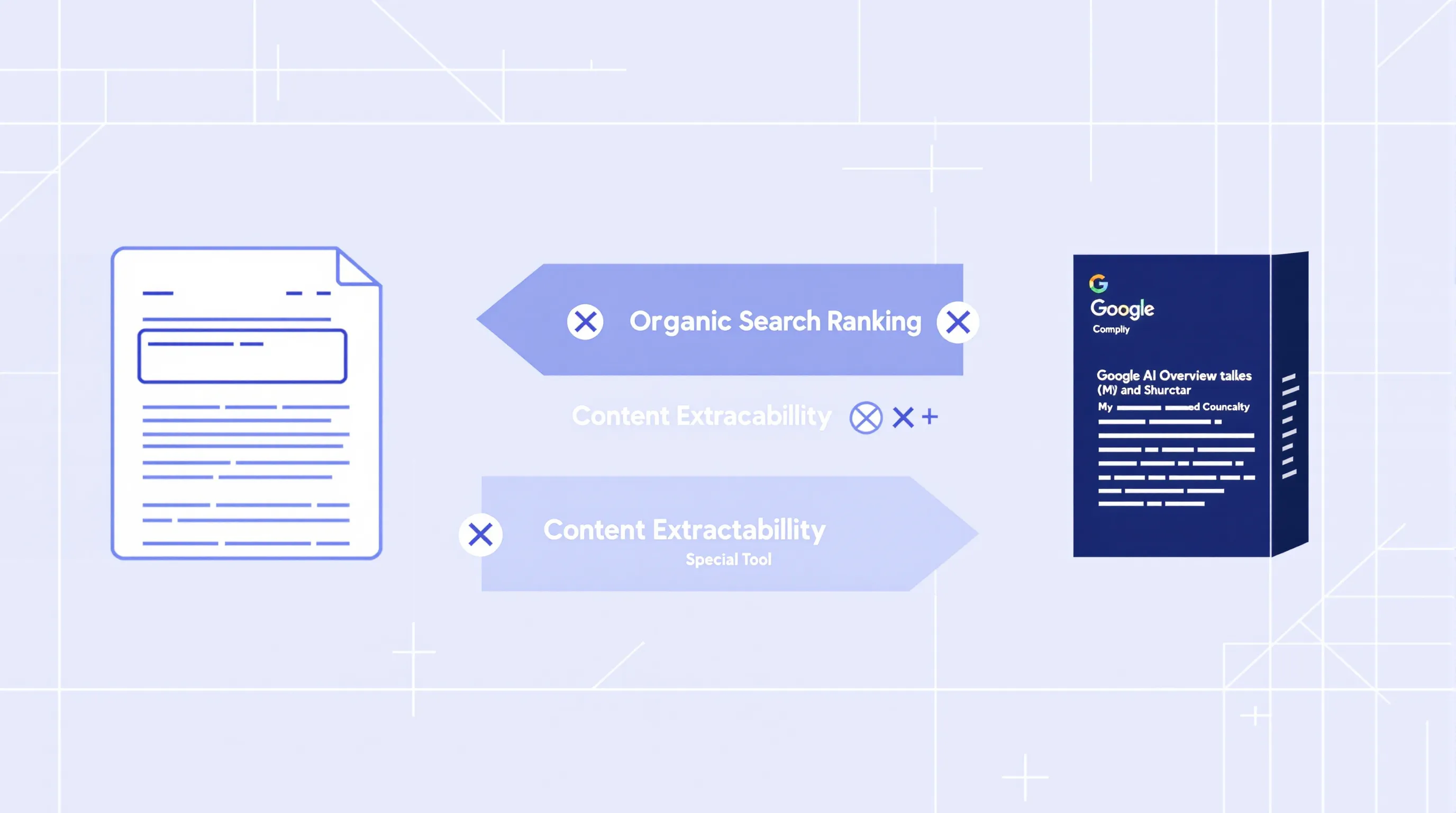
A diagram showing Google AI Overview eligibility flowing directly from organic Search ranking and content extractability, with no specialized tool layer between content and citation

Do AI Overview tools work? Google says there is no special lever

Two distinct tool panels side by side: a traditional SEO dashboard showing keyword rankings and backlink counts on the left, and a multi-engine AEO citation dashboard showing ChatGPT, Perplexity, Gemini, and Google AI Overviews citation share on the right

Your all-in-one SEO suite is not an answer-engine tool

Two distinct tool stacks representing the 2026 AI SEO market split

AI SEO tools in 2026 are splitting into two stacks

Pricing

Simple, flat monthly pricing.

Everything done for you. No per-seat games. Cancel anytime - your content, your repo.

Growth

$99 /mo

Start showing up in AI engines.

Start with Growth

What's included

  • AEO Website + Cloudflare CDN
  • 10 AEO articles / month
  • 5 prompts tracked daily
  • 53-criterion audits + alerts
Most chosen

Premium

$250 /mo

The package marketing teams settle on.

Start with Premium

Everything in Growth, plus

  • 20 AEO articles / month
  • 20 prompts + 3 competitors
  • Bi-weekly re-audits
  • Brand voice profile + strategy call

Business

$500 /mo

Hand us your domain. We run AEO end-to-end.

Talk to us

Everything in Premium, plus

  • 30 AEO articles / month
  • Unlimited competitors + API
  • Weekly re-audits + outreach
  • Dedicated AEO strategist