
Free AEO audits after Google's AI contribution panel: a 2027 forecast

On this page
Quick Answer
By the end of 2027, a free AEO audit will be worth only what it can explain about Google's own AI contribution numbers, if the reported Search Console panel ships.
Audits that publish their criteria and weights can be checked. Black-box grades cannot. And the panel will not settle everything: Google Search Help itself tells users to "always check important info in more than one place," while ChatGPT, Claude and Perplexity answers sit outside Google's count entirely.
Key Points
- In September 2026 , Google was reported to be piloting a Search Console panel that could show which sites' content is used in Gemini, AI Overviews and AI Mode answers.
- AEO Content has scored 11,000+ domains across 15 sectors and 28 categories, and its rank predicts citation likelihood only above roughly 73 out of 100 .
- Ethan Smith of Graphite described a 2025 study of thousands of questions: about 35% of ChatGPT's citations overlapped with Google results, against about 70% of Perplexity's.
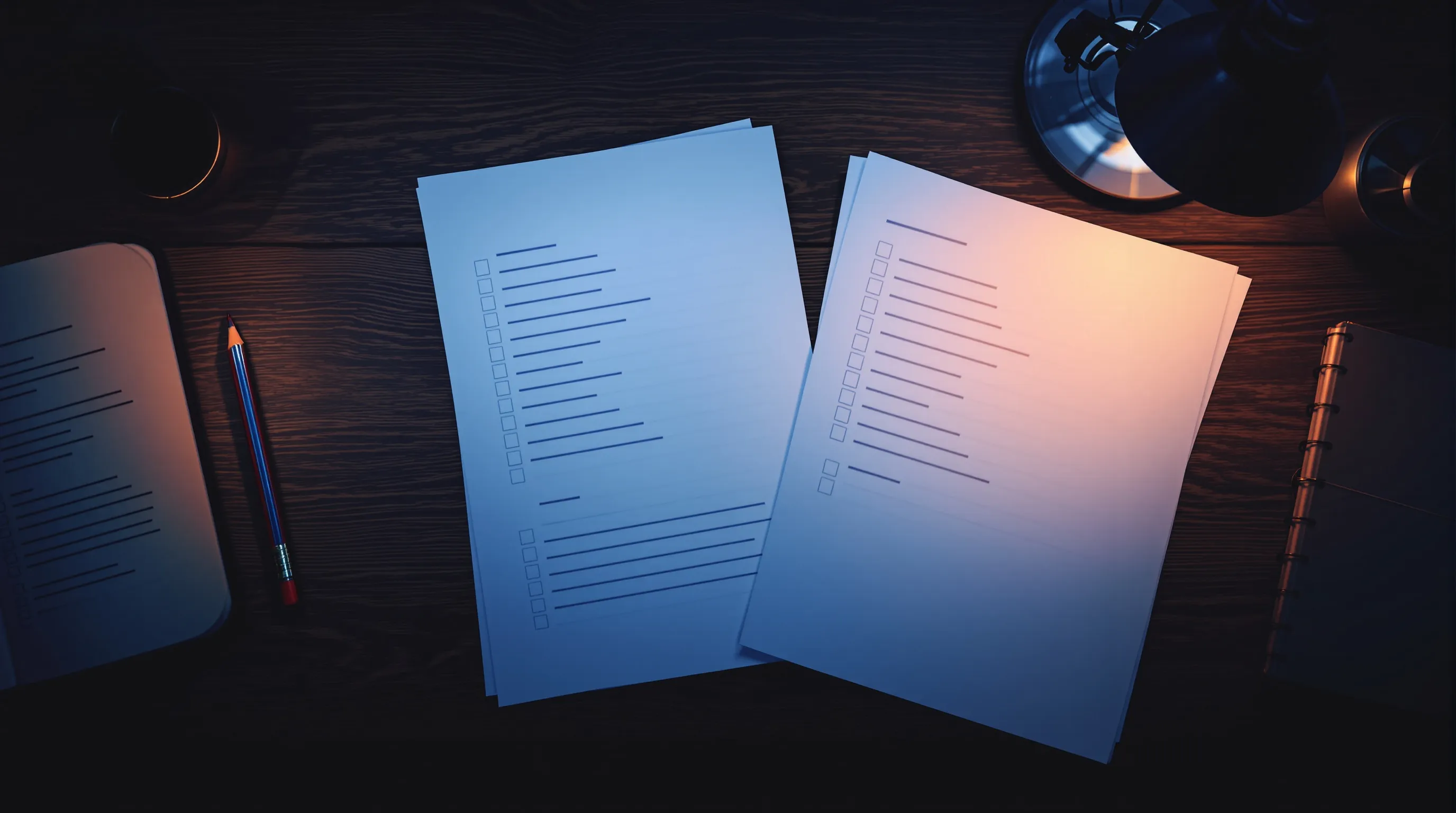
A free AEO audit waits on the desk while the first-party numbers it will be judged against are still dark.
Google calls AI Overviews "a core Google Search feature, like knowledge panels," and its help pages say they "cannot be turned off." Every searcher gets them. No site owner gets a switch.
The only way around them is the Web filter, picked after the search has already run, which "displays only text-based links without features like AI Overviews." Google lists the feature in 249 locations and 98 languages. It fires on image searches and Circle to Search as well. And the same help page admits, in plain type, that "AI Overviews can and will make mistakes."
Nobody in the house is counting what those answers take. Nearly 30% of marketers report that search traffic has dropped as consumers turn to AI tools. Only 62% of B2B marketers say they understand the challenges in organic search and what to do about them, against 70% of B2C marketers. The B2B side is behind. And late.
Google's reported AI contribution panel could be the first meter on that wall. Still in pilot. Still dark. Until the needle moves, put one question to every free audit on your desk: which of its findings could that meter ever confirm, and which will it never see at all?
I wrote this forecast for the buyer standing in front of that meter: what free audits check today, where readiness ranks stop predicting citations, how a SaaS team or a VC portfolio should judge the offer, and what Google's numbers will still leave in the dark.
Google's numbers will not show the whole board. In a 2025 study of thousands of questions, about 35% of ChatGPT's citations overlapped with Google results, and about 70% of Perplexity's did.
Ethan Smith, chief executive of Graphite, described those findings on Lenny's Podcast in September 2025. Read them again. Most of what ChatGPT cited sat outside Google's results.
Now Google is reportedly testing a Search Console panel that would show its own AI contribution figures. Not released. Not yet. If it reaches general release, I expect buyers to judge every free AEO audit by the end of 2027 on whether its findings explain the panel's first-party numbers. Audits that publish their criteria and weights will have an answer. A grade with no method behind it will hang on the wall like a stopped clock, and nobody will set their watch by it.
Rerun an audit, and only what changed should move. That is the bar. In an October 2026 pilot, we indexed a live-chat software company's product code, 1,368 text files, and a re-index after a day of commits re-read only the 14 files that changed. I hold audit findings to the same standard, because the panel will hold them to it whether the vendor is ready or not.
What do free AEO audits measure while Google keeps AI traffic hidden?
Free AEO audits measure inputs: crawler access, schema, headings and citability signals. They score what they can see, because Google Search Console still offers no separate line for AI outcomes.
Before you trust a free audit report, put four demands to it:
- Confirm which pages it fetched and whether AI crawlers can reach them.
- Find out what each check is worth in the final number.
- Check that it separates a mention, a recommendation and a citation.
- Ask what it compared its findings against, if anything.
Now look at the blind spot. Google Search Central states that traffic from AI Overviews and AI Mode is counted in Search Console's Performance report under the "Web" search type, folded in with every ordinary blue link and never broken out. The same guidance says a page only has to be indexed and eligible for a snippet to appear as a supporting link: "There are no additional technical requirements." So the console counts the clicks. It does not tell you which answers used you.
The clock reads October 2026. A site owner opens the report, scrolls, waits for the chart to load, and still cannot see a single AI answer that drew on their pages. Then, in September 2026, Google was reported to be piloting an AI contribution panel in Search Console, one that could show which sites' content is used in Gemini, AI Overviews and AI Mode answers. Reported. Not released. Not yet.
So ask one plain question of any free checker: which of its tests would an ordinary SEO audit already run? A typical free checker, by its builder's own account, tests whether GPTBot, ClaudeBot and PerplexityBot are allowed in robots.txt, looks for FAQ, HowTo, Article and Organization schema, and inspects heading hierarchy and answer-first paragraphs. One tester found it flagged a missing llms.txt and sitemap.xml on a site that had both. A builder on Reddit's r/SideProject described a hybrid SEO and AEO audit that adds "AI citation visibility" and "citation-friendly content blocks" to the usual title, meta and schema checks, then admitted, "I'm still improving it."
Practitioners already feel the gap. Measuring AI traffic in analytics shows only the small share of people who clicked, long after the answer was read. Bing Webmaster Tools now exposes AI citation data of its own. Google's console does not.
The common assumption is that a high readiness score means AI engines are already using your pages. Wrong. It means the inputs look right. A review of 5 sources suggests the same pattern: free audits inspect the doorway and never see who walked through it.
AEO Content has run 26,577 real AI-visibility audits, and I'll say plainly what none of them could do: check a finding against a number Google itself published about AI answers. No such number existed to check. I don't fault the builders of free tools for that. When there is no meter on the wall, you measure the wiring and you hope. If the vocabulary of crawlers and schema is still new to you, the AI search optimization FAQ walks through each term one question at a time.
Every score now sits in a drawer, waiting. Take yours out tonight, write down the pages it says should earn AI citations, and put a date on that list in ink, because a prediction nobody dated can never be proved wrong.
Can you check a free AEO audit against anything real today?
Google's own guide to AI Overviews says a page needs nothing special to appear in them. So what exactly is a free AEO audit grading, and can anyone check its work?
Google's Search Central guide to AI features, last updated in December 2025, sets a low bar. A page has to be indexed and eligible to show with a snippet. "There are no additional technical requirements," the guide says. Its AI checklist reads like ordinary SEO: allow crawling in robots.txt and any CDN or hosting setup, use internal links, and keep structured data consistent with the visible page. No separate AI standard exists to grade an audit against.
Free audit builders have filled that space with their own checklists, and they admit the criteria are unsettled. A developer who shared an 18-check readiness tool on Reddit in May 2026 called AEO "still pretty fuzzy as a discipline." The first commenter who described testing it found two misses: "the site I tested has a llms.txt and it said it didn't. Same with the sitemap.xml." Citing Google guidance against repeating FAQ markup, the same tester said some pages carry no FAQ markup on purpose. A checklist that flags them counts a deliberate choice as a gap.
When another builder posted a free audit in August 2026, one commenter advised: "I'd treat the score as directional rather than definitive." A second praised the tool for catching a domain with known problems "where other tools will pass it." Two free audits can reach opposite verdicts on the same site.
Directional toward what, though? Outcome data does exist, just outside Google. A practitioner in a September 2026 r/SEO thread wrote that "Bing Webmaster Tools also now exposes actual AI citation data, so we finally have some first-party data to work with." Rafal Reyzer, who reviews marketing tools on YouTube, called Bing's free dashboard "the underrated one" in April 2026.
Server logs are the other source. In the same thread, another practitioner described two checks that "take about an hour." The URLs AI agents fetch, they reported, are often "the blog and a few category pages," seldom the pages the business cares about.
The one-hour check
- Filter your server logs for the ChatGPT-User and PerplexityBot user agents.
- List the URLs those agents fetched.
- Put that list beside the pages you most want AI answers to cite.
- Review robots.txt and your CDN's bot settings.
Source: a practitioner's description on r/SEO, September 2026.
OpenAI's crawler documentation explains why the ChatGPT-User line matters. When users ask ChatGPT a question, "it may visit a web page with a ChatGPT-User agent," and that agent "is not used for crawling the web in an automatic fashion." A hit marks a person's request. A hit does not prove a citation, and OpenAI says a separate crawler, OAI-SearchBot, handles search.
Logs can also confirm crawler access. The log-check practitioner warned that "Cloudflare's AI-bot block is one click, and a lot of owners turned it on without reading which agents it covers." In an April 2026 thread, a site owner found 403 errors blocking GPTBot and ClaudeBot. After the fix, "crawl behavior changed immediately."
Some gaps are invisible to any on-site audit. The practitioner who pointed to Bing's data said competitors often win through Reddit, review sites, listicles and publications, and that "sometimes there is literally nothing meaningful to fix on your site. The gap is off-site." In April 2026, the chief executive of a company that sells AI visibility software said that across 2,000+ brands, "roughly 85% of citations came from sites the brand didn't own," then added: "weigh the source." We do. The figure is one vendor's analysis, and the thread does not show its method.
| Source | What it can show | What it cannot show |
|---|---|---|
| Free readiness checklist | Whether crawler rules, schema, headings and author signals are present | Whether any AI answer cited the page |
| Google Search Console Performance report | Clicks from AI Overviews and AI Mode, inside the "Web" search type | How much traffic came from AI features |
| Bing Webmaster Tools | AI citation data, described by practitioners as first-party | Whether Google's AI features cite the same pages |
| Filtered server logs | Which URLs AI agents fetched | Whether a fetched page appeared in an answer |
We run a free audit too, a 17-criteria readiness check, so the same limits apply to ours. Its scope, typically 10 to 20 citation candidates on a 200-page site, makes a good right-hand column for the log check.
So a free audit, ours included, is a set of educated guesses about what should matter. Bing's citation report and a filtered log file are where some of those guesses can be tested today, and off-site citations mark where on-site fixes stop helping. An audit worth trusting says which findings an outcome source could confirm, and says so when your problem sits off your site.
- Before acting on any "missing" flag, open your robots.txt, llms.txt and sitemap.xml yourself.
- Ask any auditor, us included, how each check is weighted, and whether pages lose points for omitting FAQ markup that would only repeat another page's.
- Run the one-hour log check and set the fetched URLs beside your citation candidates.
- Compare the pages in Bing Webmaster Tools' AI citation data with the pages your audit flagged.
- Ask how much of your gap the auditor thinks sits off your site.
How we checked this
We read Google's and OpenAI's official documentation, four Reddit threads where practitioners and tool builders discussed audits, a YouTube review of AEO tools and one of our own explainer videos. The 17-criteria check and the 10 to 20 page scope are ours. The Reddit material is practitioner experience. The false negatives come from one tester on one tool, and the 85% figure comes from a software vendor with a stake in off-site tracking. We did not inspect Bing's AI citation report for this section, and we relied on practitioners' descriptions of it. We sell AEO audits and services, so we have a stake as well. Still unknown: how closely Bing's citation data matches what ChatGPT, Claude or Gemini cite, and whether Google will ever report AI traffic separately.
- Google Search Central, guide to AI features and your website, updated December 10, 2025.
- OpenAI, overview of OpenAI crawlers, retrieved October 4, 2026.
- r/aeo, thread on a free AEO readiness checker, May 1, 2026.
- r/aeo, thread on a free AEO audit tool, August 5, 2026.
- r/SEO, thread on auditing sites for AI search, September 24, 2026.
- r/Agent_SEO, review of the AEO tool market, April 26, 2026.
- Rafal Reyzer, YouTube review of AEO tools, April 29, 2026.
- AEO Content, video on AEO audit scope, September 12, 2026.
Do AEO readiness scores actually predict whether AI engines cite you?
Only past a line. AEO Content has scored 11,000+ domains across 15 sectors and 28 categories, and its rank predicts citation likelihood only above roughly 73 out of 100.
Below that line the score still moves, but barely. In our published threshold analysis, a 10-point gain under 73 lifted citation rates by about 12%. Sites that crossed from below 73 to above it, through structured rewrites, FAQPage schema and original data injection, saw citation frequency improve by 2.4x within 60 days. Same scale. Same kind of work. A different outcome on either side of one number.
So a score is not a promise. It is a position, measured against an edge. The edge is approximate, and the work that carries a site across it is ordinary, patient, page-level work.
Now picture the report most free audits hand back. No line. No edge. Just findings, stacked like unopened mail on a hall table. Our scoping guidance warns that a checker running 18 tests across 300 pages can generate more than 5,000 individual findings, and not one of them says whether a page will ever be cited. The fix we recommend is narrower. Run the 17-criteria readiness check only against citation candidates, meaning any page that could plausibly appear in a ChatGPT or Perplexity answer to a buying-intent query.
The market already suspects the scores are shaky. The builder of one paid platform, sorting AEO tools into tiers, put free audits on the bottom rung: "Great for getting a quick snapshot. Not enough if you're serious about AI visibility." In the same discussion, a vendor's chief executive claimed that across 2,000+ brands, roughly 85% of citations came from sites the brand didn't own, then told readers to "weigh the source." Weigh it. Then ask your auditor which of its checks look past your own domain at all, and how much of the final number those checks carry.
That is the tension a first-party panel will expose. A threshold you can name, published alongside the work that crosses it, can be checked against Google's count. So ask any vendor where its own line sits, and which scored sites it drew that line from. Linking the two is what AI visibility tracking is for: the rank on one side, the answers that actually name you on the other.
Which leaves a buyer holding one report, one deadline, and a short list of questions for whoever wrote it.
How should a SaaS team or VC portfolio judge a free AEO audit before 2027?
Judge a free audit by its commitment. Strong offers name an outcome, like being named in AI answers within 90 days, and keep working free until that happens.
That 90-day commitment is the one we make, and I'd hold every vendor to the same bar, us included. Before acting on a single finding, I look for six things:
- Separate tracking of mentions, recommendations and citations across more than one engine, from ChatGPT and Perplexity to Claude, Gemini and Google AI Overviews.
- Published criteria, with the weight each one carries in the final number.
- A named scope: which pages were checked, and why those pages.
- A committed outcome inside a stated window.
- A fix rhythm: who triages findings, by when, and when results get re-measured.
- A dated case showing the work turned into business results.
The prompts matter as much as the engines. Start from the questions AI is answering about your market, not from prompts someone wrote around your homepage.
The fifth item is where most audits quietly die. AEO Content's published weekly cadence puts triage on Monday, time-boxed to 45 minutes with one named owner, content fixes live by Wednesday, and a re-measure on Friday. Teams running that rhythm converted their first alert into a confirmed citation in a median of 19 days. Teams without it converted zero alerts in the same period, regardless of which tool they owned. At onboarding, 67 percent had alerts more than 30 days old sitting untriaged in their dashboards.
Zero. Not fewer. Zero. The tool was never the problem; the calendar was. A report nobody owns is a clock nobody winds.
Be careful, too, with free audits sold as a funnel. One September 2026 playbook for starting an AEO agency tells newcomers who "don't have a track record" to run free audits for local businesses and family contacts, aiming to make "10K a month" in 90 days. Read that twice. The person on the other side of a free report may still be building the very track record the sixth item asks for.
So press on that sixth item hardest. Our record includes a site that went from quiet to 10 booked calls in 3 weeks. Ask every vendor for theirs, with dates attached, and watch how long the silence lasts. If you advise a portfolio, run the same six items against every company's audit and lay the answers side by side; the gaps show up in an afternoon.
Six items. One window closing. And somewhere inside Search Console, a panel most site owners have not seen yet may already be counting.
What will a free AEO audit have to prove by the end of 2027?
Findings that point to their own evidence will outlast the rest. In our knowledge-base pilot, each proposed topic cited one to four specific files and line ranges behind it.
The same study step dropped a topic when the controls it would describe were not yet wired up in the code. No evidence. No topic. I want free audits held to that rule once Google's panel goes live, because a finding that cannot name its page, its prompt and its weight will lose every argument with Google's own numbers.
Founders already feel it. Ezekiel Njuguna, writing on Medium on October 2, 2026, says founders backed by Y Combinator, Sequoia and Andreessen Horowitz are watching their customer acquisition engines break down. Njuguna puts it bluntly: "Winning founders do not guess. They build measurement machines."
Google's panel, if it ships, will count one family of answers. AI Mode and AI Overviews can already show different links for the same question. So the machine still needs buyer prompts, and an audit with published criteria and weights to lay beside Google's figures. The panel is still in pilot. The clock is not.
Summarize This Article With AI
Open this article in your preferred AI engine for an instant summary.
Frequently Asked Questions
What else do people ask about free AEO audits and Google's AI data?
Most questions come back to one worry: whether today's free audit will still mean anything once Google reports AI contribution itself. Here are the answers I give.
What is a free AEO audit?
A free AEO audit is a no-cost review of whether AI answer engines such as ChatGPT, Perplexity and Google AI Overviews can find, read and cite a site's pages. The useful ones also say which pages are worth fixing first.
Will Google's AI contribution panel replace prompt testing?
No. Google says AI Mode and AI Overviews may use different models and techniques, so the answers and links they show vary. The panel would also see nothing of ChatGPT or Claude.
Do I need special optimization to appear in AI Overviews?
Google says specific optimization "isn't required." A page must be indexed and eligible to show in Google Search with a snippet. And AI Overviews "often don't trigger," which means many of your queries will never show one.
Is AI search worth measuring for a B2B company?
Yes. Ethan Smith of Graphite said in 2025 that Webflow got 8% of its signups from LLMs, one of its top channels. Smith also said most B2B answers held nothing clickable, and a purchase like $100,000 of payroll software followed about 50 touch points. Referral data alone will undercount it.
How do I contact AEO Content about an audit?
Use the AEO Content contact page at https://www.aeocontent.ai/contact/.
Should an early-stage startup do AEO before SEO?
In 2025, Smith advised early-stage companies to skip SEO entirely but do AEO, limited to citation optimization and long-tail questions. I agree with the order. Start with the questions buyers already ask, because the first answers an engine settles on are hard to dislodge later.
Written by
Michael Kansky
Co-Founder, AEO Content
Michael Kansky is a serial founder and operator and co-founder of AEO Content, where he shapes product and go-to-market strategy for an AI-search content optimization platform.
Connect on LinkedIn