

Managing your website with a prompt: what changes for a business owner

On this page
Quick Answer
Managing a website with a prompt means you describe a change in plain words, read a preview, approve it, and it goes live.
Plugin updates, wp-admin and the developer queue drop out of your week. Review does not. A person still checks every change, and a big redesign still takes planning. AEO Content, a company that specializes in answer engine optimization, moves WordPress, Squarespace and Webflow sites to this way of working, so ChatGPT and Google AI Overviews can read the pages you just approved.
Key Points
- In AEO Content's client analytics, HelpSquad went from 5 inbound leads a month to about 20 a day two months after leaving WordPress, and its AEO Rank rose from 68 to 82.
- Per AEO Content's client results, Understood Care now holds 132 AI Overview citations, and AI engines link Seamless Chex on 28 of 40 buyer questions.
- On its AEO website page, AEO Content prices the stack most owners carry at $3,980 a month: a developer, an agency, a marketer, a host and a CMS.

Describe the change, read the preview, approve it.
In 2023, more experts leaned worried than excited about AI. Owners still feel that. A firm that specializes in answer engine optimization earns trust one way: before and after numbers.
Answer engine optimization (AEO) is the work of making a site that ChatGPT, Perplexity and Google AI Overviews can read, quote and cite. AEO Content is built around it. I would rather show you our own client analytics than describe the method.
| Client | Moved from | Measure | Before | After |
|---|---|---|---|---|
| HelpSquad | WordPress | Inbound leads | 5 a month | About 20 a day, two months after the switch |
| HelpSquad | WordPress | AEO Rank | 68 | 82 |
| Counseling & Nature | Squarespace | AI engine visits | 149 a week | 1,448 a week |
| Understood Care | Webflow | AEO Rank | 37 | 82 |
The rest of our record reads the same way. Modern Wealth, moved off WordPress and Elementor, booked 10 calls in 3 weeks and saw Google clicks rise 61%. Counseling & Nature filled 5 appointments in 2 weeks. Understood Care now holds 132 AI Overview citations, and AI engines link Seamless Chex on 28 of 40 buyer questions.
Speed was never the hard part. In our October 2026 pilot, search across one product's code answered support questions in 5 to 16 milliseconds. The slow part is a person deciding what is true. That person is still you, standing over a preview on a Tuesday morning, coffee going cold.
A WordPress site one developer had maintained since 2016 was in bad shape after the owner started editing it alone, and the client finally walked away from it entirely.
The developer told the story in an r/Wordpress thread in 2026. Some sections had their design and mobile layout broken by the owner's own edits. The client moved to an AI website builder. The developer admitted the new design was more classical, but said everything was simpler to edit and keep clean across pages.
I read that and felt something like recognition. It is the whole argument in miniature.
Prompt-based website management is a way of running a site where you describe a change in a sentence, see a preview, approve it, and it goes live. No admin panel to learn. No plugins to update. No queue.
It does not mean the people disappear. Federal survey data published in 2025 found that adopting technology, including AI, mostly left overall worker numbers unchanged. The work moved. The humans stayed.
That is the honest shape of this shift for an owner, and the part most pitches skip. So start with what an ordinary week actually looks like once the old machinery is gone.
Why does managing a website by prompt matter right now?
After 26,577 real AI-visibility audits, I keep coming back to one point: a site you can change in a sentence is a site that stops falling behind.
Before you decide whether prompt management fits your business, check four things:
- How many small changes are sitting in someone else's queue right now.
- Whether your last plugin or theme update broke a page you only found later.
- Who looks at a change before a customer sees it.
- Whether your site is mostly pages, text and forms, or an app that takes payments.
If the first two answers sting, keep reading. If the last answer is "an app," hold that thought. It matters later.
The mood around all this is not simple. In 2023, Pew Research Center and Elon University canvassed 305 technology experts about how digital life would change by 2035. Back in 2023, 42% said they were equally excited and concerned, 37% said they were more concerned than excited, and only 18% leaned more excited than concerned. That was the experts. Most owners I talk to carry the same split feeling about handing their website to a machine, the hope and the knot in the stomach at the same time.
Government advice has moved too. The U.S. Small Business Administration's guide to managing a business, published in January 2026, now lists AI for small business as a core management area, right next to finance, taxes and compliance. Its own line is plain: "Small businesses can use AI tools and applications to find solutions for all kinds of issues." The same guide treats online payroll and online accounting as ordinary tools. It also warns that cyberattacks "can be a serious concern for small businesses," which is one more reason to count the plugins and logins your site carries today.
Nobody at the SBA calls the bookkeeper obsolete, though. The guide still says owners "might want to get help" from a CPA, a bookkeeper or an online service. That is the same shape a prompt-run website takes. The tool does the routine work. A person you trust still checks the books, and still checks the page.
The conventional wisdom says prompt editing means nobody needs to know anything anymore. I don't buy it. We built our approach with a full-stack engineer and content infrastructure architect with 20 years of building enterprise systems on the team, and that background shaped one belief: the tool gets simpler, but the judgment behind it does not. Someone still has to know what a good page looks like.
We have also scored 11,000+ domains across 15 sectors and 28 categories. That kind of range teaches you that most business sites are not complicated. They are pages about services, people, prices and places. They break because the machinery around them is heavy, not because the content is hard.
Read together, 4 sources here, from Pew's canvass to our own audit and domain counts, point the same way. The fear is real. The work is mostly plain. The gap between them is where an owner loses weekends.
In practice, that gap has a cost you can feel. A wrong phone number stays up for a week. A new service never gets its page. If you want the vocabulary before the story, our AEO knowledge base guides define the terms in plain language.
So picture an ordinary Tuesday. The coffee is going cold. The price on your services page is wrong, and you just noticed.
What does a prompt-managed day look like, and where can it go wrong?
We stand behind a plain promise, named in AI answers in 90 days or we work free until you are, and the daily loop behind it is short: describe, preview, approve, live.
Back to that Tuesday. You open a chat box, not wp-admin. You type one sentence: change the consultation price on the services page and fix the FAQ answer that mentions it. A preview comes back with the old page and the new one side by side. You read it twice. You approve. The change is live before the coffee goes fully cold.
No plugin update nagging in the corner. No ticket number. No developer in another time zone.
That is the good version of the day. The harder version starts with a careless sentence, because a prompt is a small thing that can ask for something large. Marcus Kim, writing on Medium in 2026, calls "Build me an app for [idea]" "the most dangerous beginner prompt". His example still makes me wince: a simple workout-tracking request came back with "accounts, subscriptions, social features, leaderboards, wearable integrations, dashboards, an admin panel, and a database schema." His fix is to shrink the idea and "Define what 'done' means before the project starts growing extra heads."
A website prompt behaves the same way. "Make the homepage better" invites a stranger to redecorate your living room. "Move the testimonials above the pricing table" is a request you can check in ten seconds. One of those is management. The other is a gamble.
I'll admit the speed is seductive. Wes McDowell, a web designer who earned a commission on the builder he showed in a 2025 YouTube walkthrough, still called his AI-built homepage unfinished: "this isn't done by any means, but it's a great place to start." A first draft that looks finished is the easiest kind to wave through. So the real trade is not power for convenience. It is a little discipline in exchange for never waiting again.
Alex and I bring a combined 40+ years of SEO and content infrastructure experience to this work. If those years left one quiet habit behind, it is restraint: ask for one change, see it, decide. The tool does not need you to be technical. It needs you to be specific.
When requests stay small and a person checks them, the results can arrive quickly. One of our clients went from a quiet site to 10 booked calls in 3 weeks. If you want to see how the switch itself runs, this is how we move your site to an AEO website without taking the old one down first.
Which leaves an obvious question hanging. If the developer queue is gone, what else walked out the door with it?
What actually breaks when you run a website by typing requests?
Ask people who build websites with AI what goes wrong, and their answers keep landing on the same spot: the parts of the site nobody asked the AI to touch.
Dale, who runs the Create a Pro Website channel on YouTube and tests AI site tools for beginners, described the problem in a July 2026 tutorial. With chat-driven AI development tools, every change means going "back and forth with it, which costs a lot of credits," and the fix does not always stay put.
"And sometimes the AI fixes one thing, but then accidentally breaks three other things that you were already happy with."
Dale, Create a Pro Website, 2026
Before long, Dale said, "you're fighting with the AI rather than actually building your website." Even the builder he recommends has a version of the problem: edit the original prompt and resubmit it, and you get "a brand new website all over again." Pasted text also set a heading back to the old font, and the mobile layout needed its own spacing and text-size fixes. Dale fixed each one by hand in a visual editor.
Complexity raises the stakes. In a January 2025 Reddit thread on building sites with AI, one builder described a site as "99% done with AI," then added: "It's gone beyond the complexity that I can use AI for, though. I'll have to make any serious changes by hand from now on."
Breakage did not start with AI, though. A WordPress developer who had built and maintained one client's site since 2016 wrote in February 2026 that the site went downhill "since the owner started editing parts of the website by herself." The design and mobile layout of some sections ended up broken. After the client moved to an AI website builder, the developer found "everything is simpler to edit and keep clean." One account cannot establish a pattern, but a familiar dashboard did not stop an owner's own edits from damaging the live site.
The forums keep coming back to a third point: a fast launch does not end the work. In an April 2026 discussion among entrepreneurs, one commenter warned that an AI-built site is "not completely hands-off" afterward, because content updates, SEO and keeping the site current still fall to the owner. An employee of one website platform, who has a stake in the answer, agreed: "Some tools are great for getting something live, but harder to manage later on." In a separate 2025 thread, a web developer noted that "AI-generated sites can have accessibility issues" and suggested checking commercial sites with WAVE or Lighthouse.
Read side by side, these accounts place the danger in two spots: an edit that spreads beyond what was asked, and an edit that reaches customers before anyone has looked at it. Typing a sentence causes neither. A plain-language request is only as safe as the step between it and the live site.
We built our daily loop around that step. None of the sources above tested it against chat-only tools, so read it as our answer to the failures they report.
Where each reported failure gets caught
- You describe one change in a sentence.
- You see a preview. A change that spread into a section you did not mention shows up here, before a customer sees it.
- A person approves it. Nothing reaches the live site without that yes.
- The approved change goes live.
Moving a whole site follows the same idea on a larger scale: the old site stays live, and a person reviews every page before launch.
So far, 14 client sites have moved this way. Our client analytics show what several of them recorded after launch.
| Client | Moved from | Before | After |
|---|---|---|---|
| HelpSquad | WordPress | 5 inbound leads a month; AEO Rank 68 | About 20 inbound leads a day, two months after the switch; AEO Rank 82 |
| Modern Wealth | WordPress | A quiet site | 10 booked calls in 3 weeks |
| Counseling & Nature | Squarespace | 149 AI engine visits a week | 1,448 AI engine visits a week; 5 appointments in 2 weeks |
| Understood Care | Webflow | AEO Rank 37 | AEO Rank 82 |
| Seamless Chex | Webflow | Not reported | Linked by AI engines on 28 of 40 buyer questions |
One lead channel from that table, straight from our client analytics:
All of these are our own clients, and the figures cannot separate the page-by-page review from everything else that changed in the move. They show where each business went after a reviewed launch.
Before you hand your site to any prompt-driven tool, ours included:
- Ask whether a one-sentence request can change sections or pages you did not mention, and whether resubmitting a prompt rebuilds the whole site.
- Make sure every change shows you a preview, and check both the mobile and desktop versions before you approve it.
- Decide who approves changes on your side. On the old site, the dashboard alone did not stop an owner's own edits from breaking pages.
- Before launch, decide who owns content updates, SEO and accessibility checks, and ask how the tool supports each one.
- During any move, keep the old site live until a person has reviewed every new page.
How we checked this
We drew on a July 2026 YouTube tutorial by a reviewer of site-building tools, four Reddit discussions from 2025 and 2026 among developers, builders and business owners, and our own client analytics and service pages. The table figures, the count of 14 migrated sites and the description of our review process are ours. The forum comments are individual accounts that we could not verify, and one commenter works for a website platform. We sell site migrations and prompt-managed sites, so we have a clear stake in this answer. Still unknown: no source we found measures how often a preview and approval step catches errors compared with chat-only editing, and our client figures cannot isolate the effect of review from the rest of each move.
- Dale, Create a Pro Website, YouTube tutorial on AI website builders, July 15, 2026.
- r/ChatGPTCoding, thread on building websites with AI, January 29, 2025.
- r/Wordpress, thread on WordPress and AI website builders, February 9, 2026.
- r/Entrepreneurs, discussion on using AI to build business websites, April 19, 2026.
- r/webdev, thread on building a full site with AI, November 13, 2025.
- AEO Content, client case results and our AEO website page, checked October 2026.
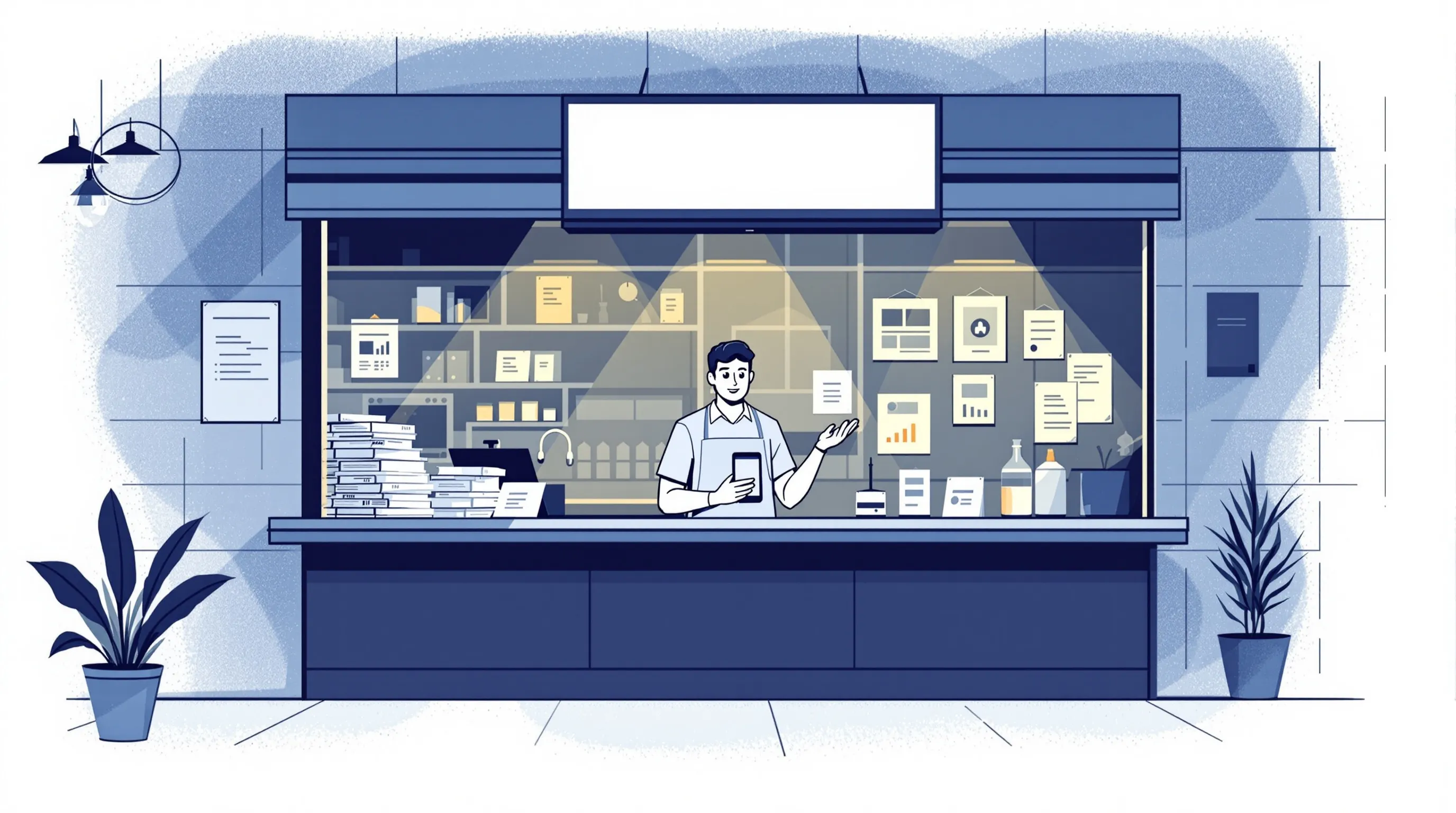
What disappears from your week after the move, and what stays?
After the move, wp-admin, plugin updates and the developer queue leave your week; review stays. Running an Inc. 5000 company (#84, 2015-2018) taught me that ownership never leaves.
Here is what actually walks out the door:
- The wp-admin login and the dashboard you had to relearn every few months.
- Plugin and theme updates, along with the small dread before clicking the button.
- The developer queue, where a one-line fix waited behind someone else's project.
- The broken page after an update, usually found by a customer before you.
And the invoices go with them. On our AEO website page, we price the stack most owners are carrying at $3,980 a month: a developer, an agency, a marketer, a host and a CMS. Five vendors. Five invoices. One website that still needed a ticket to change a phone number.
I remember how that felt from the operator's chair. You don't notice the weight until it's gone.
The people who build these sites for a living describe the same split. In a 2025 r/webdev thread, one commenter said that for simple business sites you can get something clean "without touching code." Another drew the line hard on hosting and money: "you better not leave responsibility in the hands of an AI where money is involved." Both are right. Pages and words can move fast. Anything holding a customer's card number deserves slower hands.
Our own engineering work taught a related lesson about scale. In our first repo-based knowledge base pilot in October 2026, we indexed 1,368 text files across two repositories, and a later re-index after a day of commits re-read only the 14 files that changed. That is the right instinct for a website too. Touch what changed. Leave the rest alone. A small change has a small blast radius, and a reviewer can actually see all of it.
So what should an owner trust? Ask any provider one thing first: who writes the words on your pages after launch? What stays is the writing. In a 2022 interview on the Small Biz in 15 show, Durable's own founder described the copy its AI builder generated as placeholder copy, a first pass the owner still edits. That is the version of prompt management that holds up after the novelty fades, and it is the version I would put my own name on.
If you are still sorting out the basics, the questions owners ask us most often are collected in our AEO FAQ answers, written for people who run businesses rather than servers.
The cost side is easy to state. The harder thing to show is what happens to the phone, the inbox and the calendar once the site starts moving again.
So what changes for you on the next ordinary Tuesday?
The next wrong price gets fixed in a sentence, previewed and approved before the coffee goes cold. A 2026 review of the Durable builder on Julia McCoy's YouTube channel said your business "can show up" when someone asks an AI assistant about services in your area. Can, not will, so ask whoever runs your site how they check.
A developer in an r/Wordpress thread in 2026 watched a client leave for Lovable, and admitted the new design was more classical but that everything was simpler to edit and keep clean across pages. That trade is the forecast. Plainer tools. Cleaner pages. Fewer broken sections.
Some things stay. Ask who reads each preview before it goes live. The research section above walks through these findings. I would not trust any setup that pretended otherwise.
Here is what the move looks like with us. It costs $3,000 one time. Your old site stays live while the new one is built, and a person reviews every page before launch. Then the next Tuesday starts with a sentence, not a ticket.
More in this series
- What happened after 14 businesses left WordPress, Webflow and Squarespace
- The real cost of running a WordPress site in 2026
- Squarespace and Wix sites in AI search
Thinking about a move? See how we move sites to an AEO website and our case studies.
Summarize This Article With AI
Open this article in your preferred AI engine for an instant summary.
Frequently Asked Questions
What else do owners ask about managing a website by prompt?
Most questions come back to three worries: losing the old site, breaking something live, and needing code. Each has a plain answer, and none of them requires a developer queue.
Do I need to know code to run my site this way?
No. You describe the change, read the preview and approve it. The line sits elsewhere. Commenters in a 2026 r/Wordpress thread listed what AI builders still lack: plugins, WooCommerce, memberships and backend logic. If your site sells or books through one of those, plan for a person on that part.
What happens to my old site while you move it?
It stays live. A person reviews every page before launch, and only then does anything switch over. We have moved 14 client sites this way so far.
Can a prompt break my site the way an update did?
Not without you seeing it first. Nothing goes live until you approve the preview. That is the habit the old setup never had.
What is an AEO website?
An AEO website is a site built so AI engines such as ChatGPT, Perplexity and Google AI Overviews can read it, quote it and send people to it.
How do I start?
Reach us through the contact page on aeocontent.ai and tell us what your site runs on today. WordPress, Squarespace or Webflow, the first conversation is about which pages matter.
Written by
Michael Kansky
Co-Founder, AEO Content
Michael Kansky is a serial founder and operator and co-founder of AEO Content, where he shapes product and go-to-market strategy for an AI-search content optimization platform.
Connect on LinkedIn