
33 to 90, 68 to 82: three AEO case studies and their starting Rank

On this page
Key Points
- Three engagements: a manufacturer rose from 33 to 90 over 4 phases, a customer-service company from 68 to 82 with a WordPress plugin alone, a care-services site to 82 with 5 articles.
- According to an r/aeo thread from April 2026, many brands are invisible to AI engines for reasons unrelated to content, which is why a low starting Rank calls for engineering first.
- In the Soft Surfaces case on James Dooley's podcast, a Manchester school let ChatGPT choose a £572,000 pitch contractor, and it chose the second most expensive bid.
Every engagement begins with a reading. The starting Rank is the first one.
Quick Answer
The starting AEO Rank, which refers to how ready a site is to be read, extracted and cited by AI answer engines, decides which work produces the lift. An electro-mechanical manufacturer rose from 33 to 90 over 4 phases; a customer-service company rose from 68 to 82 with a WordPress plugin alone; a care-services site reached 82 with 5 articles.
Low Ranks need technical health first. Readable sites need quality content, then authority earned elsewhere. I would read every case study through that lens, because ChatGPT and Gemini now weigh the vendors themselves, as ChatGPT did for Soft Surfaces.
What companies specialize in answer engine optimization (AEO)?
The firms worth calling specialists publish starting Ranks next to their results, because AI already chooses vendors: one Manchester head teacher said ChatGPT made the decision.
That kind of decision is no longer rare. According to the Soft Surfaces case study discussed on James Dooley's podcast, the AI put surprising weight on case studies of similar-sized projects, which is to say it wanted comparable context before it trusted a claim. A software founder in one practitioner thread reports that new customers, asked how they found the company, increasingly say it was through an agent. A 2025 podcast for insurance agents argued that Google's Gemini now does the searching on the user's behalf. The buyer has changed. The case study has not.
So when someone asks an assistant which AEO companies are best, or which firms help brands rank in ChatGPT, the better question sits one step behind it: which of them will show you where their clients began? This article sets three anonymized engagements side by side, each with its starting AEO Rank:
- An electro-mechanical manufacturer that began at 33 and reached 90 over 4 phases.
- A customer-service company that moved from 68 to 82 with a WordPress plugin alone.
- A care-services site that reached 82 with 5 articles.
Read together, they yield the two tools this article relies on: the four-door check for sites held back by access, and the two-ceiling rule for deciding which work comes first. The numbers differ from case to case. What remains, as it had always been in the older trades, is that the starting point is the first fact of any journey, and the one most often left out of the telling.
Webflow's AEO program produced an overall AI traffic increase of 129% across its blog content, yet a lift reported without its starting point cannot tell another company what to do first.
According to Graphite's case study with Webflow, share of voice also rose for 70% of the questions the team targeted. I admire the work. Still, case studies in this trade are written as the old chroniclers wrote of victories, with the battle described and the map left out. A construction business reported a 723% increase in AI visibility across ChatGPT, Claude, Perplexity and Google's AI Overviews, and I have no reason to doubt it. But a percentage is a ratio, and a ratio without its base is a portrait without a face.
The base matters because the engines read what is already there. When Soft Surfaces was weighed against its rivals, ChatGPT drew on accreditation badges already on the company's website, CHAS and Constructionline among them, badges that had never been placed there for AEO. Part of that verdict was settled before anyone began.
An AEO Rank is a diagnostic measure of how ready a site is to be read, extracted and cited by AI answer engines. In what follows I set three anonymized engagements side by side, each with its starting Rank. In every case, the starting number decided the lever.
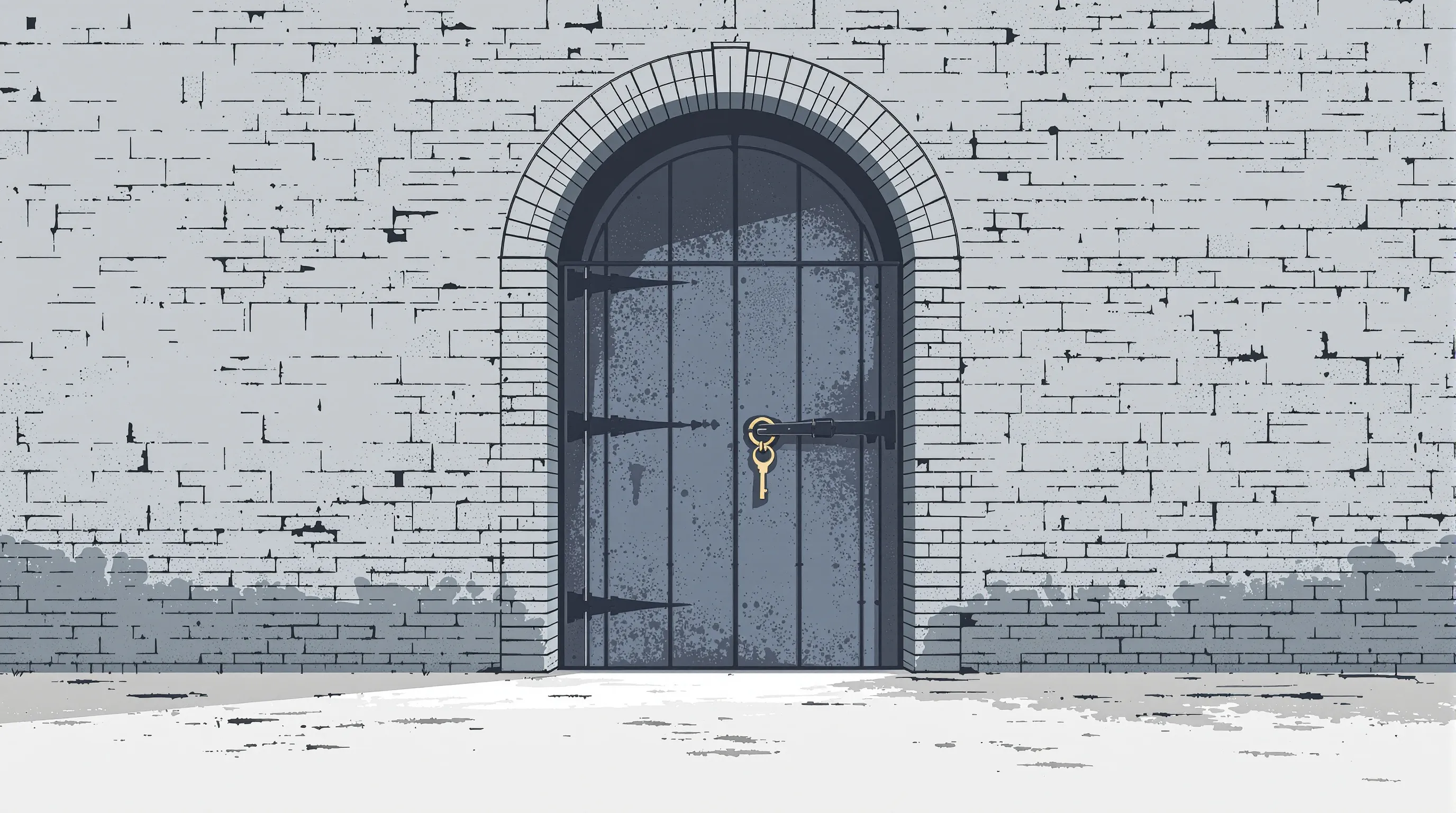
Why does a site that starts at 33 need engineering before articles?
A starting AEO Rank of 33 is rarely a verdict on the prose. It marks a locked door, which is work for an engineer like ours, with 20 years of building enterprise systems.
An analysis of 3 sources shows that practitioners place access and structure ahead of eloquence. The electro-mechanical manufacturer in the first engagement began at an AEO Rank of 33 and finished at 90 over 4 phases, and I read that starting number through what I call the four-door check, four questions asked in order before a single article is commissioned:
- robots.txt: does the file admit AI crawlers, or does it still turn them away as it had always done?
- llms.txt: is there a plain map of the site for language models, or nothing at all?
- Bing index: are the important pages present in Bing's index, or are there gaps no one has looked for?
- Structured data: does JSON-LD, including FAQ schema, tell an engine what each page is, so that an answer can be lifted without guessing?
According to a commenter in an r/DigitalMarketing thread from April 2026, surprisingly many sites cannot be reached by AI crawlers at all, and the three most common blind spots are robots.txt issues, a missing llms.txt and Bing indexing gaps. The same commenter separates the disciplines cleanly: SEO optimizes for ranking signals, while AEO optimizes for extraction, which is where FAQ schema and self-contained answer units enter. I would expect a site in the 30s to have failed the first test before it is ever asked the second.
There is something of an old empire about such a site. Its offices still stand, its titles are still printed on the doors, and yet no messenger arrives. A common misconception is that a low Rank means the writing has failed. According to a thread on r/aeo from April 2026, a lot of brands are "invisible to AI engines for reasons that have nothing to do with content," and "most brands don't know what's broken until they actually look." In that same thread a software company described moving its product documentation off legacy knowledge base tools, with its blogs to follow off WordPress, because it wanted "fine grained control for json-ld, markdown, etc." That is an engineering decision made in the service of content, and it is the kind of decision a site at 33 is still waiting for.
Monitoring alone will not find the lock. Practitioners who have paid for AI visibility trackers complain that most of them follow outputs that shift daily, with no reliable connection to what actually drives them, and a tracker will record the silence of a blocked site faithfully without once naming the cause. The phase-by-phase ledger of the manufacturer's climb is not part of this record, and I will not reconstruct it from memory. What such a ledger would show, once it is set down, is the order in which the doors were opened and what each opening was worth.
What this means is plain. On a site that crawlers cannot reach, new articles are written into silence. In practice, I would give the first phase of any low-Rank engagement to an engineer, and the writers would follow once the doors stood open. The takeaway: open the doors before you furnish the rooms.
Why does a site that starts at 68 gain fewer points, and are they worth having?
A site that starts at 68 has usually opened its doors already, so its ceiling is citation share: how often other sources name it, not how its own pages are built.
The customer-service company in the second engagement moved from 68 to 82 with a WordPress plugin alone. It is a gentle irony, after so much talk of leaving WordPress for finer control, that the old platform was enough here, and whatever a plugin does, it can only work on pages that already exist. The care-services site in the third engagement arrived at the same 82 with 5 articles. Two sites are not a law, and I would not pretend otherwise. Yet the coincidence suggests to me that the low 80s may be where work on a site's own pages slowly begins to meet its limit.
Above that line the order of things changes. An answer engine does not hand the answer to the first link, as Google once did with its blue links. It summarizes many citations, and the brand named first is usually the one mentioned most across them. Practitioners who study these answers describe the same pattern from another side: a single prompt is broken into 10, 15 or even 20 different queries, and a brand that appears across all of those sub-questions has a good chance of surfacing in the final answer. One recent construction-firm campaign was built around that insight, mapping which pages belonged on the client's own site and which needed to live on external websites.
So what remains for a site in the low 80s is, in my view, less a flaw in the house than the silence of the neighbors. Citation share is the proportion of the sources an engine reads that name your brand (the AEO Knowledge Base covers the vocabulary of AEO more broadly). No plugin can raise it, because the plugin lives on your server and the neighbors do not.
Are the smaller gains worth paying for? According to Graphite's case study with Webflow, 8% of Webflow's total signups came from AI chatbots, and the signup conversion rate for those visitors was 24%, "six times that of our non-brand SEO." A 2025 episode of The Digital Insurance Agent podcast cited studies showing that AI traffic converted five to six times better, even as traffic counts from Google fell, and noted that Google's AI draws on real-time reviews and local business data. Neither figure belongs to these three engagements. The citation outcomes that accompanied the move from 68 to 82 are not part of this record either; what such a record would show, once kept, is whether the new points arrived as mentions in other people's pages or only as tidier pages of one's own. Keeping that record over time is what Visibility Tracking is for.
In practice, the points above 80 are earned off the site. The takeaway is that a smaller gain near the top may be worth more than its size suggests. What this means for a site at 68 is a change of lever, not a change of effort: fewer pages written by you, more pages written about you.
How should a startup read its starting Rank to choose its first 90 days of work?
Low starting Rank: fix access and structure. High starting Rank: earn mentions. Either way, our promise stands: named in AI answers in 90 days, or we work free until you are.
The engagements above resolve into what I call the two-ceiling rule. Every site sits under one of two ceilings: an access ceiling, made of crawler rules, missing files and absent markup, or a citation ceiling, made of how rarely other sources mention the brand. The starting Rank tells you which ceiling is lower, and the lower one is where the first 90 days belong.
| Starting position | Likely ceiling | First 90 days | Judge the outcome by |
|---|---|---|---|
| Low Rank, as the manufacturer's was | Access: robots.txt, llms.txt, Bing index, structured data | Engineering fixes, then answer-first pages | Whether engines can read and quote the site at all |
| Mid-to-high Rank, as the customer-service company's was | Citation share across third-party sources | Mentions on review sites, forums, video and partner pages | Mentions, signups and booked calls, not points alone |
| Readable site, thin on answers | Coverage of the questions buyers ask | A small set of articles, the lever that carried the third engagement | Whether those articles are cited for their questions |
Alex and I bring a combined 40+ years of SEO and content infrastructure experience to AEO, and the two halves of that phrase are the two halves of this rule. Infrastructure answers the access ceiling. Content, and the conversation it provokes elsewhere, answers the citation ceiling. In my view, a startup rarely needs both at once in its first quarter, and it can seldom afford to buy both at once.
The contrast with the old order is worth keeping. In those days a young company waited for authority as a junior officer waits for promotion, slowly and by seniority. According to a December 2025 video from Julia McCoy, ranking in AI answer engines takes about 13 referring domains, compared with 41 for traditional page-one rankings, which suggests a young company need not wait in the old way. The same video reported that clients who began six to nine months earlier were then featured in AI Overviews for 40 to 100 plus keywords. That is a longer horizon than a single quarter, and I would set expectations accordingly: the first 90 days should prove that the right ceiling is moving, not that the whole house is finished.
Measure the outcome in something a founder can count. One of our proof points reads, simply, from a quiet site to 10 booked calls in 3 weeks, and I would rather a board heard that sentence than a Rank alone. In practice, your first 90 days are decided before anyone writes a word. The takeaway is simple: find the lower ceiling and spend the quarter there. What this means for a portfolio company is a scoped first quarter, not an open-ended retainer.
What will matter most in AEO over the next 12 to 24 months?
The starting Rank will matter most: buyers will scope work by where a site begins, paying for access fixes at the bottom and for third-party mentions at the top.
I see three signals behind that forecast. None of them is loud yet. Each is already visible to anyone who reads the practitioners closely rather than the vendors.
| Prediction | Weak signal | Why it matters | Source |
|---|---|---|---|
| Providers will sequence work by starting Rank, and weak baselines will get crawler-access and structure fixes first. | Practitioner threads now treat llms.txt and AI-crawler access as checklist items beside robots.txt, and name Bing indexing among the usual blind spots. | New copy does little for a site that crawlers cannot read. Opening access is usually the cheapest lift at the bottom of the scale. | r/DigitalMarketing thread, April 2026 |
| Brands that already start high will move most new spending to third-party pages, forums and video. | YouTube "transcribes every word automatically," and ChatGPT "uses this index as well," so a spoken answer on video becomes text an engine can cite. | Once a site's own pages are sound, the remaining gap sits in how often others mention the brand. | The Leaf Strategy, YouTube, February 2026 |
| Buyers will judge engagements by signups and deals traced to AI assistants, not by Rank lifts alone. | Webflow already reports AI chatbot signups as a line of their own, converting well above its non-brand SEO. | A large lift from a weak start and a small lift from a strong one can carry very different revenue. | Graphite and Webflow case study, YouTube, December 2025 |
According to Graphite's case study with Webflow, the company's AEO work stands on two pillars built from its existing SEO: earned visibility off-site, through third-party sites, publications, reviews and forums, and owned content on-site. I read that division as the same two ceilings described above, arranged by a company that could afford to work under both at once. Most startups cannot, which is why the order will matter more than the budget.
I hold this forecast loosely. If the engines began to hand most answers to a single top-cited source, as Google once did with its first blue link, the old ranking game would return, and the line between foundation and mentions would blur again.
What most buyers miss is that a falling traffic chart can hide a rising pipeline. Traffic from Google is falling as AI Overviews answer above the links, yet Google's AI now draws on real-time reviews and local business data, which compresses the steps between a prospect's first contact and the purchase decision. Fewer visits, shorter roads. The report that still counts only sessions will describe, with great fidelity, a world that has already passed.
Looking Ahead: 12-24 months
How baseline scores will shape AI search engagements
How buyers and providers of AI search optimization are likely to scope, price and judge work according to where a site starts.
What changes next for AI search buyers
Match each forecast to your own starting score to see which work is likely to move it and which will only add cost.
Over 12-24 months, brands that already start from a high score will move most new spending to third-party pages and video. The brand named first in an AI answer is usually the one mentioned most across the cited sources, and campaigns now map which pages belong on external websites rather than on the brand's own site.
Within 12-24 months, buyers will judge AI search engagements by signups and closed deals traced to AI assistants rather than by score lifts alone. Webflow already attributes 8% of its total signups to AI chatbots, and practitioners cite studies showing AI traffic converting five to six times better.
Over 12-24 months, more buyers will let AI assistants compare quotes against their specification. Vendors with complete, verifiable details will win at higher prices, as Soft Surfaces did when it took a £572,000 school pitch contract as the second most expensive bidder.
Over the next 12-18 months, providers will sequence work by starting score, and sites with weak baselines will get crawler-access fixes first. Robots.txt issues, missing llms.txt files and Bing indexing gaps are named as the most common blockers. And 40% of AI Overview citations already come from pages beyond position 10, so a site does not need top search positions to start being cited.
Over 12-24 months, tools that track how often a brand appears in AI answers will keep getting cheaper. Entry tools already cost about €89 a month and some are free. Buyers will expect baseline scoring to come bundled with an engagement and will save their budget for the work that moves the score.
Not Yet Confirmed Webflow now attributes 8% of total signups to AI chatbots, and practitioners cite studies showing AI-referred traffic converting five to six times better even as traffic counts from Google fall. A recent construction-firm campaign was built around query fan-outs that mapped which pages belong on the client's own site and which on external websites. YouTube transcripts also feed an index that AI assistants draw on. Practitioners now list robots.txt issues, missing llms.txt and Bing indexing gaps as the three most common reasons AI crawlers cannot reach a site. Practitioners already add a separate AI-answer tracker such as Aiclicks on top of Surfer and Ahrefs. Peec AI lists at about €89 a month, and OpenLens is offered free. In the Soft Surfaces case, an AI assistant flagged that a cheaper bid had left out the tarmac sub-base the school wanted, so the bids could not be compared. Once that bid was ruled out, only three companies remained.
Case studies and threads behind each call
Each public source below is listed with the single line it contributes to the forecasts it supports.
| Source | What it states | Forecasts it backs |
|---|---|---|
| 723% AI Visibility Increase Using AEO (James Dooley & Kasra Dash [Video] | According to Dash, the main focus of the campaign was query fan-outs: mapping which pages need to be on the client's website and which need to be on external websites [0:01]. | Strong baselines shift budget to third-party mentions |
| The ultimate guide to AEO: How to get ChatGPT to recommend your product | Ethan Smith [Web source] | [10:35] Speaker 1 says that even if Webflow's URL appears first among citations for a query like best website builder, that alone won't win the answer. On Google, the top blue link would win, but an LLM summarizes many citations. | Strong baselines shift budget to third-party mentions |
| Are There Case Studies Showing AEO Success Stories [Video] | YouTube "transcribes every word automatically" and also analyzes a video's visual content and the visual elements of its thumbnail. The resulting index is searchable on YouTube and Google, and ChatGPT "uses this index as well." [2:57]. “They don't want an AI tool to create it. They want a real answer with real biases, real opinions, and real experience.” | Strong baselines shift budget to third-party mentions |
| Webflow AEO Case Study // Graphite [Video] | 8% of Webflow's total signups came from AI chatbots. [1:23]. | Signups and deals replace score gains as the proof |
| From SEO to AEO: How Insurance Agents Win Clients in the AI Search Era [Podcast] | [20:37] Speaker 1 cites some studies showing that AI traffic converts five to six times better, even though traffic counts from Google are falling. [20:37] Speaker 1 says Google's AI draws on real-time reviews and local business data, which compresses the steps between a prospect's first contact and the purchase decision. |
Signups and deals replace score gains as the proof AI-assisted buyers stop defaulting to the cheapest bid |
| Decision Engine Optimization Case Study: How Soft Surfaces Won a £572,000 Sports Pitch [Podcast] | [1:11] Speaker 2 says the contract was a 3G football pitch for a school in Manchester, valued at £572,000, and that Soft Surfaces was the second most expensive of all the quotes the client received. | AI-assisted buyers stop defaulting to the cheapest bid |
| Answer Engine Optimization (AEO): How to Rank #1 in AI [Video] | 40% of AI Overview citations come from pages ranking beyond position 10. [1:36]. “First, 40% of AI overview citations rank beyond position 10. If you're stuck on page two of Google, AEO is your express elevator to the top.” | Weak starting scores get access and structure fixes first |
| What's the difference between AEO and SEO and where do you start? [Community / Forum] | Comment 4 names the three most common blind spots that stop AI crawlers from accessing sites: robots.txt issues, missing llms.txt, and Bing indexing gaps. “AEO is SEO. LLMs do not rank content.” | Weak starting scores get access and structure fixes first |
| How are you approaching Answer Engine Optimization (AEO) and [Community / Forum] | Peec AI: tracks across major LLMs and has an easier interface than most. About €89/mo. “AEO feels like SEO did in 2010. You knew it was important but the tools were limited and expensive and you were having to figure out a lot of it manually.” | Tracking brand mentions in AI answers gets cheap |
| GEO vs AEO vs AI - Which one is shaping the real future of SEO? [Community / Forum] | Commenter 1's workflow: Surfer and Ahrefs for conventional SEO, plus Aiclicks to track content appearance in LLM outputs. “Do you think GEO will stay dominant, or will AEO and AI search take over how we approach optimization in the next 2 3 years?” | Tracking brand mentions in AI answers gets cheap |
Conditions that would reverse these calls
Shifts in how AI assistants cite sources, how AI referrals convert or how buyers weigh price would weaken or reverse these calls.
The Hedge
75 rests on the firmest evidence in this set; 62 is the one most likely to be proven wrong first.
- Strong baselines shift budget to third-party mentions. A reversal by regulators or buyers undercuts it before anything else.
- AI-assisted buyers stop defaulting to the cheapest bid. If the balance of sources tips against the consensus, that becomes the safer call.
Why does the starting Rank matter more than the final one?
The starting Rank chooses the lever before anyone chooses a vendor, and the same budget spent under the wrong ceiling buys very little that an answer engine will ever repeat.
A Rank is a diagnosis, not a scoreboard. The distance a site travels, as the manufacturer's did from 33 to 90, is set first by where it stands on the morning the work begins. According to Graphite's Kristen Vaughn, "Just like broader SEO, there could potentially be a ton of wasted work with AEO." In my view, most of that waste is labor done under the wrong ceiling.
The engines, meanwhile, read the record you already keep. In the Soft Surfaces case, ChatGPT noticed that a rival offering a 10-year guarantee had been trading for only four years, and it questioned how that guarantee could be warranted. Once an engine settles on a source it trusts, it tends to cite that source again, and the advantage compounds quietly, as interest once did in the old savings banks.
Over the coming year I expect buyers to ask for the starting Rank before they ask for the price. The first thing I would check is not the copy. It is the robots.txt file, still turning visitors away as it may have done for years.
Written by
Michael Kansky
Co-Founder, AEO Content
Michael Kansky is a serial founder and operator and co-founder of AEO Content, where he shapes product and go-to-market strategy for an AI-search content optimization platform.
Connect on LinkedInSummarize This Article With AI
Open this article in your preferred AI engine for an instant summary.
Frequently Asked Questions
What should you ask of any AEO case study?
These answers address the questions a founder or investor should put to any AEO case study, with the starting Rank kept in view throughout.
What is an AEO Rank?
An AEO Rank is a diagnostic measure of how ready a site is to be read, extracted and cited by AI answer engines. I treat it as a starting diagnosis rather than a trophy. It tells you which ceiling is lower before it tells you anything else.
Why do so many AEO case studies leave out the starting point?
A large percentage makes a better headline than a modest baseline. Without the base, though, a reader cannot tell whether the lift came from opening locked doors or from winning mentions. That is the gap this article sets out to close.
Can a plugin alone raise an AEO Rank?
Yes, when the site's pages are already sound. The customer-service company in the second engagement gained its points with a WordPress plugin alone. A plugin works only on your own pages, however, so it cannot raise citation share.
What is citation share?
Citation share is the proportion of the sources an engine reads that name your brand. Above the low 80s, in my view, it is the main lever left.
How long does AEO take to show results?
It depends on the ceiling. According to Graphite's case study with Webflow, the roadmap runs in five steps: identify high-value questions, track visibility, create long-tail content, optimize existing content including the help center, then test off-site strategies like Reddit. Structural steps show early; off-site work compounds slowly.
Do AI assistants really decide purchases?
Some already do. In the Soft Surfaces case, the head teacher fed ChatGPT all the information, asked who was the best value, and confirmed the school would have used another contractor had ChatGPT picked one.
Do I need a paid tool to track AI visibility?
Not at first. At least one multi-engine tracker, OpenLens, is offered free, and practitioners say most tools still need pairing with manual prompt testing. The tool matters less than knowing which ceiling you are under.