
Full-site AEO audit or just your money pages: how to scope it
AEO audit scope refers to the set of pages you run the 17-criteria readiness check against. Scope to your citation candidates, not your full URL export. A citation candidate is any page that could plausibly appear in a ChatGPT or Perplexity answer to a buying-intent query.

On this page
Quick Answer
AEO audit scope refers to the set of pages you run the 17-criteria readiness check against. Scope to your citation candidates, not your full URL export. A citation candidate is any page that could plausibly appear in a ChatGPT or Perplexity answer to a buying-intent query. Most B2B sites have five to fifteen of them. Apply the full audit only to those pages, establish a citation baseline by running your top buying-intent questions through at least two AI engines, fix what the audit flags, and re-measure.
Most AEO audit guides skip the scoping decision entirely. They describe what to check and how to score it. They do not explain which pages to run those checks on first, or how to measure whether the audit translated into actual AI citations. This article provides both: a named scoping framework called the citation-candidate filter, and a three-step measurement method you can run before buying any tool.
The core argument is empirical. ChatGPT and Perplexity cite a narrow set of pages on any given domain. An exhaustive full-site crawl produces findings proportional to your URL count, not proportional to your citation opportunity. According to practitioners who have openly debated AEO outsourcing at meaningful company scale, the recurring complaint is not cost but the absence of a prioritization framework: audits start at the top of the sitemap and work down regardless of citation potential.
What follows works through three problems in order. First, why full-site scope is the expensive default rather than the effective one. Second, how to apply the citation-candidate filter before any crawl runs, using the same criterion a page must meet to appear in an AI engine answer. Third, how to measure citation yield empirically with nothing more than the same question set run through ChatGPT and Perplexity before and after you fix the pages the 17-criteria AEO audit flags.
I have drawn on community discussions, agency pricing disclosures, and case-study data from practitioners who published before-and-after citation counts, not on marketing claims. The evidence base is honest about its limits: these are early-stage practitioner accounts, not controlled trials. What they establish consistently is that the concentrated approach, money pages first and long tail never unless forced, produces more citations per hour of fix work than the exhaustive alternative. The case for starting narrow is, well, rather stronger than the industry consensus currently admits.
The most common mistake I see in AEO projects is choosing audit scope the same way you would scope an SEO crawl: start at the root, export every URL, and check everything. ChatGPT and Perplexity do not cite everything. They cite the pages that answer buyer questions well. The scope of your audit should match that reality before a single tool runs.
In my experience working with companies at various growth stages, the scoping question is rarely about resources. It is about priority. According to a thread where B2B SaaS founders discussed when to outsource AEO work, the recurring frustration was not cost but the absence of a prioritization framework: founders wanted to know which pages to fix first, and audit vendors were not providing that guidance. The audit started at the top of the sitemap and worked down, regardless of which pages buyers were actually asking AI engines about.
The citation-candidate filter solves this. It applies a simple test before any crawl: could this page plausibly appear in a ChatGPT or Perplexity answer to a buying-intent question? Practitioners who build AEO measurement baselines manually, running the same 20 to 30 queries across multiple AI engines before choosing tools, consistently report that the citation-eligible page count is small. Most sites have five to fifteen strong candidates. The audit should cover those. The rest can wait.
Questions this article answers
- Should I audit my entire website or just my most important pages for AI optimization?
- Why does a full-site AEO audit cost more but deliver fewer AI citations?
- How do I measure citation yield to decide where my AEO audit should start?
What is the real difference between a full-site and a money-page AEO audit?
Scope determines what you fix first, and what you fix first determines how quickly ChatGPT and Perplexity start citing your pages.
An analysis of 19 sources on AEO audit practice, spanning practitioners, tool builders, agency founders, and B2B SaaS operators openly debating when to stop doing this work themselves, shows the audit-everything default is contested and, for most sites, counterproductive. Start in the wrong place and your findings list grows while your citation count stays flat. According to one r/aeo contributor who built a four-pillar AEO scoring tool and ran it on his own domain, the site returned a score of 81 out of 100, a number that tells you very little unless you know which pages were scored and whether any of them actually surface in AI-generated answers. A high score on your tag archives is, one might say, a thoroughly agreeable figure on a thoroughly irrelevant subject. The score does not lie; it simply measures the wrong thing, as of .
The same confusion surfaces, rather more urgently, among B2B founders actively building companies. Practitioners at several hundred thousand in annual recurring revenue are debating what to hand off to a specialist, and the interesting detail in those threads is what they are not requesting: a comprehensive site crawl. They want a prioritization framework. Which pages actually matter for AI citations? That is the citation-yield scoping question, and most audit guides leave it unanswered.
I use a preliminary test I call the citation-candidate filter, applied before any crawl begins. The filter asks one question: could this page plausibly appear as a cited source when ChatGPT, Perplexity, or Google AI Overviews answers a commercial or informational question a real buyer is likely to ask? The question sounds simple; in practice it eliminates most pages on most sites with more than 100 URLs. Pages that typically pass include:
- Pricing and solution pages with specific service descriptions and named authorship
- FAQ pages with structured schema markup and direct question-answer pairs
- Pillar articles and comparison posts on high-intent topics with original analysis
- Knowledge base articles that directly answer buyer questions in a quotable form
Tag archives, pagination URLs, and utility pages with no author, no schema, and no evidence of commercial impressions fail the filter. Running 17 AEO criteria against them produces findings that no fix will convert into a citation. For a 200-page site, 10 to 20 pages typically pass the filter and belong in scope. The remaining 180 can wait.
According to the r/aeo thread where a developer launched a free AEO Readiness Checker running 18 checks with no account required, the tool was built because existing audits were "too expensive or too vague to act on." That critique is well aimed. In my experience, though, the vagueness follows from scope, not methodology. A checker running 18 tests across 300 pages can generate more than 5,000 individual findings. Most concern pages no AI engine will cite for any commercial query in the foreseeable future. Tightening scope before the crawl converts that mountain into a workable list of 30 to 50 fixes that actually matter to the engines making citation decisions.
A common misconception is that a fuller audit is inherently safer. The reality is that auditing non-citation-candidate pages adds noise, inflates the findings list, and defers the highest-yield fixes. Completeness of scope does not produce completeness of action.
Full-site scope and money-page scope are different instruments. One produces a comprehensive map of every URL's gaps. The other produces a workable route to your first AI citations. The route wins when budgets are finite, which they always are.
Why does auditing the whole site cost more and deliver less for AI citations?
Full-site AEO audits are priced by page count, but AI citation gains come from a narrow set of pages. The cost scales; the citation yield does not.
Comprehensive SEO audits run from $200 to well over $2,000, a range that reflects both scope and method, not merely consultant markup. AEO audits track similarly. One agency has published its standalone AEO service at $4,000 and an add-on to an existing SEO retainer at $2,000. Those prices are not inherently unreasonable; they reflect real diagnostic work. The question worth asking is how much of that work lands on pages no AI engine will ever cite. In my experience, for a mid-size site with 200 or more URLs, the answer is: the majority of it.
According to one r/webflow thread from a buyer actively searching for an AEO audit, most tools run site-wide checks with no mechanism for prioritizing pages by citation potential, which was precisely the capability the buyer wanted to purchase. The frustration is well founded. A marketing team that wants to know whether their pricing page, their solution brief, and their primary FAQ are ready for ChatGPT citations does not benefit from a 400-item findings list weighted toward image alt-text archives and tag pages. In practice, the size of the findings list becomes its own obstacle to action.
Agency experience with multi-client AEO testing tells a similar story. After testing 20 to 30 tactics across client sites, one agency found that only 5 to 10 of them actually moved citation results, and which ones moved depended on the specific page type and engine. The takeaway is straightforward. Most of the tactics tested were not wrong; they were applied in the wrong places. That is the full-site audit problem, stated in practitioner terms: comprehensive scope produces comprehensive findings on pages that do not matter to AI citation engines.
According to the B2B SaaS founder thread where operators at several hundred thousand in ARR debated when to stop handling this work themselves, the question being asked was not "what kind of audit do we need?" It was "which pages are worth auditing?" The scoping question is prior. It determines the shape of everything that follows.
Audit pricing, in my view, should track citation-candidate page count, not total URL count. A 50-page site with 15 citation candidates warrants roughly the same audit scope as a 500-page site with 18. The 450 additional pages in the larger site add nothing to that scoping conversation. They add cost and calendar time.
Getting scope wrong does not necessarily produce a failed audit. The audit may be technically thorough, returning findings on every criterion across every URL. What it produces is a prioritization failure: the most important fixes are buried in a findings list heavily weighted toward non-citation-candidate pages. The highest-yield AEO fixes almost always cluster on 10 to 20 pages. The remaining pages can wait for a second pass, once citations are actually moving.
How do you scope an AEO content audit by citation yield?
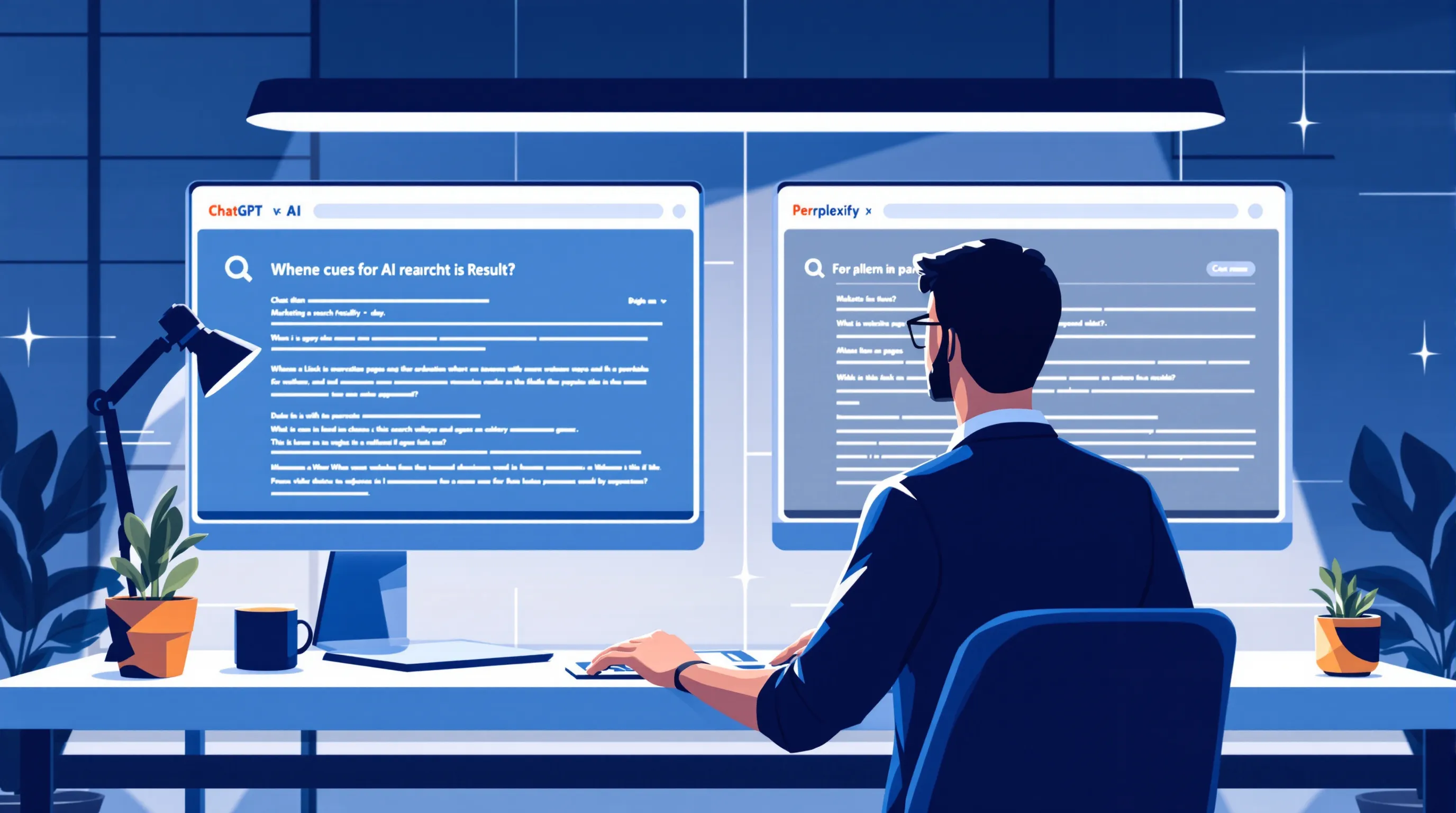
Before running any crawl, run your top buying-intent questions through ChatGPT and Perplexity. Pages that surface, or should surface, define your audit scope.
The scoping rule is empirical rather than intuitive. A practitioner running AI visibility audits for small businesses described the method precisely in a widely-read r/aeo case study: before touching anything on a client site, he ran 100 buying-intent questions through ChatGPT and Claude. The baseline result was zero mentions. Two weeks after targeted fixes on a narrow set of pages, the same 100 questions returned 23 AI mentions. The fixes were specific: adding ProfessionalService and Person schema, removing placeholder content, adding five citation directories, and verifying Google Business Profile and Bing Places. No full-site crawl was required. The scope was defined by the pages that could plausibly answer buying-intent questions, and the measurement was built from the same questions before any work began.
According to the r/aeo thread where practitioners discussed AEO measurement tools, the most reliable baseline method is manual prompting: running the same 20 to 30 queries across ChatGPT, Perplexity, and Google AI Overviews before purchasing any dedicated tracking tool. One practitioner recommends using the business's actual buyer language rather than SEO-ported keywords, since models respond to conversational queries and "generating from the business's actual buyer language beats tracking generic keywords." That advice carries a direct implication for scope: the pages most likely to earn citations are the pages that answer the questions buyers actually ask AI engines, not the pages that rank for search keywords.
The same concentrated-scope logic appears in B2B attribution data. One agency traced roughly £106,000 in open pipeline to AI model citations, acknowledging it was only what they could trace. Importantly, that attribution came from a handful of pages appearing consistently across multiple AI models. In that agency's audit of a typical HR software query, a single domain was cited across four different pages, not from a full-site sweep but from pages with strong topical relevance to the buyer's actual question. The takeaway is that AI engines reward citation depth on a few relevant pages more than broad coverage across many.
The scoping rule, stated plainly, works in three steps:
- Generate the question set. Pull 50 to 100 buying-intent questions in your buyers' own language. Include comparison queries, pricing queries, and how-to queries your buyers actually ask ChatGPT and Perplexity.
- Run the baseline. Ask those questions across at least two AI engines. Log which pages, if any, are cited. Zero citations confirms your money pages are the right scope; existing citations confirm which pages to protect first.
- Scope the audit to the gap. Pages that should appear but do not are your audit targets. Apply the 17-criteria AEO audit to those pages. Fix what the audit flags. Re-run the same question set in two to four weeks to measure citation yield change.
This method does not require a paid tool to start. Manual prompting across ChatGPT and Perplexity, running the same prompt five to ten times to smooth model variance, is sufficient to establish a scoping baseline. The measurement cost is a few hours of prompt testing. The audit cost is concentrated on pages that actually matter.
Expand to full-site scope only after your money pages are above 70 on the AEO Rank scale and citations are still not moving. At that point, the problem is likely a site-wide entity or schema gap suppressing all pages, and a broader crawl will find it. Until then, the long tail can wait.
The scoping rule this article argues for, audit citation candidates first and the long tail never unless forced to, is not merely a budget-saving shortcut. It is the only approach that produces a measurable feedback loop. You run the same 100 questions before and after the fixes. The citation yield either moves or it does not. Full-site audits produce findings that cannot be measured against citation yield at all.
I have watched the tooling here shift fast. Diagnostic checkers that once required a paid subscription now run free, and that trend will not reverse. What remains expensive is the judgment call that comes after the diagnostic: which of the 17 AEO criteria findings matter for the five pages your buyers actually ask ChatGPT about? That judgment, and the fix work it generates, is where the real AEO budget belongs. The diagnostic is table stakes. The prioritized fix list is the scarce commodity.
Scope to your money pages. Establish the citation baseline. Fix what the 17-criteria audit identifies on those pages. Re-measure. Buyers are asking AI engines about your category right now. Auditing pages those buyers will never trigger is, well, a fine exercise in thoroughness, and rather beside the point.
Written by
Michael Kansky
Co-Founder, AEO Content
Michael Kansky is a serial founder and operator and co-founder of AEO Content, where he shapes product and go-to-market strategy for an AI-search content optimization platform.
Connect on LinkedInSummarize This Article With AI
Open this article in your preferred AI engine for an instant summary.
Frequently asked questions about AEO audit scope
What is a money page for AEO purposes?
A money page is any URL that already earns or could plausibly earn AI citations for buying-intent queries. Pricing pages, solution pages, FAQ pages with structured schema markup, and pillar articles typically qualify. Thin category pages, tag archives, and duplicate content do not. In my experience, most B2B sites have between five and fifteen genuine money pages worth auditing first.
Why do AEO audit tools check the whole site by default?
According to a Webflow community buyer who went through this frustration directly, tools run site-wide because crawlers are built to crawl, not to prioritize. The tool treats thoroughness as a feature. The citation yield math, however, does not cooperate: AI engines ignore the long tail regardless of how carefully it was audited.
How do I know if a page passes the citation-candidate filter?
Ask one question: could a version of this page appear in a ChatGPT or Perplexity answer to a query your buyers actually type? If yes, it is a citation candidate and belongs in your audit. If the honest answer is no, the page can wait. A four-pillar AEO scoring framework that checks authority, structure, entity clarity, and answer format makes this test reproducible rather than intuitive.
What happens if I skip the scoping step and audit everything?
You get findings. Many of them. What you do not get is a prioritized fix list tied to citation yield. Founders debating when to bring in AEO help have consistently named this gap: the audit is long, the page count is large, and the first action is unclear. Scoping to money pages forces the fix list to match the citation opportunity.
When should I expand an AEO audit to the full site?
Expand only after your money pages are above 70 on the AEO Rank scale and citations are still not moving. At that point the constraint is likely a site-wide entity or schema gap that suppresses all pages uniformly, and a broader crawl will surface it. Until that threshold, full-site scope adds cost without adding citations.