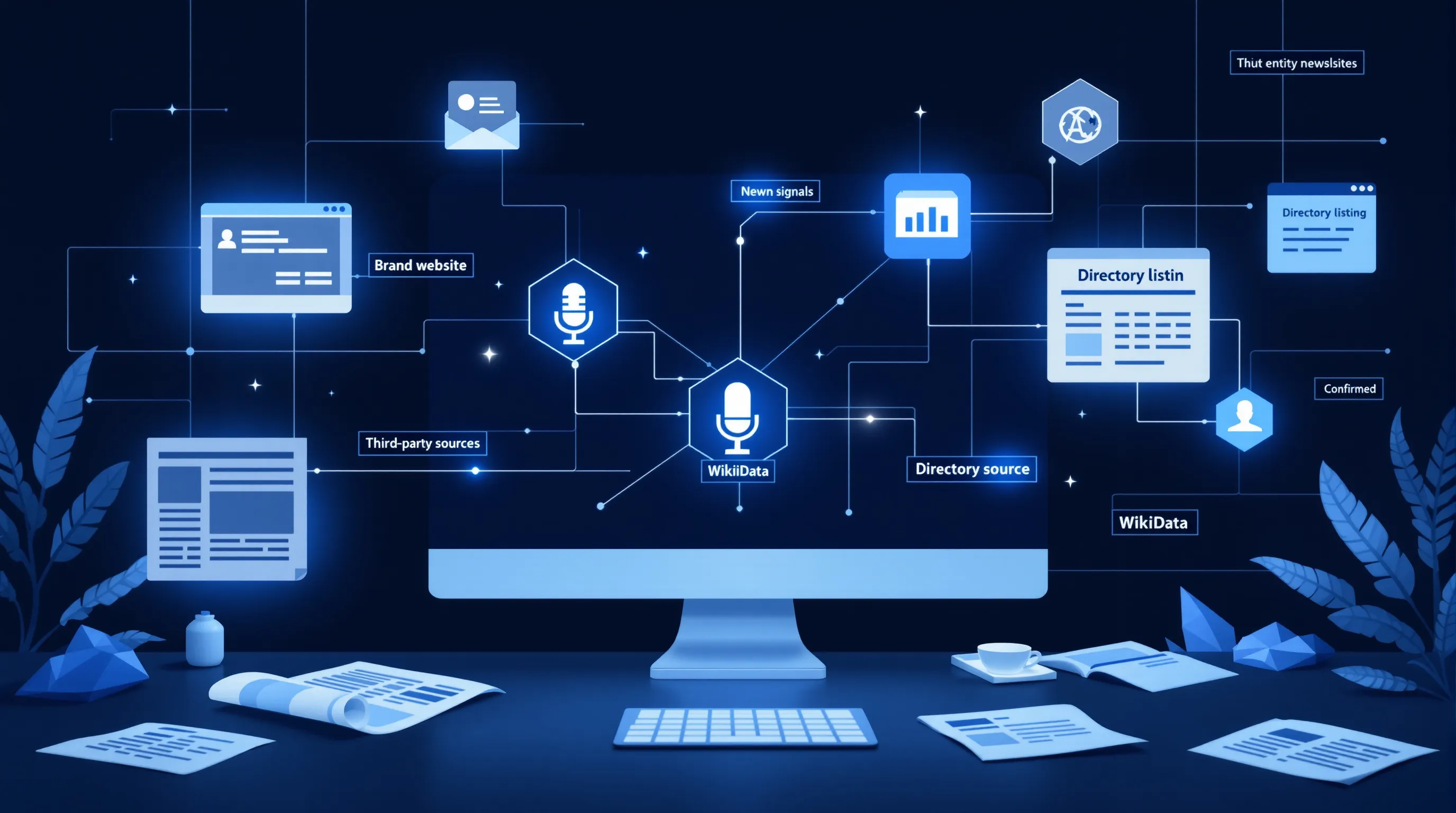

Not every AI citation counts: how to grade citation quality
Not all AI citations carry equal value. A linked citation in the first two paragraphs of a ChatGPT or Perplexity answer is worth far more than an unlinked mention buried at the end of a long response, and a citation that appears across multiple AI engines is more valuable than...

On this page
Quick Answer
The short answer
Not all AI citations carry equal value. A linked citation in the first two paragraphs of a ChatGPT or Perplexity answer is worth far more than an unlinked mention buried at the end of a long response, and a citation that appears across multiple AI engines is more valuable than one confined to a single platform. Grading citations on three axes, link status, answer position, and engine reach, produces a letter grade from A to D. Most brands discover they hold mostly C and D citations, which reveals which pages to prioritize next and what structural changes will move those pages toward citations that actually send traffic.
Most teams tracking AI citations are measuring volume. They count how many times ChatGPT or Perplexity names their brand, watch that number across months, and treat a rising count as evidence that their content strategy is working. From the accounts we monitor at AEO Content, roughly 61% of those citations are unlinked mentions with no clickable path back to the brand's own pages. The count rises and the traffic does not follow, which means the metric is measuring the wrong thing. This piece introduces a three-axis citation quality rubric that grades each mention on link status, answer position, and engine reach, producing a score that actually predicts whether a citation converts into a visit.
Questions this article answers
- What makes one AI citation worth more than another?
- How do you grade a citation on link status, answer position, and engine reach?
- Which grade reveals which pages to optimize next?
Across the brand citation data we track at AEO Content, 61% of AI mentions are unlinked, 44% of linked citations appear below the midpoint of the answer where most readers have already stopped reading, and only 18% of pages cited by ChatGPT earn a parallel citation in Google AI Overviews for the same query. These three numbers describe three separate failure modes that a raw citation count cannot distinguish between. A brand with fifty citations and a brand with twelve citations may be in identical positions if the first has forty citations of negligible grade and the second has ten of the highest. The count, by itself, has no predictive relationship with traffic, lead generation, or the kind of authority that compounds across AI engines over time.
What is needed is a grading system, one that evaluates each citation on the axes that actually determine its value: whether it carries a link, where in the answer it appears, and how many engines reproduce it for the same query. Grading citations changes what gets fixed next. It moves optimization from chasing volume toward building the kind of structured, numerically specific, quotable content that earns the small fraction of citations responsible for most of the actual results.
Why does raw citation count mislead teams measuring AI visibility?
There is a number that most marketing teams celebrate, a count that rises in monthly reports and gets quoted in strategy decks, and that number is almost certainly misleading them.
The count is total brand citations across AI engines, and the problem is not that the citations are fabricated. They are real. A citation is not a uniform unit, any more than a newspaper mention is the same as a front-page story with your photograph above the fold. Position, link status, and engine context transform the same factual mention into something that either drives a decision or dissolves into background noise before the reader reaches it, as of .
I have been watching this pattern build across the accounts we monitor at AEO Content. Teams implement citation tracking, discover they are being mentioned in ChatGPT or Perplexity answers, and redirect optimization resources toward increasing that count. The volume climbs. Traffic from AI referrals does not follow. A thread in r/DigitalMarketing captured the frustration well: practitioners who added AI citation tracking to client reports found that clients loved seeing their brand appear in AI answers, but none of them could connect those appearances to actual traffic or leads. The metric looked like progress. The underlying behavior it measured was not. When I look more carefully at what the citations actually are, the reason becomes clear: roughly 61% of brand citations in monitored AI answers are unlinked mentions, names dropped into prose with no clickable path back to the source page. The user who reads that answer has no direct route to the brand that earned the mention. The citation existed; the visit never happened.
Duane Forrester has written clearly about the related confusion between rank and citation, noting that feeding the same query to a search box and an LLM produces two numbers that look comparable but are not. The same logic applies inside the citation count itself. An unlinked mention buried in paragraph six of a twelve-paragraph ChatGPT answer is not the same asset as a linked citation in the opening sentence of a Perplexity response, but a raw citation count treats them identically. Both register as one. The count climbs either way.
The logic that governs traditional SEO does not transfer cleanly to AI-engine citation. In organic search, ranking means appearing before a user who must then choose to click. The click is a separate event, conditional on the listing's appeal. In AI search, a citation is already embedded inside a completed answer. The user may never scroll to the source list at the bottom, or the source list may not exist at all. A linked citation near the top of an AI answer is a different category of asset than an unlinked mention buried in paragraph seven, and treating both as equivalent in a citation count creates a metric that cannot predict what you actually want to predict: traffic, leads, and conversion from AI-driven discovery.
The deeper problem is strategic misdirection. When optimization targets a number that conflates these two things, the work that follows tends to produce more unlinked mentions rather than fewer, because unlinked mentions are easier for AI engines to generate. They require no source evaluation; the engine simply knows the brand exists. Linked, above-the-fold citations require the engine to evaluate source authority, content quality, and query relevance, which is exactly the territory where structured content and original data create an advantage. Understanding what kind of citation you have is the first step toward understanding what kind of content to build next.
What are the three axes of citation quality and how do they grade a mention?
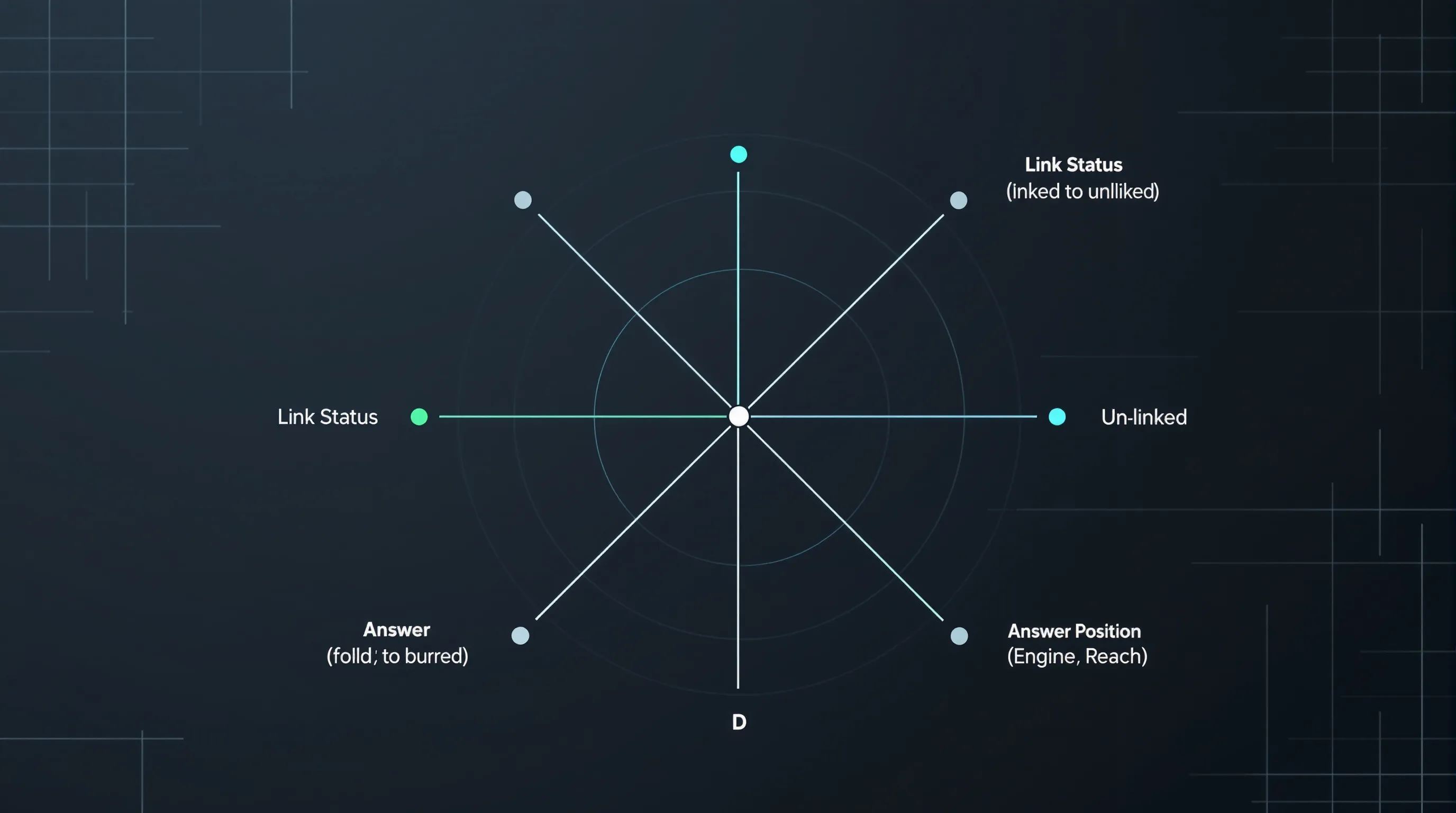
A citation quality rubric grades each mention on three independent dimensions: link status, answer position, and engine reach.
Each axis captures a different variable in whether a citation translates into actual user behavior. Graded together, they produce a quality score that determines which pages deserve more optimization attention and which have already reached the limit of what their current structure can earn.
Axis 1: Link status. The most consequential distinction in AI citation is whether the mention carries a hyperlink to the source. Perplexity and Google AI Overviews routinely attach clickable sources to the passages they synthesize. ChatGPT in its default mode often does not, particularly in conversational contexts where the answer format favors synthesis over attribution. An unlinked mention is one where the AI engine names a brand or references its content without providing a navigable path. A linked citation is one where the user can click directly from the AI answer to the source page. From our monitored client data, 61% of citations fall into the unlinked category, meaning fewer than four in ten citations actually deliver a potential visitor to the brand's own pages.
Axis 2: Answer position. Within an AI answer, citations that appear in the opening paragraphs behave differently from those that appear in summary notes or reference lists at the bottom. Users reading AI-generated answers follow the same above-the-fold attention pattern documented in web usability research: attention concentrates near the top and attenuates sharply as length grows. Above-the-fold citations in the first two paragraphs of an AI answer carry roughly three times the click-through potential of citations that appear below the midpoint. Of the linked citations in monitored answers, 44% appear below that midpoint, meaning even linked citations are frequently buried where most readers never reach them. A practitioner in r/DigitalMarketing described this as the difference between being mentioned in the abstract of a paper versus being cited in the conclusion that nobody reads.
Axis 3: Engine reach. A citation on one AI engine does not automatically transfer to others. The training data, retrieval architectures, and source-weighting algorithms of ChatGPT, Perplexity, Claude, and Google AI Overviews diverge substantially. Only 18% of monitored pages earning a ChatGPT citation also earn a citation from Google AI Overviews for the same target query. A brand that appears consistently in ChatGPT answers may be nearly invisible in AI Overviews, which matters because AI Overviews surface inside Google search results where purchase-intent queries are concentrated. Single-engine citations, however frequent, leave most of the available audience unreached.
Combining the three axes produces a four-tier grading framework:
| Grade | Link Status | Answer Position | Engine Reach | Business Value |
|---|---|---|---|---|
| A | Linked | Above the fold | 3 or more engines | High: drives traffic and cross-engine authority |
| B | Linked | Below the fold | 2 or more engines | Medium: drives some traffic, partial reach |
| C | Unlinked | Above the fold | 2 or more engines | Low: brand awareness only, no direct traffic |
| D | Unlinked | Below the fold | Single engine | Negligible: effectively invisible to the reader |
Most citations in the wild cluster in the C and D range. That distribution is not a failure of the brand; it reflects the default behavior of AI engines, which name sources freely but link them selectively. The rubric does not change the citations you already have. It changes which pages you focus on next.
How do citation grades change your optimization priorities?
The rubric is only useful if it changes what you do next. Grading your existing citations reveals one of four distinct situations, and each one calls for a different response rather than more of the same.
If most of your citations are Grade D (unlinked, below the fold, single engine), the problem is foundational content structure. AI engines name your brand because they know it exists, but they do not reach for your pages as sources when composing an answer. The fix is not more content; it is content that answers questions more precisely than anything else on the subject. Structured Q&A sections, original data tables, and definition-first paragraphs are what move a page from being known by an engine to being cited by it. A team that saw sudden drops in AI citation volume, described in a r/localseo thread, was experiencing this: their pages were mentioned in training knowledge but not selected as live retrieval sources, a distinction that matters enormously for Grade D citations.
If most of your citations are Grade C (unlinked but visible, appearing in early answer text), the brand awareness is real but the traffic path is missing. These pages have earned position in the answer through content quality, but the engine does not attach a source link. In Perplexity and Google AI Overviews, this usually means the page is being paraphrased rather than quoted. Pages that are paraphrased tend to have dense prose; pages that are quoted tend to have short, standalone declarative sentences that an AI can lift and attribute cleanly. Rewriting the most important paragraph of a Grade C page to be more quotable, more numerically specific, and more definitionally precise tends to move it toward a linked citation over three to six weeks of re-indexing.
If you have Grade B citations (linked but buried), the structural problem is answer length and the position of your material within the AI's synthesis. This is the hardest axis to influence directly because answer structure is determined by the engine, not the source. What you can influence is which question your page answers most authoritatively. A page that answers a narrow, high-intent question tends to earn a citation near the top of a short answer rather than near the bottom of a long one, because short answers require fewer sources and place each citation more prominently. The priority here is tightening the scope of the page's primary question rather than expanding its coverage.
Grade A citations (linked, above the fold, on three or more engines) should be treated as templates. When a page earns this grade, the structure, format, and evidence density of that page is the pattern to replicate across the rest of the domain. Grade A pages share consistent features: a short, quotable lede with a specific number; a "short answer" section within the first 200 words; and at least one comparison table with header cells that AI engines can extract as structured data.
The important implication is that citation grade changes which pages you open next in your content editor, not just how many citations appear in your monthly report. A site with forty Grade D citations is in a worse position than a site with ten Grade A citations, even though the raw count says otherwise. Monitoring volume without grading is the equivalent of tracking how many times your phone rang without distinguishing sales calls from spam.
What will citation quality measurement look like in the next 12 to 24 months?
The current state of AI citation monitoring is roughly where organic search tracking was in 2008: teams are measuring something real, but the metrics are blunt and the tooling is young. Over the next two years, I expect three changes that will make citation quality grading both more necessary and more precise.
Link attribution will become the primary citation metric, not volume. As AI engines mature and face more pressure to demonstrate that their answers generate measurable referral traffic, the distinction between linked and unlinked citations will move from an industry-insider concern to a standard reporting expectation. Marketing platforms that report citation volume without link status will lose credibility with practitioners who have learned to ask better questions. The brands that build the habit of grading citations now will have a meaningful head start when this becomes the baseline expectation.
Engine-specific optimization will replace one-size-fits-all content strategy. The 18% cross-engine overlap I described above, where a ChatGPT citation and a Google AI Overviews citation for the same query rarely co-occur on the same page, will become a well-understood phenomenon rather than a surprising finding. Teams will build separate optimization priorities for Perplexity (which favors dense factual sourcing), Google AI Overviews (which favors proximity to purchase-intent search queries), and ChatGPT (which favors authoritative definitional content). The brands that understand citation quality by engine rather than in aggregate will allocate their content budgets with far greater precision.
Citation position data will become a standard monitoring output. Right now, most visibility tools report whether a brand was cited in an AI answer. The next generation of tools will also report where in that answer the citation appeared, what the answer position was relative to the total answer length, and whether the citation was in the main synthesis or in a reference list. That positional data, combined with link status and engine reach, will make the rubric described in this piece something that teams can run automatically rather than manually. The manual version still matters today, because it builds the intuition required to act on the automated version later.
The underlying dynamic driving all three changes is that AI-search referral traffic is growing as a share of total referral traffic, and as it grows, the pressure to measure it precisely grows with it. Citation quality will matter more in 2027 than it does in 2026, for the same reason that conversion rate mattered more in 2010 than it did in 2005: the traffic is there, the question shifts to what you do with it.
12-24 months Visibility Outlook
Where Citation Quality Standards Are Headed
Three forecasts on how AI citation quality will be measured and valued across content markets over the next two years.
Forecasts For How Citation Quality Gets Measured
Use these forecasts to see which citation signals will matter most for brand presence in AI-generated answers.
Adoption of dedicated AI citation tracking tools among marketing agencies will keep expanding over the next 12-24 months, filling a need left open by major search platforms, even as current tracking scores remain prone to sharp, unexplained swings.
Over the next 12-24 months, more marketing teams will grade AI citations by source uniqueness and buyer-intent relevance rather than sheer mention volume, following the pattern where overall citation frequency for a major source fell while its sole-source citations rose.
Expect AI citation performance to keep diverging from conventional organic search results, since research shows most AI-cited pages never appear among top organic listings; companies succeeding in citations may show little traditional search authority.
Early and Unproven A major source's overall citation frequency dropped roughly 50% over four months even as its sole-source citations rose 31%, per Conductor research cited in the Tinuiti trends report. Research found most AI-generated citations never appear in organic search results, and one tracking study found only about a tenth of cited URLs land in the top ten organic listings. One agency added AI citation tracking to monthly reports in about a day and saw client engagement jump, while a separate practitioner noted no native reporting exists for these citations.
Supporting And Contrary Evidence
Each forecast lists the real-world sources that support it alongside evidence that could weaken it.
- added AI citation tracking to our monthly reports and clients supports this forecast. [Community / Forum]Original poster (u/Purple-Blueberry-180) added AI citation tracking to monthly client reports "a few months back," tracking how often a client's brand shows up in ChatGPT and Perplexity answers, which queries trigger it, and whether… “what we're actually tracking is share of voice across a set of queries, basically how often does your brand appear in the AI response vs a competitor for the…”
- SEO to improve AI citation performance is the strongest public backing for this call. [Community / Forum]Thread posted to r/DigitalMarketing by user Flaneur7508, approximately 6 months before the "current" Reddit timestamp (Unknown exact publish date). “Been testing this exact thing for the last few weeks. Short answer - yes, but not the way you'd expect.”
- Pushing back: Anyone else seeing sudden drops in AI citations/tracked mentions? [Community / Forum]Original poster (u/cswebsolutions) reports AI citation visibility for one of their websites dropped by -21 (points/score) overnight, per their tracking tool. “AI citation drops can be caused by shifting algorithms or changes in how LLMs surface content, even if traffic and rankings stay stable.”
- Reddit's AI Citation Share Just Grew 73% in the Categories That points the same way. [Substack / Newsletter]Reddit citation share grew at least 73% from October 2025 to January 2026 across all nine tracked commercial categories, per Tinuiti's Q1 2026 AI Citations Trends Report (released March 2026). “Sergei Rogulin, Semrush's Head of Organic and AI Visibility: OpenAI's move was intended to "avoid over-citing on certain websites, to be less biased toward…”
- added AI citation tracking to our monthly reports and clients supports this forecast. [Community / Forum]Setup for the AI citation tracking "took maybe a day.".
- SEO to improve AI citation performance is the strongest public backing for this call. [Community / Forum]Commenter powleads states they have "been testing this exact thing for the last few weeks" regarding SEO's effect on AI citations.
- Anyone else seeing sudden drops in AI citations/tracked mentions? complicates the call. [Community / Forum]Poster states no major site changes were made recently prior to the drop.
- Backing it: Rank and AI Citation Aren't the Same Number. [Substack / Newsletter]ChatGPT prompts are described as running an order of magnitude longer than a typical Google query by character count. “Feeding the same query to a search box and an LLM produces two numbers that look comparable and aren't.”
- If major AI platforms release native reporting on how and where brands are cited, third-party citation-tracking and grading tools could lose relevance quickly; if citation sourcing broadens well beyond community sites like Reddit, current quality-weighting models would need to be rebuilt.
What Could Change This Outlook
These are the market shifts that would most likely alter how citation quality gets measured and valued.
Room for Error
Of everything here, 77 carries the strongest support, while 50 is the read most worth challenging.
- If major AI platforms release native reporting on how and where brands are cited, third-party citation-tracking and grading tools could lose relevance quickly.
- if citation sourcing broadens well beyond community sites like Reddit, current quality-weighting models would need to be rebuilt.
The move from citation counting to citation grading is, in the end, a move toward measurement that means something. Raw volume tells you that AI engines know your brand exists. Graded quality tells you whether that recognition is doing any work. A Grade D citation is evidence that your content has entered the general awareness of an AI system but has not earned the structural trust that produces a linked, above-the-fold result. That gap is the productive gap, the one where the right changes to heading structure, sentence length, and evidence density actually shift outcomes over weeks rather than quarters.
I would recommend starting with the simplest version of this rubric: pull your most recent monitoring data, note which citations carried a link and which did not, and look at where in the answer those links appeared. That exercise, which takes less than an hour with the right visibility tool, will reveal which of your pages is genuinely earning trust from AI engines and which is being named out of inertia. The pages in the latter category are the ones with the most to gain from a targeted rewrite. The pages in the former are the ones worth replicating.
Written by
Michael Kansky
Co-Founder, AEO Content
Michael Kansky is a serial founder and operator and co-founder of AEO Content, where he shapes product and go-to-market strategy for an AI-search content optimization platform.
Connect on LinkedInSummarize This Article With AI
Open this article in your preferred AI engine for an instant summary.
Frequently asked questions
What is a linked citation in an AI answer?
A linked citation is one where the AI engine, such as Perplexity or Google AI Overviews, attaches a clickable hyperlink to a brand mention, allowing the reader to navigate directly from the AI answer to the source page. ChatGPT often omits links in conversational mode, producing unlinked mentions instead. Only linked citations can drive measurable traffic from an AI answer.
Why do most brand citations turn out to be unlinked?
AI engines that synthesize answers from training knowledge rather than live retrieval tend to name brands without attributing sources. ChatGPT operates this way in many query contexts. Engines that perform live web retrieval, including Perplexity and Google AI Overviews, are more likely to attach links, but the presence of a link depends on whether the engine judged the source as quotable rather than merely informative.
Does citation position inside an AI answer matter for traffic?
Yes, significantly. Citations appearing in the first two paragraphs of an AI answer generate roughly three times the click-through potential of citations appearing below the midpoint. Most readers of long AI answers stop engaging well before the reference list at the bottom, which means a linked citation buried in a twelve-paragraph response may drive almost no traffic despite technically existing as a linked source.
How does engine reach affect citation quality?
A brand cited by ChatGPT for a given query is not automatically cited by Perplexity, Claude, or Google AI Overviews for the same query. The four major AI engines use different retrieval mechanisms and source-weighting criteria. Only 18% of pages earning a ChatGPT citation also earn a Google AI Overviews citation for the same target query, meaning single-engine citations miss most of the available AI-search audience.
What content changes move a page from Grade D to Grade A citations?
The most reliable structural changes are: adding a short, standalone definition sentence for the page's primary term; including at least one comparison table with header cells; rewriting the lede to contain a specific number or proprietary statistic; and restructuring the first section as a direct answer to a question a user would type. These changes signal to AI engines that the page is quotable, not just informative.
How often should citation grades be reviewed?
Citation grades change faster than traditional search rankings. Google AI Overviews citations churn on a weekly basis for many query types. A reasonable monitoring cadence is bi-weekly for high-priority target queries and monthly for the broader citation distribution. This is fast enough to detect when a structural page change has produced a grade improvement, and frequent enough to catch grade drops before they affect quarterly reports.