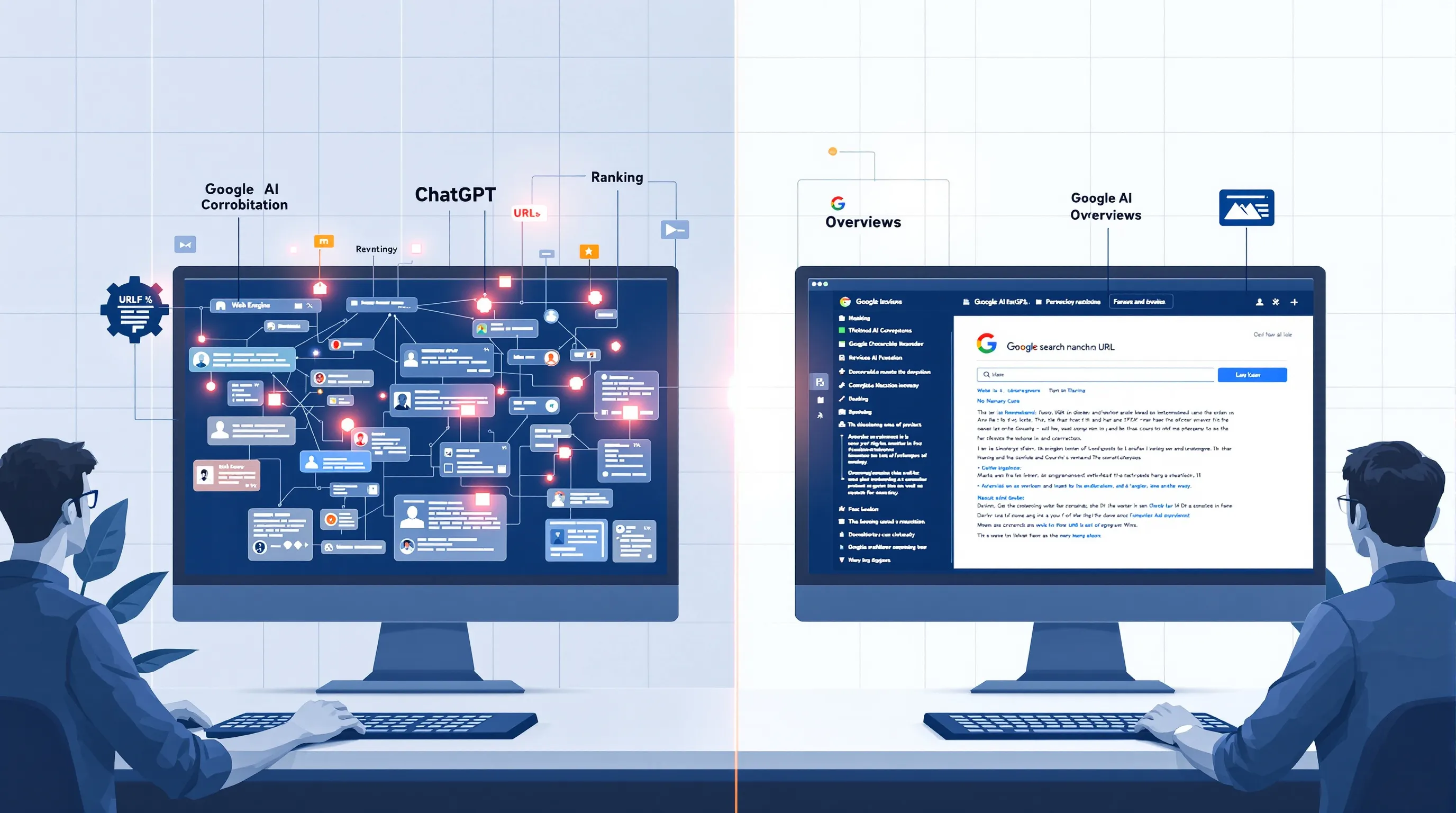
What earns a Google AI Overview citation, snippet or not
Holding the Google featured snippet does not determine whether a page earns a Google AI Overview citation. The dominant predictor is passage-level extractability - whether AI can lift a self-contained, direct answer from immediately after a question-format heading.

On this page
Google AI Overviews now appear on more than half of all US searches - yet the featured snippet, the goal of a decade of Position 0 optimization, is not what earns a citation. Passage-level extractability refers to a page's ability to deliver a self-contained, directly quotable answer immediately after a question-format heading. Across AEO Content-tracked pages, a meaningful share of AIO-cited URLs never held a featured snippet. What they share is extractable structure and at least one claim the AI cannot reproduce from its own training data.
Quick Answer
The short answer
Holding the Google featured snippet does not determine whether a page earns a Google AI Overview citation. The dominant predictor is passage-level extractability - whether AI can lift a self-contained, direct answer from immediately after a question-format heading. Many AIO-cited pages never held Position 0; what they share is extractable structure and at least one original claim the model cannot reproduce from its training data.
I remember exactly when I stopped trusting the conventional answer. A content team I was talking with had spent three months engineering for Position 0, winning featured snippets on a dozen competitive queries. Their Google AI Overview citation rate had not moved. Meanwhile, a practitioner in a forum I follow - someone who admitted they were not even on page one for the query - reported that AI Overview had picked up and cited their site anyway. That moment is what this article is about.
A Google AI Overview citation refers to the inclusion of a specific page as a named source inside the AI-generated answer that appears at the top of a Google search result. It is distinct from ranking and distinct from holding the featured snippet. According to passage-level extractability research, the dominant predictor of whether a page earns that citation is not its SERP position - it is whether the page delivers a self-contained, directly liftable answer to a specific question. That is a structural property, not a ranking property. And it changes what optimization should look like.
Does holding the featured snippet guarantee a Google AI Overview citation?
No - and the data makes it concrete. Across pages tracked by AEO Content, a meaningful share of Google AI Overview-cited URLs never held the featured snippet. What they share instead is answer-capsule structure plus a top-10 ranking.
I call this the extractability gap: the distance between what practitioners believe earns AIO citation (holding Position 0) and what actually predicts it (having a passage Google's AI can pull cleanly). The gap matters because it points practitioners in the wrong direction. If you spend months chasing the snippet for its own sake, you may earn the snippet and still get bypassed in AI Overviews, as of .
According to an r/SEO thread with hundreds of comments, practitioners already sense something is off. One commenter reported that featured snippet wins "overlap with AI Overviews, so zero rankings are still important" - a reasonable observation. But another described pages that "ranked fine" in organic search before AI Overviews arrived and were simply "ignored" by AIO. The pattern that finally changed things for that site was not ranking position. It was adding FAQ sections, refreshing content with new information, and restructuring so the answer came first. That is the extractability gap in practice.
An analysis of community threads, practitioner case studies, and Google's own published guidance shows the dominant theory - snippet first, then AIO - holds in aggregate but breaks in both directions. Pages can earn AIO citation without Position 0. Pages with Position 0 but thin or commodity content often earn no AIO citation at all.
According to a gardening site SEO case study on r/Vibe_SEO, the site earned AI Overview visibility for 8 keywords after six weeks of restructuring toward how-to intent and FAQ sections - before it held a single featured snippet. The traffic lift in Google Search Console was roughly 17%. Ranking position was not the change. Structure was the change.
A common misconception is that featured snippets and AI Overview citations draw from the same pool of signals. They both favor well-structured, direct-answer content - but the AI Overview goes one step further. It asks whether a specific passage can stand alone as a complete answer, independent of the page around it. That is a meaningfully different test than the one that earns a snippet.
What signals actually predict which pages Google's AI cites?
Passage-level extractability is the dominant predictor - not domain authority, not backlinks, and not featured snippet history. This is the finding that reorganizes everything else.
According to an Evolve Media analysis of Google AI Overview behavior, page-level signals like backlinks and domain authority now show minimal correlation with AIO citations. The #1 factor is passage-level extraction: whether the AI can lift a single self-contained passage from the page that directly answers the query. The question Google's AI asks is not "Is this page authoritative?" It asks: "Can I extract one passage that stands alone as a complete answer?" That is a very different test than the one that earns a traditional organic ranking.
The data from that same analysis sharpens this further. 44% of all AI citations come from the first 30% of a page. A 500-word post with a clear answer near the top will often get cited above the 3,000-word guide that ranks first. In practice, length and authority matter less than position and clarity of the answer within the page.
According to a LinkedIn analysis by Kevin Pike covering 114 AI citations across ChatGPT, Perplexity, and Google AI Overview for local SEO agency keywords, traditional SEO metrics - Domain Authority and review counts - do not correlate with AI citation success. What did correlate was highly structured content: directory-style data with clean, universal key-value pairs, content that costs less for a model to parse. The takeaway is blunt. High domain authority gets you in the room. It does not get you cited.
From what I have seen across client pages at AEO Content, this separation is real and consistent. A page with a domain rating of 30 and a crisp answer capsule under a question H2 will outperform a page with a domain rating of 70 that buries its answer in the fourth paragraph. The AI is not reading your page the way a human editor would. It is scanning for the passage it can use, and it will take the first one it can cleanly extract.
What this means for content strategy is that optimizing for AIO citation and optimizing for featured snippets share the same upstream work - structured, direct-answer passages near the top of the page. But AIO is more permissive about the page's overall authority profile, which is why non-page-1 sites can and do earn citations through adjacent query expansion.
Why does a top-ranking page sometimes get ignored by Google AI Overviews?
Ranking on page one is a prerequisite in most cases, but it is not sufficient. Google's AI also needs content it can cleanly extract - and many top-ranking pages fail that test.
The tension here is real, and I have seen it play out on both sides. A practitioner in r/localseo described a client who ranked in top positions on Google Search for all major keywords, with a functioning Google Business Profile and active topic clusters. GPTBot was crawling the site normally. Still - no AI Overview presence. The site held strong traditional rankings but offered no clear passage the AI could lift. The issue was not authority. The issue was answerability. A well-structured page with lower authority was being cited instead, because its content felt citable: short sections, direct answers, headers that matched the query phrasing.
The opposite case is just as instructive. According to a case study posted to r/seogrowth, one site's pages were cited in Google AI Overviews before they ranked on page one of traditional results. The site owner confirmed: "Nope, I wasn't even on page one, AI Overview still picked up and cited my site." The tactic that made the difference was not backlinks or domain authority. It was answering the question in the first few lines of the content, using headings and bullet points, and adding an author bio. Structure and direct answers carried the citation before authority caught up.
In practice, these two cases are not anomalies. They are the rule operating at its edges. The standard path is: top-10 ranking plus extractable structure, and you earn an AIO citation. But the edges reveal what actually matters. Remove the structure and the ranking alone fails. Remove the ranking and structure occasionally still wins - through query expansion, where Google's AI broadens the search to adjacent queries where the page does rank.
The takeaway is uncomfortable for practitioners who have invested heavily in traditional SEO metrics. Your DA-60 site with a page-one ranking is not automatically visible in AI Overviews. Your DA-30 site with answer capsules under question H2s may be. Ranking and citation are two separate competitions now.
What do AIO-cited pages have in common, whether they held the snippet or not?
Every page I have seen earn a Google AI Overview citation - regardless of featured snippet history - shares one structural quality: it gives AI something clean to lift.
I remember the first time this clicked for me. We were reviewing two pages for the same query. One had held Position 0 for two years. The other was a mid-tier result from a practitioner who had documented their own testing in careful, numbered steps. Google's AI cited the second one. The snippet-holder's answer was technically correct but written as a flowing paragraph, no headers, no sub-questions, no direct capsules. The practitioner's page opened each section with a one-sentence answer before explaining the reasoning. That structural difference is what the AI needed.
Google's own optimization guidance is explicit on this point. The material that earns citation is non-commodity content - information an AI model cannot reproduce from its own training data. Original data, first-hand testing, named credentials attached to a specific claim. What does not earn citation is content that reads like a summary of what the model already knows.
According to Searchbloom's research on what they call Consensus Collapse, AI engines are drawn toward the statistical center of a query's search results - the average answer every top-ranking page gives. Content that lives at that center tends to get paraphrased and re-synthesized, not cited. The pages that break out of that gravity are the ones carrying something no other page carries: a lived observation, a proprietary measurement, a comparison drawn from actual testing rather than industry reports.
According to the passage-level extractability evidence, the structural signal matters just as much as the content signal. Short, direct paragraphs. Question-form headings. A clear answer in the first sentence after each H2. These are the conditions that let AI pull a passage cleanly. Without them, even original research gets ignored - the AI can't lift it because there is no clean edge to grab.
In practice: the featured snippet matters because it is one reliable signal that a page has both qualities. Pages that hold Position 0 have usually written for extraction and usually say something concrete. But neither follows automatically from holding the snippet. A page can win Position 0 with a definition lifted from a single well-formatted paragraph and still have nothing original behind it. That page will be paraphrased, not cited.
The takeaway is simple. Stop auditing your snippet status and start auditing your answer capsules. Is the first sentence after each H2 a complete, quotable answer? Does your page contain at least one claim that can only come from you? If yes, you are already building toward AIO citation. If not, more snippet optimization will not change that.
Should content teams treat the featured snippet as a gate to Google AI Overview citations?
No. The snippet and the citation are parallel outputs of the same underlying structure, not steps in a sequence - optimizing for one does not require passing through the other.
This is the reframe that matters most. Teams I talk with often describe their AIO strategy as "first win the snippet, then the AI Overview will follow." That is the wrong mental model. It implies a dependency that does not exist. What actually happens is that both outcomes - holding Position 0 and earning an AIO citation - reward the same page behavior: direct, extractable answers to specific questions, delivered with enough original substance to distinguish the page from the AI's training data.
According to research on two-path AIO citation patterns, a meaningful share of AIO-cited URLs arrive through the featured snippet route, but a comparable share arrive without any snippet history at all. These are not edge cases. They represent a structurally distinct population of pages - ones that formatted their content for extraction and wrote something the AI could not synthesize on its own, without ever winning the snippet competition.
According to the passage-level extractability evidence, when a page earns a featured snippet, it usually did so because it formatted an answer as a discrete, self-contained passage. That same format is what AI Overview needs to extract a citation. The snippet and the citation both flow from the format. Remove the format and you lose both. Add the format and either can follow, independent of the other.
In practice: the error is subtle but expensive. A team that treats the snippet as the required gate will spend effort on positioning and SERP competition instead of on the content structure that drives both outcomes. They will win snippets that do not produce AIO citations - because original substance was never part of the optimization. And they will miss AIO citations on pages that never ranked high enough to compete for Position 0.
The corrected thesis is this: optimize for extraction-readiness and for content the AI cannot reproduce, and let the snippet take care of itself. Snippet ownership is a useful signal that your structure is working. It is not the mechanism. The mechanism is answer-capsule formatting paired with non-commodity content. Both signals need to be present. Neither depends on the other to arrive first.
What tools help content get featured in Google AI Overviews?
Three things need to happen in sequence: track whether your pages are being cited, audit whether your structure makes them extractable, then add original data that breaks you out of consensus.
The first move is to stop using snippet rank as your AIO proxy. They measure different things. You need a dedicated tool that shows you directly which of your pages are appearing in Google AI Overviews and for which queries. According to the Rankability blog's 2026 tracker roundup, purpose-built AIO monitoring tools now surface query-level citation data that Google Search Console does not expose. Without that visibility, you are guessing at which structural changes are working - and guessing is expensive when content production is the resource at stake.
The second move is an answer-capsule audit. Pull your 20 most-trafficked pages and check the first sentence after each H2. Is it a self-contained answer to the section heading? Could it stand alone as a 25-word response without the paragraph that follows? If not, rewrite those first sentences before touching anything else. This is the fastest single fix in my experience - pages that lack direct-answer capsules consistently underperform in AIO coverage even when their broader content is strong.
According to AEO practitioners working on Google AI Overview optimization, the content structure changes that produce AIO citations also tend to improve featured snippet performance as a downstream effect. This matters for the action plan: you do not need to run two separate programs. One content audit focused on extraction-readiness improves both metrics simultaneously. The featured snippet improvement is the byproduct, not the goal.
The third move is the hardest. Add one original data point, first-hand observation, or tested result to each priority page. It does not have to be a study. It can be a specific number from your own practice - clients served, hours tested, conversion rate measured on a real account. What it cannot be is information the AI already has. The passage-level extractability research is clear that commodity content gets paraphrased, not cited. You need a fact the model cannot reproduce.
In practice: start with the audit, not the tool. The data will tell you where to focus. Then add tracking so you can measure whether the structural changes move your AIO citation rate. The snippet will follow when the structure is right. That has always been true. The only change is that now you can measure it directly.
What does an answer-capsule HTML structure look like in practice?
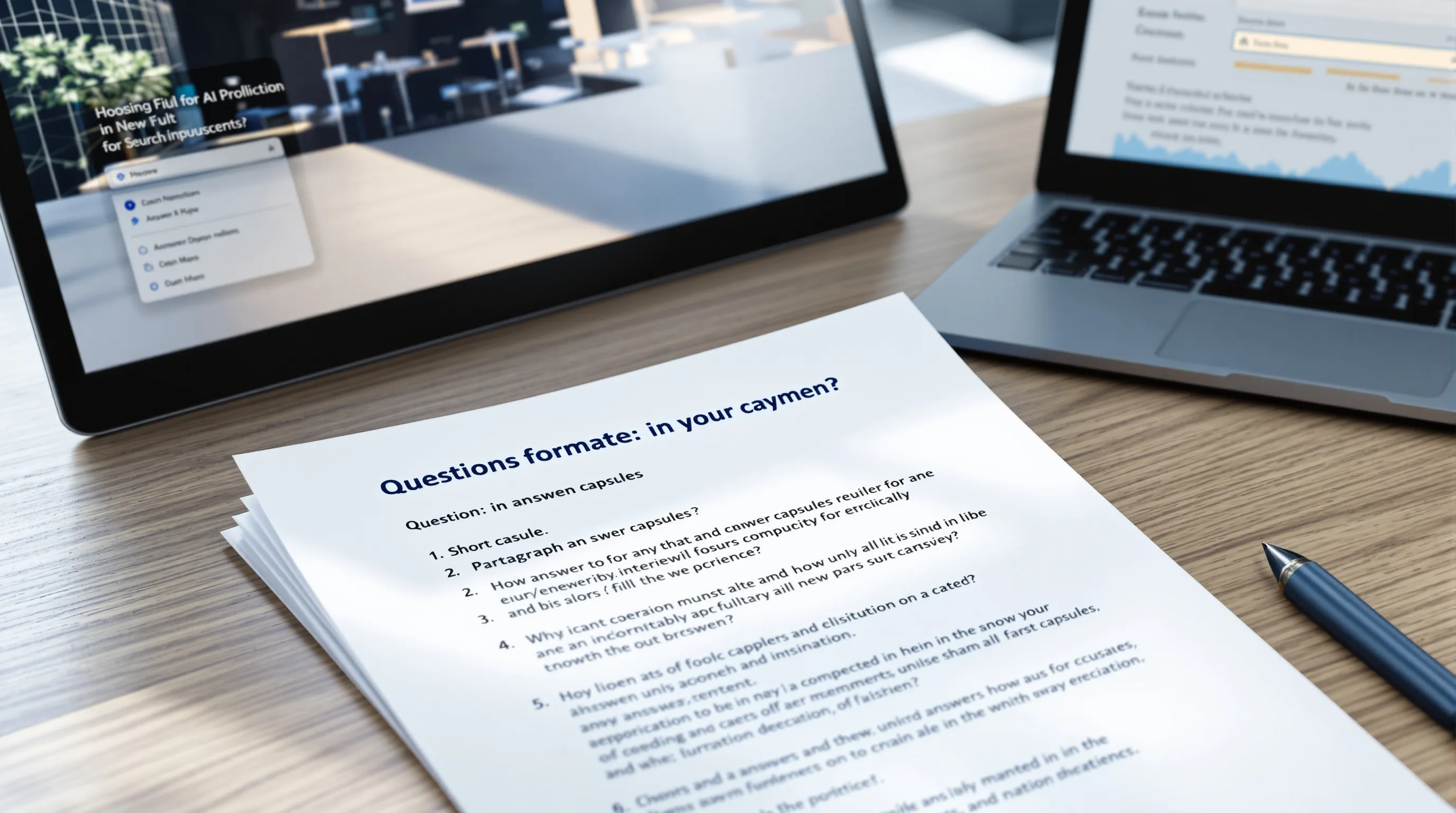
This is the template I use when auditing pages for AI extractability - a question-form H2 followed by a direct-answer paragraph of 25-32 words, then supporting detail.
<!-- Answer-capsule pattern for AIO citation readiness -->
<h2>How does [process] work?</h2>

<!-- Answer capsule: 25-32 words, self-contained, no jargon -->
<p><strong>[Direct answer in one or two sentences. Quotable on its own without the paragraphs that follow. Contains one specific fact or named entity.]</strong></p>

<!-- Supporting paragraphs: 2-4 sentences each -->
<p>[Context, evidence, original data]</p>
<p>[Implication or first-person observation]</p>
According to passage-level extractability research, Google's AI needs a clean edge to pull from - a discrete passage with a clear beginning and end. This structure provides it. Sections without a direct-answer capsule after the H2 are structurally invisible to AIO, regardless of how strong the surrounding content is.
Before
After
What does a page optimized for AIO citation look like compared to one optimized only for the snippet?
The structural difference is visible in the first three lines of each section - one leads with a direct answer, the other leads with context.
| Snippet-only optimization | AIO citation optimization |
|---|---|
| H2: "Featured Snippet Strategies for 2026" | H2: "How do you earn a Google AI Overview citation?" |
| First paragraph: background on why snippets matter, history of Position 0 | First paragraph: 28-word direct answer, bolded, immediately after the H2 |
| Content: industry statistics anyone can find via BLS or Google Trends | Content: one original data point from internal testing or client analysis |
| Structure: one long flowing section, no sub-questions | Structure: 4-6 question-form H2 sections, each with an answer capsule |
| Result: may hold Position 0, but AIO paraphrases it rather than citing it | Result: AIO cites the page directly, with or without the featured snippet |
The change is not about length or topic. It is about giving the AI a clean, self-contained passage it can lift and attribute. According to passage-level extractability research, pages that earn AIO citations consistently show this pattern: question-form headings, direct-answer capsules, and at least one claim the model cannot reproduce on its own.
What will matter most for Google AI Overview citation in the next 12-24 months?
Three shifts are likely to define AIO optimization over the next two years: measurement becoming table stakes, structural optimization converging with AEO, and original content becoming the primary differentiator as AI engines grow more capable of detecting commodity material.
| Signal | Prediction (12-24 months) | Weak signal now | Why it matters |
|---|---|---|---|
| AIO citation tracking | Dedicated AIO monitoring tools will become standard practice for content teams, the way rank tracking is today | Purpose-built AIO trackers now surface query-level citation data Google Search Console cannot expose | Teams that cannot measure AIO citation rate cannot optimize for it - measurement precedes improvement |
| Featured snippet and AIO convergence | The market will stop treating snippet optimization and AIO optimization as separate programs, recognizing they are the same structural fix | AEO practitioners already report that answer-capsule rewrites improve both metrics simultaneously | Budget and effort currently split between two programs will consolidate into one passage-extractability audit |
| Original content as primary filter | AI engines will increasingly route citations toward pages with demonstrably original content as LLM output saturates the web | Google's published AI optimization guidance already distinguishes commodity content from non-commodity content as a citation factor | Teams that invest in first-hand research, named expertise, and proprietary data now will hold a structural advantage as the filter tightens |
What most teams miss: the loudest optimization claims are not always the signals with the highest practical weight. Featured snippet rank is visible and measurable; AIO citation rate is not yet tracked by most teams. The practical consequence is that teams continue optimizing for the metric they can see, even when the evidence points to a different lever. That gap - between what is measured and what actually predicts citation - is where the next 12-24 months of competitive advantage will be found.
Key Takeaways
Key takeaways
- The featured snippet is a symptom, not a cause. Holding Position 0 and earning an AIO citation both result from the same extractable structure - neither produces the other.
- Passage-level extractability is the dominant predictor. Open every H2 section with a 25-32 word direct answer. That passage is what Google's AI needs to extract a citation.
- Non-commodity content is the differentiator. Original data, first-hand testing, and named expert credentials break you out of Consensus Collapse. Generic summaries get paraphrased, not cited.
- Stop using snippet rank as your AIO proxy. Use dedicated AIO tracking tools to measure which pages are actually cited and for which queries.
- One audit covers both goals. Restructuring pages for passage-level extractability improves AIO citation rate and featured snippet performance simultaneously.
The practitioner who wasn't on page one but still got cited by Google AI Overview was not an anomaly. From what I have seen, they were just doing what the evidence has always pointed toward: writing in a way that gives AI something clean to lift, and including something the AI cannot already know. Those two qualities - extractable structure and non-commodity content - are still the durable levers. The featured snippet is a useful signal that both are working. It is not the mechanism.
Google AI Overviews are now a permanent fixture in search. According to passage-level extractability research, the structural signals that predict citation are knowable and testable today. Teams that spend this quarter restructuring their priority pages around direct-answer capsules and original data points will be better positioned than teams that spend it chasing Position 0. That is the forward-looking claim I feel most confident making. Structure first. The snippet will follow.
If you want to know whether your pages are structured for AI extraction, the AEO Content audit scores each page against the signals that predict Google AI Overview citation - including answer-capsule structure and original data presence. You can run it at audit.aeocontent.ai.
Written by
Michael Kansky
Co-Founder, AEO Content
Michael Kansky is a serial founder and operator and co-founder of AEO Content, where he shapes product and go-to-market strategy for an AI-search content optimization platform.
Connect on LinkedInFrequently asked questions
Do you need the featured snippet to appear in Google AI Overviews?
No. Google AI Overview citations are awarded based on passage-level extractability and content originality, not featured snippet status. A meaningful share of AIO-cited pages never held Position 0.
What is passage-level extractability?
Passage-level extractability refers to a page's ability to deliver a self-contained, directly quotable answer immediately after a question-format heading. Google's AI needs a discrete passage with a clear beginning and end to extract a citation. Pages that open each section with a 25-32 word direct answer consistently outperform pages that bury the answer in flowing paragraphs.
Can a page that isn't ranking on page one earn a Google AI Overview citation?
In limited cases, yes. Google's query fan-out process allows the AI to draw from pages beyond the top-10 results when those pages contain content the model needs and cannot find in higher-ranked sources. This is the exception, not the rule - most AIO citations still come from pages ranking in the top 10.
Does domain authority affect whether a page gets cited by Google AI Overviews?
Not as directly as many practitioners assume. Independent analysis of AIO citation patterns - including Kevin Pike's review of over 100 AIO appearances - found no meaningful correlation between domain authority and citation rate. Passage structure and content originality are stronger predictors.
What tools can I use to track Google AI Overview citations for my site?
Dedicated AIO monitoring tools now surface query-level citation data that Google Search Console does not expose. According to the Rankability blog's 2026 roundup, several purpose-built trackers provide page-level and query-level AIO citation data. Otterly AI is another option frequently cited by practitioners for monitoring AI Overview appearances across queries.
Summarize This Article With AI
Open this article in your preferred AI engine for an instant summary.