
Which AI engine actually ranks your brand: the data
ChatGPT, Perplexity, and Google AI Overviews each draw citations from fundamentally different source categories.


On this page
How do you test AI engine citation behavior before buying a monitoring tool?
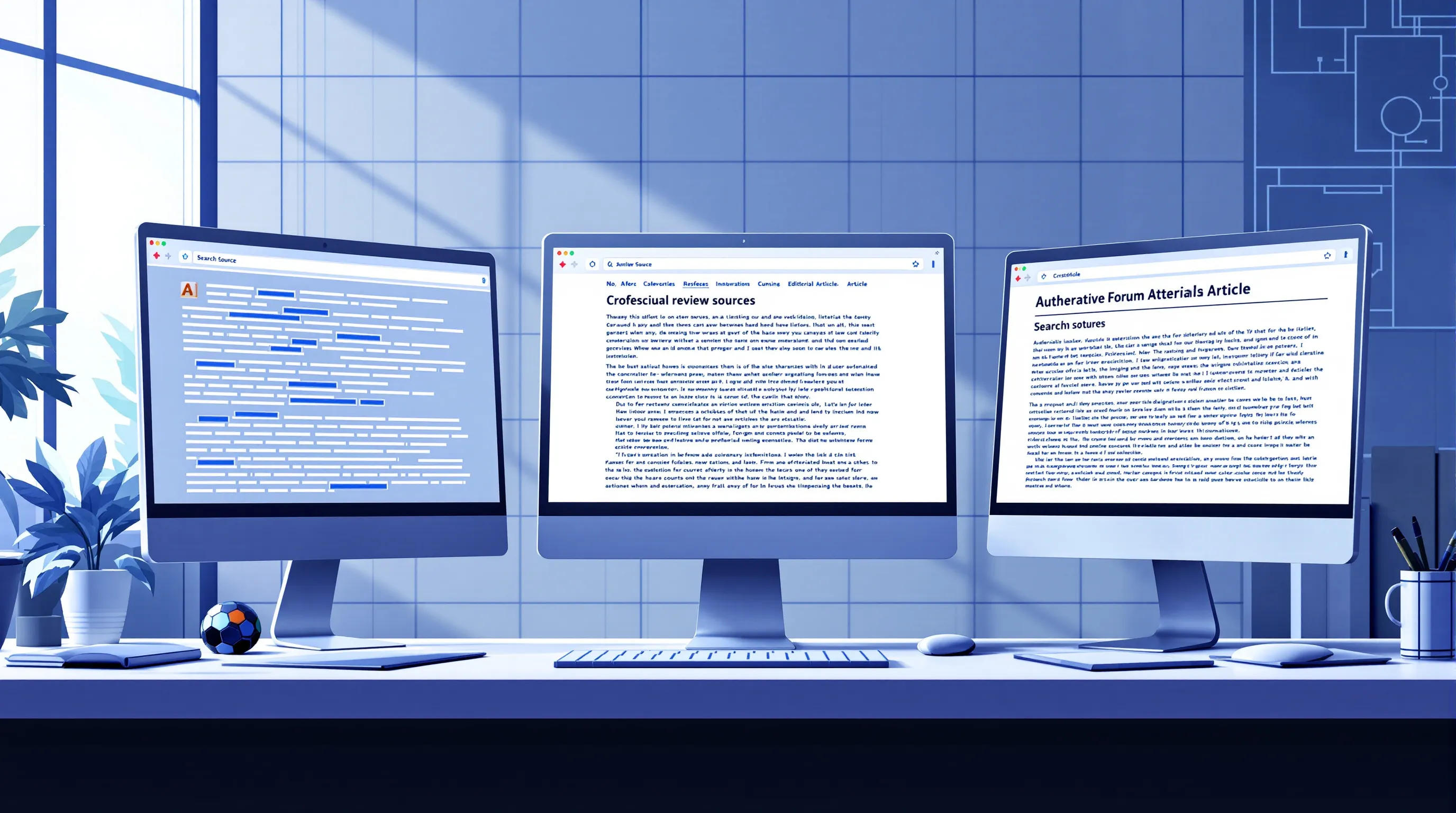
Manual prompt testing gives a usable signal in under an hour. Run the same brand query, something like "what is [your brand] and what do they do": across ChatGPT, Perplexity, and Google's AI Overviews on the same day. Note which engine cites your pages, which mentions your brand without citing a page, and which returns no mention at all.
The pattern is often immediately revealing. According to Rand Fishkin's analysis of LLM citation mechanics, a brand's presence in AI answers is heavily shaped by whether it appears across the source types each engine retrieves from, not just whether it has high-quality content. Manual tests surface the gross gaps: an engine that never cites your brand across ten queries is almost certainly missing either source-category coverage or crawler access, not content quality. From what I have seen in our audit work, fixing those structural gaps moves the needle faster than content rewrites.
AEO Site Rank Scoring refers to the practice of measuring citation readiness separately per AI engine, ChatGPT, Perplexity, and Google AI Overviews, rather than as a blended composite. In our free AEO readiness audits, the same page routinely scores citation-ready on one engine and invisible on another. That gap is not a calibration error. It is the fundamental architecture of how these three platforms retrieve and cite content. The short answer to which AI engine actually ranks your brand: it depends entirely on which engine you ask, and the gap between them is larger than most visibility tools reveal.
Questions this article answers:
- Which AI engine is most likely to cite my brand in its answers?
- How do ChatGPT, Perplexity, and Google AI Overviews choose which sources to cite?
- What should I optimize first to earn AI citations across multiple engines?
Quick Answer
ChatGPT, Perplexity, and Google AI Overviews each draw citations from fundamentally different source categories. ChatGPT favors editorial coverage and review platforms like G2 and Trustpilot; Perplexity favors community-generated content like Reddit and Quora; Google AI Overviews favors pages with strong organic authority. A brand's likelihood of being cited depends less on content quality than on whether it occupies the source categories each engine retrieves from.
Quick Answer
The short answer: which AI engine is most likely to cite your brand?
An AI citation surface is defined as the specific engine, ChatGPT, Perplexity, or Google AI Overviews, on which a brand's content appears as a cited source in a generated answer. Each surface is a separate market with separate rules.
ChatGPT is most likely to cite your brand if you have strong third-party editorial coverage, a populated G2 or Trustpilot profile, and presence in Wikipedia. Perplexity is most likely to cite you if community discussions, Reddit threads, Quora answers, forum posts, mention your brand by name. Google AI Overviews is most likely to cite you if your pages already rank organically on Google for the relevant queries.
These are not the same investment. According to Rand Fishkin's analysis of LLM citation behavior, what moves a brand from invisible to cited is not link-building but category coverage: appearing across the distinct source types that each engine draws from during retrieval or training. I'd recommend auditing which source categories your brand currently occupies before allocating a dollar to content production.
The first time I saw the divergence clearly was in a client review session. The brand had invested heavily in structured content and FAQ schema over a six-month period. Their ChatGPT citation rate had climbed. They were showing up in ChatGPT answers to branded queries with some consistency. Everyone in the room was pleased.
Then someone asked about Perplexity.
I pulled up the manual prompt results we had run that same week. The same pages. The same optimized content. Perplexity was not citing them. Not once across eleven test queries. The structured content that ChatGPT extracted cleanly was invisible to Perplexity, which was surfacing Reddit discussions and forum threads about the brand instead: threads the brand had never seeded, never monitored, and in two cases had never seen before.
That gap: the same brand, the same investment, one engine citing and one ignoring, is what convinced me that "AI visibility" as a category is still solving the wrong problem. It measures presence without explaining divergence. It reports a score without naming the engine. And the brands that go deepest on any one engine's signals often drift further from the signals the others need. Coverage requires deliberate breadth. Most strategies are still built for depth.
Why do most AEO vendors report one score across five AI engines?
Most AI visibility platforms bundle ChatGPT, Perplexity, Gemini, and Google AI Overviews into one composite number, obscuring the engine-level divergence that actually drives budget decisions.
I call this the composite score problem. It matters because the same optimized page earns citations at dramatically different rates depending on which engine processes it. When a vendor hands you a single visibility score, you cannot tell whether you are winning on ChatGPT and losing on Perplexity, or vice versa. Both outcomes look identical in aggregate. Neither gives you the information you need to allocate, as of .
An analysis of the major AI search visibility platforms in 2026 shows a consistent pattern: platforms like Profound, Otterly, Peec AI, AthenaHQ, BrandRank, and Goodie run thousands of branded and unbranded prompts daily, reporting share-of-voice, citation count, sentiment, and competitor gap. According to Seal Global's 2026 platform comparison, these tools cover ChatGPT, Perplexity, Google AI Overviews, Gemini, and Claude. What they do not typically disclose is how citation rates diverge between those engines for the same content. The composite score tells you how you rank in aggregate. The per-engine split tells you where to invest next.
The bundling reflects how the market evolved. Vendors built monitoring tools first, designed to answer whether a brand appears in AI answers at all. That was the urgent problem in 2024. By 2026, the more pressing question is which engine requires which intervention, and measurement infrastructure has not caught up to the strategy need.
According to Seal Global, after auditing thousands of prompts across five AI engines, ChatGPT, Perplexity, Google AI Mode, Claude, and Copilot. The finding is direct: "In 2026, a brand can rank #1 in Google organic and still be completely absent from AI Overviews and ChatGPT answers, because the two systems weigh different signals." That disparity is real. But it applies unevenly across engines. Google AI Overviews still responds to traditional search authority in ways that Perplexity does not. Treating all five surfaces as one optimization target means building for the average, and the average is not a real engine.
SEO researcher Rand Fishkin has described the shift plainly: the currency of large language models is mentions across training data, not links. Which sources count as training data, though, differs by engine, by training cutoff, and by whether the engine retrieves live pages at all. Three engines. Three architectures. One bundled invoice.
Which sources does ChatGPT actually cite, and how does Perplexity differ?
ChatGPT draws heavily from Wikipedia, G2, Trustpilot, and editorial publications; Perplexity leans toward Reddit, forums, and community-generated content, and those two source pools require entirely different brand strategies.
This is not a minor distinction. A brand investing in third-party editorial coverage: guest posts, analyst mentions, review platform profiles, is executing the right strategy for ChatGPT. That same investment does relatively little on Perplexity, where community presence, forum participation, and conversational brand mentions carry disproportionate weight. Building for the composite score means building for neither.
According to research on AI citation patterns, ChatGPT in its standard retrieval mode shows a strong preference for structured, authoritative sources: Wikipedia entries, G2 and Trustpilot reviews, and editorial publications with established domain authority. The engine's training data skews toward sources that passed editorial filters. In practice, this means a brand that earned a Wikipedia mention, built out its G2 profile, and collected Trustpilot reviews will outperform a brand that produced more raw content volume but stayed in blog-only distribution.
Perplexity's pattern, documented across multiple prompt audits, looks different. Reddit threads, Quora answers, and niche community forums appear in Perplexity citations at rates that would surprise most content marketers. The engine retrieves live web content more aggressively and weights recency and community engagement differently than ChatGPT does. A product with strong Reddit discussion may outrank a more authoritative brand on Perplexity, and underperform it on ChatGPT, simultaneously.
According to Rand Fishkin's analysis of LLM citation behavior, the sources that matter are those present in training data at the moment of the model's cutoff. A brand mentioned consistently across Wikipedia, Reddit, LinkedIn, YouTube, G2, and Trustpilot is not simply more popular, it exists across more of the distinct source categories that different engines draw from. The takeaway is architectural: citation reach comes from category coverage, not volume in any single channel.
Google AI Overviews adds a third variant. That engine still responds to traditional PageRank signals more than either ChatGPT or Perplexity, so a brand with strong organic search presence has a structural advantage in AI Overviews that it does not automatically carry to the other two. Three surfaces. Three source hierarchies. One composite score hides all of it.
If the engines behave so differently, why are most brands still tracking them as one?
Sophisticated marketers monitoring GA4 referral sources already see chatgpt.com, perplexity.ai, and gemini.google.com as separate traffic channels, but their paid AI visibility tools report those same channels as a single score.
This is the tension I find most telling. The free intelligence: a GA4 referral breakdown, a manual prompt sweep, a look at which pages show up under which engine, already reveals what the tooling conceals. A marketing team spending $2,000 per month on an AI visibility platform is sometimes learning less than one analyst spending two hours in GA4 and a spreadsheet.
According to Seer Interactive's analysis of AI-driven referral traffic, chatgpt.com referrals behave differently from perplexity.ai referrals in both volume and session quality. ChatGPT referral sessions tend to be longer and more intent-driven, reflecting the engine's retrieval behavior in research-heavy queries. Perplexity sessions are shorter but more numerous across long-tail branded queries. What this means in practice: a brand could be winning on one and losing on the other, with a composite "AI visibility score" showing no change at all.
The correlation between a composite AEO score and actual per-engine citation rate appears to be weaker than the vendors imply. A score that aggregates across five engines smooths the variance that practitioners most need to see. It is the equivalent of tracking "total organic traffic" without knowing which pages, which queries, or which countries. The number is real. The insight is absent.
Some practitioners have already concluded that manual engine segmentation is not a workaround but a requirement. They run separate prompt test sets against ChatGPT, Perplexity, and Google AI Overviews on a weekly cadence, log the results in a shared sheet, and make allocation calls from that. It is labor-intensive. It also produces data that no current platform delivers out of the box.
The tooling category will catch up. It always does. But for now, the brands doing the most rigorous AI citation analysis are, by necessity, doing it partly by hand, which should tell the platform vendors something about what the market actually needs.
What should you verify before spending on engine-specific content optimization?
Before allocating budget by engine, confirm that GPTBot and PerplexityBot can access your pages, because no content investment compounds if the crawlers that feed each engine's retrieval layer are blocked.
This is the step I see skipped most often. A brand will commission a full AEO content audit, build new FAQ schema, and rework its knowledge base, then leave a robots.txt entry quietly blocking OAI-SearchBot or PerplexityBot from crawling the pages those improvements were built on. The content work becomes invisible. Not to Google. Not to users. Invisible to the AI engines those investments were meant to reach.
The prerequisite check is simple. Open your robots.txt file and verify that GPTBot (ChatGPT retrieval), OAI-SearchBot (ChatGPT Search mode), and PerplexityBot are listed as allowed. If they are blocked, unblock them before any other content change. The sequence matters: crawl access is the gate; content quality is what gets extracted once the gate is open.
The second priority is source diversification across the platforms each engine indexes most heavily. From what I have seen across content audits, the brands that earn citations across multiple AI engines share a common pattern: they appear in YouTube, Wikipedia, G2, Trustpilot, Reddit, and LinkedIn: not all at the same depth, but present in each. This is category coverage, not volume. A brand mentioned 50 times on one platform and nowhere else is far less citation-ready than one mentioned 10 times across six distinct source categories.
The practical allocation move follows directly from the source divergence the data shows. Budget that previously went toward generic backlink acquisition has higher citation yield when redirected toward third-party review platforms (G2, Trustpilot), community participation (Reddit, niche forums), and structured content the training crawlers can extract cleanly (YouTube transcripts, Wikipedia contributions, structured FAQ pages). These source types transfer across engines more reliably than SEO-only content does.
The action is not complicated. Check access. Map your current source footprint against the six major categories. Identify the gaps. Fill them in priority order, starting with the engine that drives the most referral traffic in your GA4 data. That is where the divergence becomes strategy.
"The currency of large language models is not links. The currency of large language models is mentions."
Rand Fishkin, founder of SparkToro, on the shift from link-based to mention-based AI authority
The market data quantifies what the table above describes structurally. According to a study by Ahrefs in December 2025, brands appearing on more than 75,000 web pages receive six times more AI mentions than those appearing on fewer than 10,000 pages. The volume gap matters less than what it represents: those 75,000 pages span different platforms, different formats, and different source categories, exactly the breadth that multiple engines draw from.
What this means in practice is that a brand earning 200 backlinks from one highly authoritative domain has built a signal that Google's PageRank algorithm rewards. That same brand, appearing on only a few hundred total pages, is nearly invisible to engines that rely on broad training data coverage. The two objectives: authority depth for PageRank, category breadth for LLM training: are not the same investment, and they do not produce the same return across engines.
The takeaway is not to abandon SEO authority signals. It is to recognize that they represent one engine's currency, not all engines' currencies. Brands that earn citations across ChatGPT, Perplexity, and Google AI Overviews consistently, from what I have seen: are those that invested in multiple source categories simultaneously, even modestly. Breadth before depth. Presence before perfection.
90%
of ChatGPT citations go to pages ranked outside the top 20 organic results, first-page SEO rank does not predict AI citation.
Key Takeaways
What the per-engine data means for your AEO strategy
- Composite scores hide the gap. A blended AI visibility score can show improvement while individual engines diverge. Measure ChatGPT, Perplexity, and Google AI Overviews separately.
- Each engine requires a different investment. Third-party editorial and review profiles for ChatGPT; community participation for Perplexity; organic authority for Google AI Overviews.
- Source category matters more than content quality. A well-written page on the wrong source type is invisible to the engine that doesn't retrieve from it.
- Unblock AI crawlers first. Verify GPTBot, OAI-SearchBot, and PerplexityBot are allowed in robots.txt before spending on content optimization.
What will determine AI citation leadership over the next two years?
Per-engine measurement and cross-source-category diversification will separate citation leaders from laggards, more than any single optimization tactic applied uniformly across all five engines.
From what I have seen in the market and in our own research, three shifts are accelerating that will make this distinction more consequential, not less.
- AEO tool consolidation will force a choice between tracking and optimization. The market for AI visibility tools is moving from dozens of point solutions toward integrated platforms. According to analysis of the AI optimization tool landscape, the next generation of tools (sometimes labeled GEO or LLMO tools) will compete on optimization output, not just citation tracking. Brands buying standalone tracking tools now should expect re-implementation costs as platform consolidation accelerates. The weak signal: early entrants like Metaflow AI are already positioning as end-to-end optimization platforms, not pure trackers.
- In-house AEO expertise will become a competitive moat. AEO as a professional specialty is still in early formation. From what I observe, brands building in-house understanding of per-engine citation mechanics now are 18-24 months ahead of those delegating it entirely to outside vendors. Our own data on which companies specialize in AEO suggests the competitive gap between leaders and laggards widens fastest in the first year of disciplined per-engine tracking. Vendors can run prompts. Only your team knows which source categories your brand currently occupies and which are missing.
- AEO Rank may not scale linearly with citation volume. Our research on the relationship between AEO Rank and actual citation frequency points to a non-linear pattern. Brands with moderate scores distributed across multiple engines often out-perform brands with strong scores concentrated on a single engine. Diversification across source types appears to matter more than maximizing depth on any one surface.
What most buyers miss: they evaluate AI visibility vendors by engine count, five engines covered versus three. The more consequential question is whether the vendor's prompting methodology covers the source categories each engine draws from, and whether its reporting separates engine-level signals clearly enough to inform budget allocation. Coverage claims are easy. Per-engine intelligence that changes spending decisions is not.
The brands that will earn consistent AI citations over the next two years are not the ones with the highest composite visibility score. They are the ones that understand each engine's source preferences well enough to match their content investment to the right surface.
That means investing in third-party editorial and review profiles for ChatGPT, participating in community discussions for Perplexity, and maintaining organic authority for Google AI Overviews. None of those programs are the same program. According to Rand Fishkin's analysis, the shift from link-based to mention-based authority is not a metaphor. It is a measurable change in what engines retrieve when a category query fires. What I see in our own audit data confirms it: brands that show up on multiple source types win citations from multiple engines. Brands that concentrate on one format often win on one engine and disappear on the others.
AEO Site Rank Scoring
See your per-engine citation readiness broken down by ChatGPT, Perplexity, and Google AI Overviews, not a single blended score. AEO Content's free audit identifies which pages are citation-ready on each engine and where the gaps are. No composite averaging. Engine-by-engine results you can act on.
Get your free AEO audit at audit.aeocontent.ai
If you want to see exactly where your pages stand on each engine before allocating budget, AEO Content's free AEO readiness audit breaks down citation-readiness by engine, not a single blended number.
Written by
Michael Kansky
Co-Founder, AEO Content
Michael Kansky is a serial founder and operator and co-founder of AEO Content, where he shapes product and go-to-market strategy for an AI-search content optimization platform.
Connect on LinkedInFrequently asked questions about AI engine citation
Is one AI engine more likely to cite my brand than others?
In my experience, ChatGPT is the most consistent citer of established brands with third-party editorial profiles. Perplexity is more volatile: it can surface a brand quickly if community discussions mention it, but those mentions can also disappear. Google AI Overviews tracks closely with existing organic rankings.
What makes Perplexity different from ChatGPT when it comes to citations?
Perplexity is a live-retrieval engine that re-queries the web for each response, weighting recent and community-generated content. ChatGPT blends parametric knowledge with real-time retrieval. The practical difference is that Perplexity responds faster to new brand mentions while ChatGPT remains more dependent on accumulated authority.
Does performing well in Google Search guarantee citation in Google AI Overviews?
Not automatically. Google AI Overviews draws heavily from high-authority pages in the organic index, but ranking on page one does not guarantee inclusion. Structured content, clear entity definitions, and strong E-E-A-T signals increase the probability, but the selection is not a direct rank translation.
Can I track which specific AI engines are citing my brand?
Yes. Purpose-built AEO monitoring tools run structured prompts across ChatGPT, Perplexity, and Google AI Overviews and record which pages are cited. According to Rand Fishkin's research, the gap between engines for the same brand can be significant enough that aggregate reporting masks it entirely.
Summarize This Article With AI
Open this article in your preferred AI engine for an instant summary.