Two markers that separate AEO specialists from SEO shops

On this page
Quick Answer
A real AEO specialist owns citation data it collected itself and runs a live loop that measures each AI engine separately. An SEO agency with an added AI line usually has neither.
I apply that test to everyone, us included: our audits check whether ChatGPT, Claude, Perplexity and Google AI Overviews each name a client. What the evidence cannot settle is how many self-described specialists actually run that kind of measurement. Nobody has counted. So ask, and watch who goes quiet first.
Key Points
- A September 2026 citation study found 55.2% of top-10 AI citations did not rank in Google's traditional top 10, and no pair of AI platforms shared more than 24.1% of cited pages.
- AEO Content's own citation data comes from 26,577 AI-visibility audits, each scored against AEO Rank, a standard of 53 criteria across 5 pillars.
- A Connecticut agency owner's June 2026 AMA built a solar installer's baseline from about 75 prompts drawn from about 700 chats, then reported results by model.
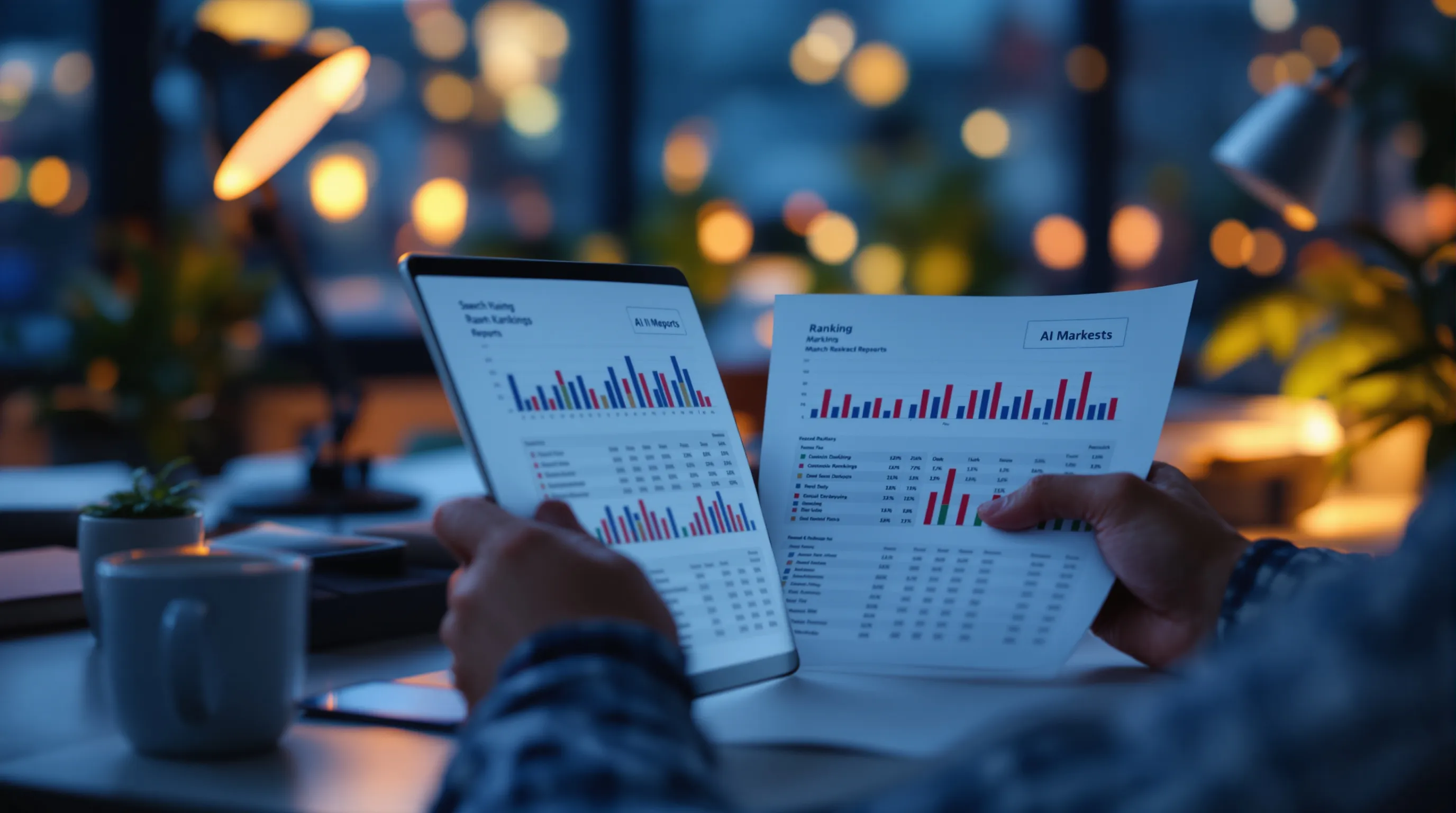
Two reports, two questions: what the agency ranks, and which AI engines actually name you.
Every SEO agency has an AI page now. Fine. The page is not the problem. The problem is that the word "AI" costs nothing to add to a service page, and the two things that actually make a company an AEO specialist cost a lot.
Those two things are proprietary citation data, meaning records a company collected itself about which pages and brands AI engines actually name, and a per-engine measurement loop, meaning a repeated check of each engine on its own, then a change to the content, then another check. Neither comes bundled with a rank tracker. (I know. I wish it did too.)
My bias, stated up front: I co-founded AEO Content, and our audits track whether ChatGPT, Claude, Perplexity and Google AI Overviews name our clients, engine by engine. So yes, I think the markers matter. I also think you should make any provider, us included, prove both.
Why does owning the source matter so much? One small example from our own work. In a pilot, we wrote knowledge-base articles straight from a product's code, and one article caught that the admin page described two-factor sign-in as using an authenticator app while the real sign-in screen sends a one-time code by text and email. An article written from documentation or memory would have repeated the admin wording, confidently and wrongly, to every customer who read it. Secondhand data repeats secondhand mistakes.
Below, you will follow one small SaaS team through both markers, step by step, starting with the question their agency could not answer.
Picture a small B2B SaaS marketing team at the end of a long Tuesday. They have a decent blog, an SEO retainer they renewed last month, and one person who also runs the webinar calendar (tired, obviously, and not asking for more tools). Then the agency invoice arrives with a fresh line on it: AI search optimization. Same report. Same call. New word.
So is that agency an AEO specialist now? Honestly, probably not. Answer engine optimization (AEO) is the work of getting a brand named and cited inside AI answers from ChatGPT, Perplexity, Claude, Gemini and Google AI Overviews. A real specialist owns the first marker, citation data it collected itself. It also runs a live loop that measures each engine separately. The research section below shows how to check for both.
To be fair, the SEO shop is not useless here. A September 2026 citation study found AI engines cited 98.9% of traditional positions 1-3 and 90.0% of top-10 results, against 49.3% of pages outside the top 10. Ranking still gets you into the room. It just does not decide who gets quoted, which is the exact thing the team is now paying extra for, and the first marker is where that gap starts to show.
What is proprietary citation data, and why can a rank tracker not replace it?
Proprietary citation data is the first marker of a real specialist. Ours comes from 26,577 AI-visibility audits, and no SEO rank report records what those audits capture.
Proprietary citation data is a record, collected by the firm itself, of which pages and brands AI engines actually name when someone asks a real question. Honestly, it is not a dashboard login. Before your next sales call, run three checks:
- Ask what they collected themselves. Which engines, which questions, over what period.
- Ask how big the base is. How many sites or audits sit behind the advice they are about to give you.
- Ask for one contradiction. A case where their citation records disagreed with a client's Google rankings, and what they changed because of it.
The third check is the one that clears the room. A 2026 Rankability study found that 55.2% of top-10 AI citations did not rank in Google's traditional top 10, and only 29.1% of exact pages appeared in both channels for the same query. The same study found that no pair of AI platforms shared more than 24.1% of the pages they cited. Read that twice. The engines disagree with Google, and they disagree with each other.
The conventional wisdom says a firm with great ranking reports already knows where AI answers come from. It does not. A rank tracker measures position in a list of blue links, while an AI answer is assembled from a different pool, and most of that pool sits outside the list the tracker is watching. (Which is to say, the monthly PDF can look fantastic while ChatGPT recommends your competitor by name.)
So what does owned data look like in practice? Ours has two layers. We have scored 11,000+ domains across 15 sectors and 28 categories, and every audit runs against AEO Rank, a standard of 53 criteria across 5 pillars. On top of that, we track whether ChatGPT, Claude, Perplexity and Google AI Overviews actually name the brands we work with. That second layer is why our research-driven content process starts from citation records instead of keyword volume.
Volume matters here. One audit is an anecdote. A large base is a pattern you can bet a budget on. Put the 4 evidence items behind this section side by side and the pattern is kind of boring and very clear: the useful signal lives in citation records, not in rank reports.
Now picture a small B2B SaaS marketing team, the kind with a decent blog, a freshly renewed SEO retainer and one person who also runs the webinar calendar. Their agency adds an AI line to the invoice. The team asks the three checks above, and the agency answers the first with a screenshot of someone else's tool, the second with silence, and the third with a very confident speech about schema. Fine. The team now knows exactly what it is buying, and it still has a second question to ask, about what happens after that first measurement comes back.
What is a per-engine measurement loop, and why does session reporting miss it?
A per-engine measurement loop records whether each AI engine names you, changes the content, then measures again. Session reports cannot do this, because AI answers rarely send a click.
Let me define it properly, because the phrase gets thrown around a lot. A per-engine measurement loop is a repeating cycle: fix a set of real buyer questions, record which brands each AI engine names for them, change something, then run the same questions again and compare engine by engine. Four moving parts, in order:
- Set a baseline from real buyer questions, not invented keywords.
- Split every result by engine, so ChatGPT, Claude, Perplexity and Google AI Overviews each get their own line.
- Change one thing, such as a page, an answer or a third-party mention.
- Re-run the same questions and compare against the baseline.
Why not just look at sessions? Because AI answers do not behave like a results page. There is no page one and no fixed keyword list, the same question phrased two ways can produce two different answers, and when an engine summarizes your page for someone you usually never see a visit in analytics. The click stopped being the thing to count. Session growth can go flat while your brand gets named more often, and it can climb while you are quietly losing the answer.
A generic metric list does not fix that on its own. In 2025, a Simplilearn explainer listed AEO metrics as snippet placements, voice search visibility, AI chatbot appearance frequency and direct answer accuracy. Fine list. The thing is, a list of metrics is a menu, not a loop. Nobody eats until someone measures, acts and measures again.
A working loop is easier to show than describe. A Connecticut agency owner posted an AMA in June 2026 laying out the baseline for a solar installer client: about 75 prompts built from about 700 chats, seeded from real Google Search Console queries, loaded into a tracking dashboard alongside competitors, and reported as a baseline by model. In the owner's experience, ChatGPT is usually the weakest engine for local visibility. A critic in the same thread pushed back that citation rates shift with model updates and retrieval changes, so a month-one number will not mean the same thing in month six.
Honestly, the critic is right, and that is the whole case for the loop. A single snapshot ages badly. A baseline that gets re-run against the same questions, engine by engine, is the only version that survives a model update. (It is also the only version you can show a CFO without sweating through your shirt.)
The evidence I have does not settle how often a loop should run for every business, and I would rather leave that open than invent a number. What the team can do is ask any provider to put its own cadence in writing, then check that the reports actually arrive on that schedule.
Back to our SaaS team. Their agency's AI report shows one blended visibility number, up a little, colored a reassuring green. So they ask which engine moved, against which baseline questions, and what changed between runs. If the answer takes longer than the question, they have learned something. If the vocabulary still feels slippery, the AEO FAQ on AI search optimization is a decent place to park, right before the harder question of whether an SEO background disqualifies that agency at all.
AEO vs SEO: do I need a separate agency to show up in AI answers?
Not necessarily. An SEO background is no disqualifier, and our founders bring a combined 40+ years of SEO and content infrastructure experience to AEO. Check for the two markers instead.
The common assumption is that AI search needs a brand-new kind of agency, staffed by people who have never touched a title tag. I understand the appeal. It is also wrong, or at least lazy. The question is not where a firm came from. The question is what it owns and what it measures now.
Ethan Smith of Graphite made the overlap case plainly on Lenny's Podcast in 2025. He started in SEO in 2007, called AEO probably the second biggest change in that whole stretch (behind Google's anti-spam updates), and said "everything that works in SEO works in AEO," with additional things on top. For Webflow, the tactics that worked best were, in order, straight SEO, YouTube videos and Reddit. In 2025, Webflow was getting 8% of its signups from LLMs.
Here is the part I find more useful. Smith's own process starts by putting prompts into an AEO tracker, then working out who shows up as citations and building a plan for each group of them. His firm also runs a research team that tests hypotheses. So an SEO-born firm, describing its AEO work, describes both markers: its own research, and a tracker it checks. The SEO past was never the problem.
Even agencies selling AI visibility audits describe the AI layer as sitting on top of SEO rather than replacing it. Fine. Nobody serious disputes the foundation. The dispute is about the floor above it, and whether anyone is actually standing there.
So the decision is simpler than the acronyms make it feel:
- Keep your current agency if it can show citation records it collected itself and a baseline it re-runs engine by engine.
- Add a specialist if it can show rankings and sessions but goes vague the moment you ask which engine named you last month.
- Think about off-site work either way, since mentions on other sites feed AI answers too, which is why sponsored listings AI engines cite exist as a category at all.
I came to this from building customer-service software, not from a link-building shop, which is either a credential or a confession depending on who is asking. Anyway. Origin stories are cheap. Records are not.
Our SaaS team, then, does not fire anyone tonight. They send their SEO agency two emails. One asks what citation data the agency owns. The other asks for last quarter's results split by engine, against the same questions as the quarter before, and then they wait to see which email gets answered first.
How can you tell a real AEO specialist from an SEO shop with a new label?
Several agencies quoted one small team between $3k and $5k a month for answer engine optimization. On closer reading, the offers looked like work the team already knew.
The poster, writing on Reddit's r/AskMarketing in March 2026, called it "a checklist of things we could probably do ourselves": featured snippet optimization, structured data, FAQ schema. Most replies agreed. One commenter listed five tactics sold as AEO, from FAQ schema to question-based headings, that "have been part of good SEO for years." Google's own guide for site owners agrees: "There are no additional requirements to appear in AI Overviews or AI Mode, nor other special optimizations necessary."
On tactics, the skeptics are mostly right, and we say that as a company selling AEO. A service page full of schema cannot set a specialist apart. The difference shows up in what a provider can measure, because the AI engines behave so differently.
A September 2026 study by an SEO software company compared the pages AI platforms cite with the pages search engines rank. The platforms cited largely different pages from one another, and each followed organic rankings to a very different degree.
Rankings still matter. The same study found AI citing 98.9% of pages in the top three organic positions. Yet 55.2% of top-10 AI citations did not rank in the traditional top 10. "Ranking helped, but it was not the only path into an AI answer," the authors wrote, and they advised measuring conventional rankings and AI visibility separately. So a rank report describes Perplexity's sources fairly well and ChatGPT's poorly. A single blended AI score averages together engines that cite largely different pages.
Practitioners who vet providers use the same test. The founder of an agency selling SEO and AEO to SaaS startups wrote in April 2026: "A lot of traditional SEO agencies slapped AEO onto their website in 2024." His check: "Ask them which AI platforms they track citations on and how. Vague answers mean it is not real." A commenter in the March thread was blunter: "Ask them to show you AI citation results they've actually moved for a client. If they can't, walk away." The founder sells these services, so his checklist is one practitioner's view, though it matches the study's advice.
A citation report has its own weakness. Eli Schwartz, an SEO consultant and author of Product-Led SEO, warned in an April 2026 essay that AI answers shift with phrasing, context and platform: "Ask the same question twice in the same session, and you may get a meaningfully different answer." He went further, in words that apply to companies like ours.
"Selling prompt tracking as the AEO equivalent of rank tracking is selling a weather forecast on the basis of just looking out a window."
Eli Schwartz, SEO consultant, 2026
The usual answer to that criticism is volume and repetition. In a June 2026 Reddit thread, a Connecticut agency owner described building a client baseline from roughly 700 chats across about 75 prompts, split by model. "That volume is what makes the starting visibility number trustworthy instead of anecdotal," the owner wrote. A critic in the same thread doubted that any of it proves value: "'Visibility went up' is an output metric. Solar installers buy leads, not visibility scores." Call tracking, the critic added, "doesn't tell you that AI citation drove the intent."
Our reports record whether ChatGPT, Claude, Perplexity and Google AI Overviews name each client, as four separate results. For one client, Understood Care, Google AI Overview citations rose from 22 to 132 in about five months. The figure shows one engine moving for one client. It cannot show what those citations earned in sales, and the critic's point applies to us as much as anyone.
Line the findings up and the test gets narrow. The tactics overlap with SEO, the engines disagree about what to cite, and any single run can mislead. The evidence that holds up against all three is citation data collected engine by engine and checked again over time. Neither a checklist nor a rank report can produce it. Even that evidence stops at visibility. On a September 2026 podcast about a UK contractor whose bid a school chose after asking ChatGPT to compare quotes, one SEO practitioner said measuring that stage depends on the sales team asking prospects how they found the business.
Five questions for any AEO provider, us included
- Which AI engines do you track, and can we see the results for each one separately?
- What citation results have you moved for a past client, with the starting and ending numbers?
- How many prompts and runs sit behind your baseline, and how often do you repeat them?
- If the report shows rankings and sessions, what does it tell us about engines like ChatGPT, where most cited pages had no measured ranking in the study?
- How will we connect a mention to a lead? Plan for your sales team to ask new prospects how they found you.
How we checked this
We drew on two Reddit threads where buyers and practitioners discussed hiring AEO help, a June 2026 Reddit AMA by a Connecticut agency owner, Google's Search Central guide on AI features, a September 2026 citation study by an SEO software company, an April 2026 essay by Eli Schwartz, and a September 2026 podcast episode. The list of engines we track and the Understood Care result are our own client data. The study's publisher sells SEO software and used its own tracker for the ranking data. Schwartz's essay was sponsored by an SEO data vendor and an SEO agency. Several Reddit commenters were promoting their own services. The podcast describes one contractor's experience. We sell AEO content and per-engine tracking, so we have a stake in the test described here. Still unknown: how stable the gaps between engines are from month to month, how many runs make a baseline reliable, and how often a citation turns into a sale.
- r/AskMarketing, thread on whether AEO agency services are worth the cost, March 8, 2026.
- r/SaaS, thread on choosing an AEO agency, April 5, 2026.
- Google Search Central, AI features and your website guide, retrieved November 10, 2026.
- Study of AI citations and traditional rankings by an SEO software company, September 23, 2026.
- Eli Schwartz, "AEO is not SEO 2.0" essay on Substack, April 9, 2026.
- r/aeo, AMA by a Connecticut AI SEO agency owner, June 12, 2026.
- James Dooley Podcast, decision engine optimization case study episode, September 7, 2026.
- AEO Content client data: engines tracked per client and the Understood Care Google AI Overview citation results.
What should the team look for before signing anyone?
Hire the company that can show citation data it collected itself and a report split by engine against your own questions. Then ask what happens if nothing moves.
I think buyers stop accepting the AI line on an invoice as proof of anything within a year or two. So ask every provider what it promises if the engines keep ignoring you. Ours is blunt: named in AI answers in 100 days, or we work free until you are. The fix is not mystical. It is infrastructure.
Which, fine, is a self-serving thing for me to say (I co-founded a company that builds exactly that). One of our co-founders is a full-stack engineer and content infrastructure architect with 20 years of building enterprise systems, and honestly, that background matters more here than any job title with "AI" in it. Measurement loops are plumbing. Somebody has to build them.
Back to the team with the webinar calendar and the two emails. If the agency replies to the second one with a single blended number again, the team already knows whose inbox gets the next question.
Summarize This Article With AI
Open this article in your preferred AI engine for an instant summary.
Frequently Asked Questions
What else do people ask about hiring an AEO specialist?
Most follow-up questions come down to time, money and proof. Each one below gets a plain answer, plus what to ask a provider before you sign anything.
Should I judge an AEO provider by its rankings report?
No. Back in 2022, SEO consultant Eli Schwartz was already calling rankings a useless KPI for search itself, arguing it should be judged on customer acquisition cost (CAC), meaning what you spend to win one customer, and lifetime value. For AEO, ask for citations by engine instead.
How long does AEO take to show results?
In that same 2022 interview, Schwartz said SEO takes "a long time 12 to 18 months." Our client Modern Wealth moved faster: organic search sessions rose 220% and Google clicks 61% within three weeks of the first articles. That is one client, not a promise for every site.
What do the larger AEO Content plans include?
Business is $500 a month for 30 articles plus a dedicated strategist. Business Plus is $1,000 a month for 44 articles, Local AEO and 2 backlinks from DR 30+ sites.
Is AEO replacing SEO?
Not really. Nathan Gotch calls SEO "the foundational layer" with AEO layered on top. Fine. The layer on top still needs its own measurement.
How do I talk to AEO Content about my site?
Use the contact page at aeocontent.ai/contact. Bring the two questions our SaaS team emailed their agency, because those are the first ones I will ask you back.
Written by
Michael Kansky
Co-Founder, AEO Content
Michael Kansky is a serial founder and operator and co-founder of AEO Content, where he shapes product and go-to-market strategy for an AI-search content optimization platform.
Connect on LinkedIn